
Beyond the Horizon
By Pradeep Kumar
Prime Minister Narendra Modi had announced demonitisation of Rs 500 & Rs 1000 currency notes at 8 pm on 08.11.16 aimed to fulfil four objectives of checking terror-funding by Pakistan, printing of counterfeit currency, black money and corruption. whose outcome is not known.
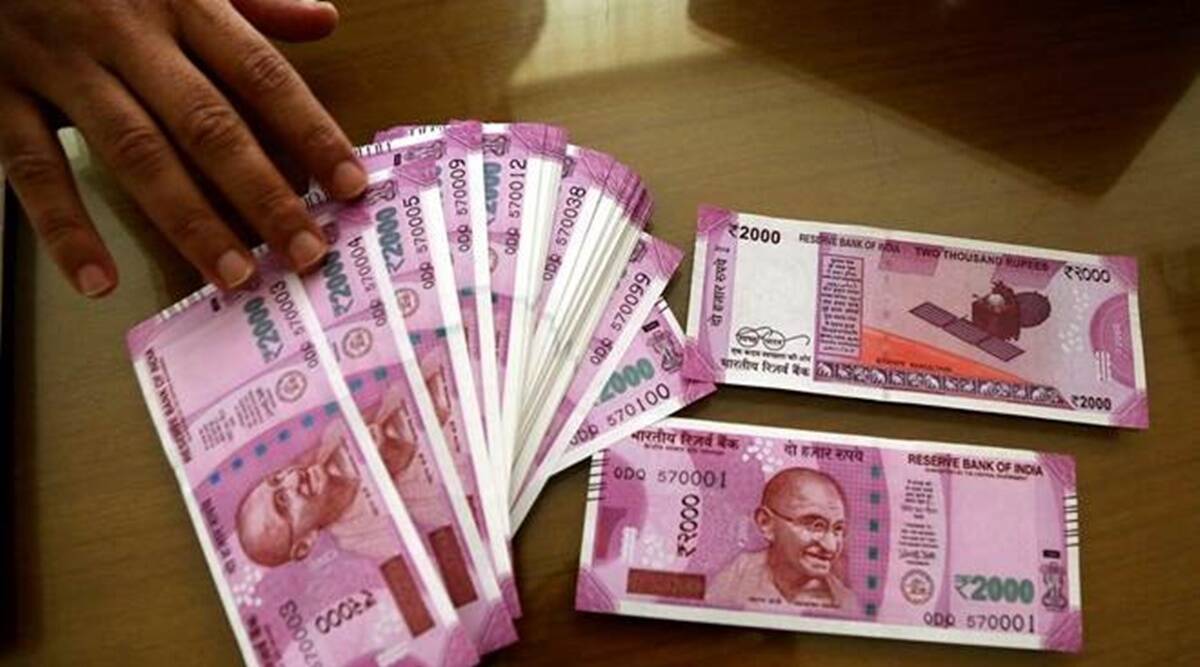
The RBI on May 19 notified to withdraw Rs 2,000 notes from circulation and justified that about 89% of the Rs 2,000 denomination notes were issued prior to March 2017 and are at the end of their estimated life span of four-five years. The total value of these banknotes in circulation has declined from Rs 6.73 lakh crore at its peak as on 31.03.18 (37.3% of notes in circulation) to Rs 3.62 lakh crore constituting only 10.8% of notes in circulation on 31.03.23, these notes are not popular and are just lying around.
The notification said:
“The notes will continue to be legal tender. It said the existing Rs 2,000 notes can be deposited or exchanged in banks until September 30 with a limit of “Rs 20,000 at a time”.
“Deposit into bank accounts can be made in the usual manner, i.e., without restrictions and subject to extant instructions and other applicable statutory provisions. The facility for exchange will also be provided at 19 RBI regional offices having issue departments from May 23.
“The printing of Rs 2,000 banknotes was stopped in 2018-19.
On May 22, the State Bank of India issued a guideline to all its branches saying it will be allowed “without obtaining any requisition slip”. ₹ 2,000 notes up to a total value of ₹ 20,000 can be deposited or exchanged at a time.
The clarification comes amid alleged misinformation on social media that a form would need to be filled out, along with submitting identity documents like an Aadhaar card, in order to exchange the banned notes.
Govt sources said there is no restriction on standing in the queue again after exchanging or depositing the notes once.
Unanswered questions
It is still unclear whether the ₹ 2,000 note will continue to be accepted by banks beyond 30.09.23, and continue to be legal tender from 01.10.23.
Also, any exchange of ₹ 2,000 notes cannot exceed Rs 20,000 at a time, according to the RBI. Therefore, those who have more than Rs 20,000 in notes must go to the banks numerous times to exchange them.
Opposition parties have questioned the motive behind the decision to introduce the ₹ 2,000 notes and later withdraw these. Communist parties have demanded that a white paper on the state of the economy post-demonetisation be brought out.
On 08.11.16, the Govt of India announced the demonetisation of all ₹ 500e and ₹ 1,000 notes of the Mahatma Gandhi series, constituting 86% of cash, from the system. It also announced the issuance of new ₹ 500 and ₹2,000 banknotes in exchange for the demonetised banknotes.
On 30.08.18, the RBI had claimed that 99.3% of junked noted had returned after the unprecedented demonitisation decision.
The RBI in its annual report on 12.02.20 had stated that except one rupee note, the printing cost of each note of ₹ 200 is ₹.2.93, ₹ 500 is ₹ 2.94 and ₹ 2000 is ₹.3.54, except ₹ 1,
While Indian economy had lost 1.5% of GDP in terms of growth, that alone was a loss of Rs 2.25 lakh crore a yea, the money spent on the printing of notes in post-demonetisation was very high. The RBI had spent Rs 3,421 crore on printing currency notes in 2015-16 (July to June cycle).
One could imagine the huge cost involvement in printing currency notes and their transpiration to banks across the country?


 20
