Beyond the Horizon
By Pradeep Kumar
Rains poured down in prevailing sultry atmosphere even in October end, contrary to winter arriving in August in the Capital Complex a decade ago. Why? Is it the impact of climate change? – question naturally comes to mind.
A lawmaker known for calling a ‘spade a spade’ gave conscience steering justifying reasons behind climate change without commenting on capital situation, during a causal discussion on the topic.
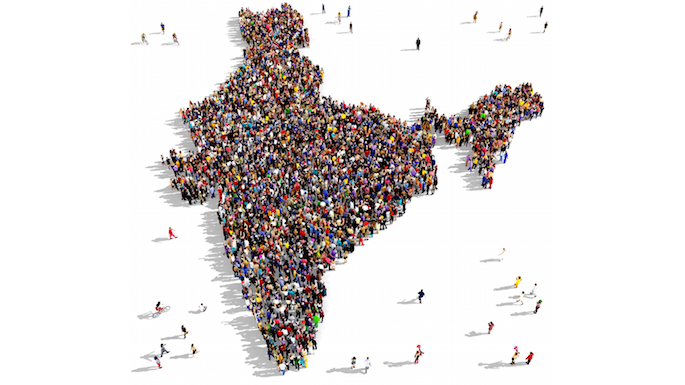
Population explosion is one of the greatest contributors to climate change, he said, adding that nature trove Arunachal Pradesh, spread in 83,743 sqkm with about 69,00 sqkm reserve and community forest, offers very little land for expansion though population density is only 27 per sqkm. But unmindful growth continues without giving any second thought to it.
With polygamy still in practice, there is neither any control on number of marriage nor on number of off springs. When there are many wives, many building will be built, followed by buildings for children. Cultivation would follow to meet food requirements. Hills will have to be leveled & trees felled to disturb the nature to make space for houses and cultivation. Who bothers about the impact, he questioned?
Moreover, none cannot deny that population explosion also contributes to unethical practices, he said with conviction, adding the question of employment is the next essential requirement. With hardly any large industry, where is the scope for employment. Can any Govt offer jobs to all its citizens? If no, the only scope is self-employment for which the GoAP, led by Chief Minister Pema Khandu has already launched many schemes with incentives.
This thinly populated Himalayan state is in an advantageous position to set an exemplary trend for others to emulate, he opined and advocated evolving binding rules for elected leaders or those who intend to fight election to set things right. He suggested:
1) Polygamy practice, against which All Arunachal Pradesh Women Society has been spearheading movement, should be totally banned legally; 2) total ban on tree felling; 3) restriction on hill cutting; 4) self-employment to be a family practice.
The civil society being the worst sufferers should espouse such restrictions first. With check of population growth many of its direct effects would disappear to benefit the society. With unused land and hills at the possession of every Arunachalee, what is the use of yeh mera pahad, yeh tera pahad rhetoric? Why not make the hills productive through committed hard work?
He is right as this state offers very suitable climatic conditions for agri-horticulture cultivation and tops in kiwi production, leads in quality orange and large size cardamom cultivation.
This only reminds Russian philosopher, writer and novelist Leo Tolstoy who wrote: How much land does a man require? The protagonist of his short story, a peasant named Pahom, in his last for land forfeits everything, including his life to be buried in a six feet grave. Does it not mean six feet land is ultimate requirement?
Multi-storied structures are springing up in the Capital Complex, particularly within space of the Govt quarters overlooking the fact that Arunachal Pradesh is located in zone-V seismic prone area.
The advice of doyen of Indian geology Prof K S Valdiya, who has apprised the legislators in assembly complex once on the dire necessity of building codes, is a forgotten chapter.
Everyone seems to be in cutthroat competition to occupy any available space, justifying the common saying: Civilizations sprang up and vanished for jaru aur zamin (women and land).
“If land was the reason for most of the wars fought in history, Mahabharat between the Kauravas and the Pandavas neither was an exception nor the mission to search land in Arunachal Pradesh would ever end.
“Can there be development without land? The nations which made the best use of their land resources became economically powerful across the globe. But there is hardly any land in the Capital Complex without any owner. Either a board or some bamboo clamps identifying ownership would draw attention, if one looks in any direction in the state capital.
I would like to recall HD Deve Gowda, who was the first PM to tour the NE at a stretch for six days in October 1996. At the end of this tour, he had announced during a press meet in Raj Bhawan mandatory earmarking of 10% of every GoI department for development, renamed now as non-lapsable central pool of resources (NLCPR).
On my repeated question about the fate of proposed airport, glaring at me with annoyance, he had quipped: “Tum bahut badmash ho... Why don’t you ask your state Govt to provide land? I can provide fund but cannot send land from Delhi. Samjha?” Alas … the airport is still a mirage!
“Should we stop living in fear of pralaya (destruction of the universe)?” has a replay from Rahul Dev Burman’s meaningful number Kal kya hoga kisko pata… Kal kya hoga kal kibaat; aaj kyon na jiya? (Kasme Vaade, 1978).
Why not strike a golden mean between development and conservation for the Mother Earth for our prolonged survival? – is a fundamental question for every Arunachalee to ponder!


 20