
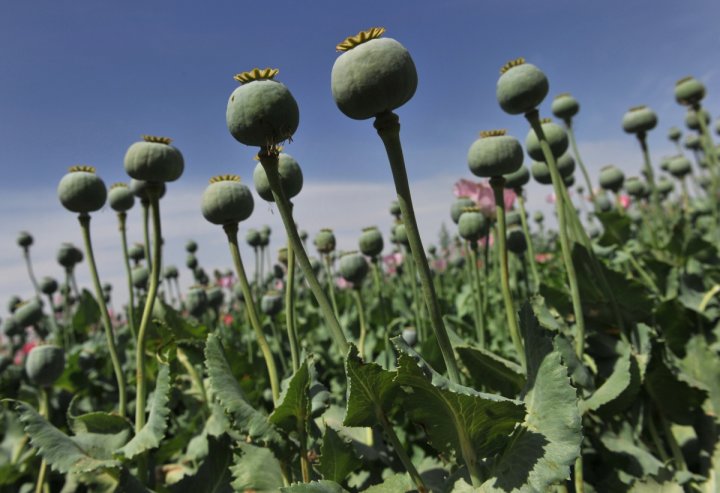
Drug menace posing serious threat
BKIVV anti-drug drive
Successful: Prof Sahoo
The Barhma Kumari Ishwariya Viswa Vidyalaya (BKIVV) due to its proven record, has been engaged in 16 districts of 16 states by respective Govt with various supports, to counsel drug addicts to bring them normal life, said its senior faculty Prof. Jayadeba Sahoo today.
Responding to a question during an event in Itanagar unit here on Saturday, he said that the BKIVV team has been successfully conducting anti-drug campaign from Anjaw district HQs Hawai to Itanagar for last many years and its results have been very satisfactory. The campaign is a continuing process, he added.
By Pradeep Kumar
ITANAGAR, Aug 25: Arunachal Pradesh Govt should take up eradication of fast flourishing drug cultivation and use of opium and its by-products besides cannabis to save the people, particularly younger generations.
It may be mentioned here that Logding, Tirap & Changlang, located along Myanmar, Namsai, Lohit, Anjaw, Upper Subansiri, West Kameng districts besides Siang and Dibang belts are totally infected by drug abuse.
The excise and narcotic department has a very vital and important role to play as drug menace encompassing terrorism, trafficking beyond birders, particularly from the infamous Golden Triangle in Myanmar, has been posing serious threat to national security, particularly to the younger generation of this state’s tribal society.
Deputy Chief Minister Chowna Mein, in his 2018-19 budget, had proposed to earmark an initial sum of Rs 18 crore to be administered through a society of DCs of Eastern Division under East divisional commissioner for specific targeted intervention in opium affected districts through an integrated strategy for rehabilitation, counseling, and medical intervention.
He had also proposed Rs 14 crore to set up new drug de-addiction centres at Longding, Yupia, Hayuliang, and for running the existing centres at Pasighat, Lathau, Bordumsa, Tezu and Khonsa aimed at creating facilities to deal with drug menace challenges and rehabilitate the addicts. His proposal also included evolving a policy to prevent illegal poppy cultivation and alternative livelihood to discourage people from opium and drug addiction. Have these allocated funds been utilised for its proposed purpose?
However, taking cognizance of the serious situation, the state Govt had appointed highly experienced officer of the department as nodal officer of state narcotic cell under NDPS Act, 1985, as approved by the governor, in November 2016 to take up eradication activities on mission mode.
What are the activities conducted by the department – how many cases have been registered by the cell, how many druggists and drug peddlers arrested so far are relevant questions for the top bureaucrats of the department to reply. Regrettably, the replies to above questions would be almost negative as hardly any support, including staff and office, has been given to the executing officer.
However, according to my information, state narcotic cell nodal officer Oli Koyu had convinced high level national governing body of Narcotic Funds for control of drug abuse twice in recent past to win first project under NFCDA envisioned section 7 of NDPS Act, 1985 to provide alternative livelihood to opium cultivators. This being the first such project in India, chief secretary Satya Gopal had lauded Oil’s initiative.
In such case, has the excise and narcotic department planned activities to eradicate the killing drug menace and the quantum of fund earmarked for such activities – is the most relevant question. According to highly placed sources, there is no fund for such activities for which any anti-drug campaign or activity is officially not possible. It is altogether different that some NOGs are very active in eradicating any form of drug from the society to save the GenNext.
Various narcotic drugs and psychotropic substances have been making inroads into the state from Golden Triangle and China is a known fact. Such activity dates back to 1998 when Changlang DC Y D Thongchi had seized 99 kg of charas sending a shock wave across India.
However, Namsai district had inked a record this year by destroying opium plants of around 3,000 acres, according to Guwalior-based Central Bureau of Narcotic (CBN). However, record includes destruction of 235 hectares in Mimi, Emphum, Kherem Namgo & Namliang; 215 hectares in Mabira, Tengapani, Emphum, Namgo, Empong & Momong; 350 hectares in Namgo, Emphum, & Empong; 205 hectares in Empong, Lungkha, Inju & Insa; and 205 hectares in Lungka, Inju and Insa on different dates by CBN officers with support of Oli-headed state narcotic cell under the direct supervision of Namsai DC R K Sharma and support of many NGO representatives.
A CBN officer from Himachal Pradesh, while informing this, had lauded Deputy Chief Minister Chowna Mein for his whole hearted support and chief CS Gopal for his initiative to direct state officers to work with commitment to eradicate the killer drug from the state.
It would be worth mentioning here that Singhphos have lost one of their generations due to drug menace as highlighted by me in mid 90’s.


 20
