
By Staff Reporter
BANGKOK (Thailand), Nov 03: The International Federation of Journalists (IFJ) Asia Pacific has expressed concern over growing digital media challenges in the region during its ongoing digital working group three-day workshop here while focusing on media situation of Asia Pacific region relating to digital challenges and strengthening of union activities.
The inaugural session ted on Friday dwelt at length on media issues and Regional Corporation of Southeast Asia Journalists Union (SEAJU). IFJ Asia Pacific director Jane Worthington briefing on digital ecosystem remarked that mass redundancy in media organisations is one the greatest challenges in the digital media organizations across the globe.
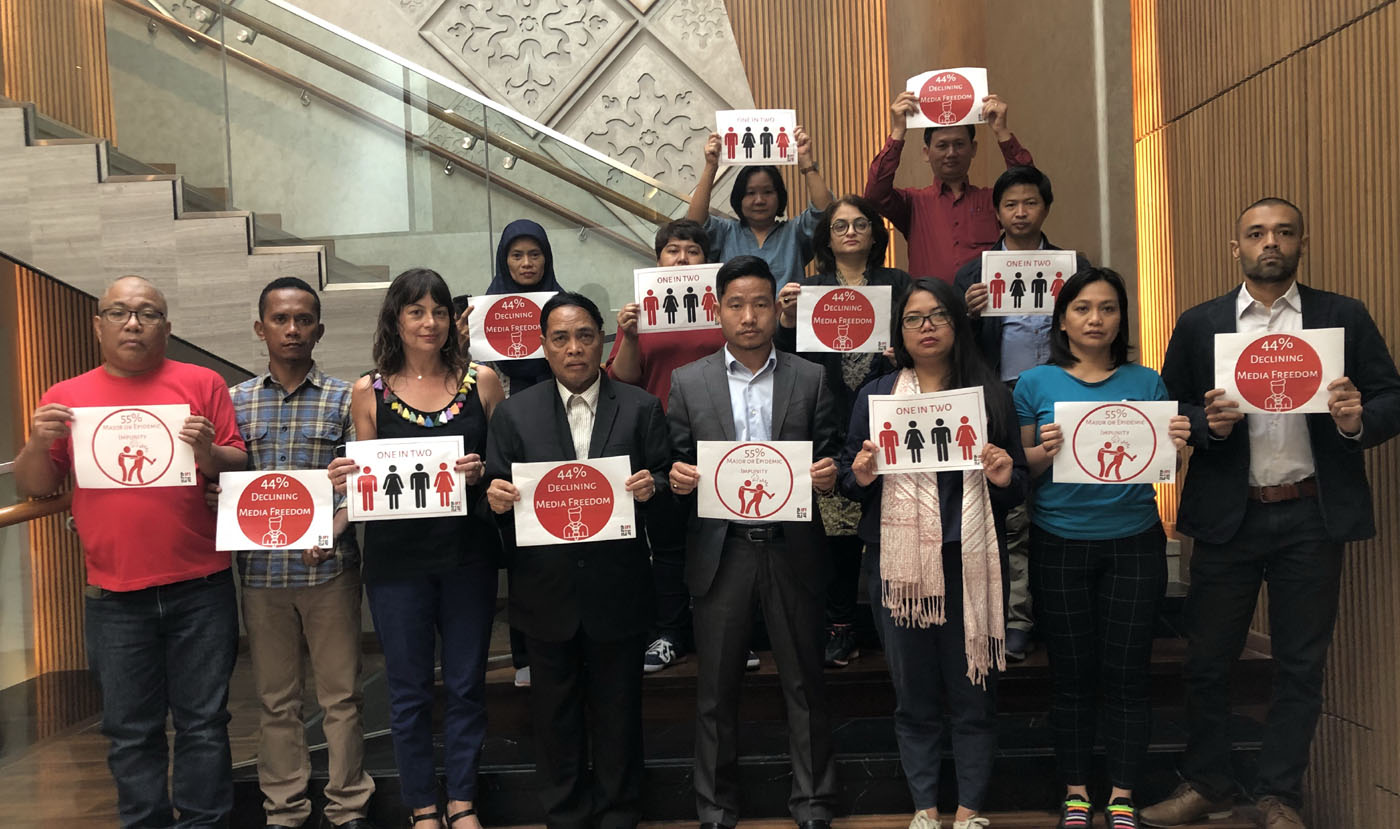
The members from different nations observed International Day to end impunity for crimes against journalists on the sideline of workshop on Friday.
“Working condition is primary threat for journalists and job security is challenging”, Worthington said, and sought technical solution to challenges while sharing ideas to help IFJ inform to strengthen and equip to tackle digital relation situation.
“Technology platforms have become publishers in a short space of time. Newsrooms reach larger audience than ever before through new platforms but at the cost of identity, branding and necessary audience data,” she said, adding: “Social platforms are driving change and shaping journalism in new ways”
Representatives from Australia, Pakistan, Sri Lanka, India, Bangladesh, Myanmar, Thailand, Philippines, Cambodia, Indonesia, Malaysia, Hong Kong and Timor Leste attended the workshop.
Representing Indian Journalists Union (IJU), Arunachal Pradesh Union of Working Journalists president Amar Sangno highlighted media situation of India, particularly digital media industries and repressive policies of Govt against media to curb freedom press.
Justin Molito of Writers Guild of America East USA, as resource person, through power point highlighted how union changes or adapts approaches to building labour power in future.
On youth involvement in union activities in digital media, Ratna Ariyant of Indonesia suggested encouraging young journalists to be leaders by providing them services relevant to their needs particularly multimedia training and strengthening global cooperation. Online/virtual meeting could be significant instead of physical meeting, Ratna added.
Potential youth could be developed as trade union leader by involving them in decision-making process, Michelle Bellino of Phillipines observed on trade union movement.
Hong Kong Journalists Association president & Editor of Citizen News, Chris Yeung highlighted media atmosphere in Hong Kong by pinpointing ‘one nation two systems’ as Hong Kong is part of China. “Youths are extremely busy these days, it is difficult to find young people join union,” he said.
Gigital impact on traditional media in Philippines has led to redundancy of journalists across the country, Nonoy Espina said.


 20
