
GoAP heralds new tourism era
Arunachal Pradesh has risen from 3 lakh to 9 lakh in the last six years, Khandu has informed on 22.09.18 at Jullang. However, formation of a robust tourism policy involving ‘Team Arunachal’ to make the state as one of the best global tourist destinations is visible.
When Union Tourism Ministry has declared 2018 as ‘The Year of Adventure Tourism’, Khandu had flagged off ‘Rally of Arunachal-2018 involving Federation of the Motorsports Clubs of India (MRF FMSCI), Indian National Rally Championships to promote adventure tourism & motor sports, Tourist Police and Mobile App – Arunachal Suraksha, a brainchild of DGP SBK Singh, on Nov 2.
Liromoba MLA Nyamar Karbak had flagged off first edition of Arunachal Cup-2018, an R6 National Level Rafting Championship from Yomgo River here on 25.10.18, organized by Arunachal Water Sports Association (AWSA) in collaboration with state’s sports and youth affairs department to promote adventure tourism and boost inflow of domestic and international tourists.
By Pradeep Kumar
ITANAGAR, Nov 06: The maiden MoU signed by the state Govt with Entertainment Society of Goa (ESG) of Goa to hold an International Tribal Film Festival at Itanagar in January next deserves appreciation for Chief Pema Khandu.
ESG annually holds globally recognized International Film Festival of India (IFFI) which has made Goa country’s world-class international entertainment nerve-centre.
Sun-soaked Goa, rendezvous of East and West, where Indian culture intertwines with Portuguese influences left over from a 500-year occupation despite being India’s smallest state has many specialities to draw global attention. Known as tourist paradise for its natural scenery, unique beaches and cultural diversity, Goa’s economic growth is driven by the strong performance of industrial sectors including mining, tourism and pharmaceuticals.
If Goa could, why not Arunachal?
Bounded by Arabian Sea in the west its beaches have long served as a magnet for serene hedonists. The prevailing tourist-centric scene in the north with an international flair has been skewing more hip than hippie. Unspoiled stretches of sand in south is an escape from large resorts. Temples, mosques and wildlife sanctuaries provide diversions from the beach. Goa stands 6th in top 10 Nightlife cities in the world in National Geographic Travel and Patnem beach in Palolem stands 3rd in CNN Travel’s top 20 beaches in Asia. Water sports, like jet-skiing, parasailing, banana boat rides, water scooter rides in Baga and Calangute beaches, world heritage architecture, rich flora and fauna as a biodiversity hotspot are biggest tourist attractions; Goa’s rock art engravings exhibit earliest traces of human life in India. It has India’s highest per capita GDP, ranked the ‘best placed state’ by 11th Finance Commission” for its infrastructure and ranked on top for the ‘best quality of life’ in India by the National Commission on Population based on 12 indicators including infrastructures.
Goa has a well-developed social, physical and industrial infrastructure and virtual connectivity. It has an international airport that is in line with its importance as a globally-recognised leisure destination. Tourist arrivals during January to December 2017 on the basis of e-tourist visas was recorded to be 133,798 besides 851,048 foreign tourists from over 141 countries, about 12% of India’s foreign tourist arrivals. However, total tourists 31,58,566 – 26,77,559 (Indians) & 4,81,007 (foreigners) arrived till June last.
Knowing specialties is more important at this juncture for GoAP as sate’s unique culture and diversity make it a land of unlimited opportunities, which I described as ‘Land of Indra Dhansuh’ while sensitizing all ranks of police Rashtrapati Bhawan on NE uniqueness on 09.09.18..
The GoAP should incorporate ‘Impact tourism’, community and tourist-centred approach by leveraging tourism to help deliver sustainable community infrastructure. It gives tourists an authentic experience of local culture and traditions while helping the community – and both these objectives are aligned with evolving targets of Paris Agreement and the UN’s Sustainable Development Goals. Impact tourism leads to sustainable rural development and provides livelihood opportunities for rural communities. It is a win-win situation for all stakeholders. Its potential is immense.
In 2016, India was visited by 9 million tourists. When looked at in isolation, that seems a large number – but when compared with, say, the city of Barcelona, which received 8 million tourists last year, one begins to wonder why a country with 29 states and 4,000 cities managed to attract so few foreign travellers. The secret to enabling this growth is hidden in India’s 600,000 villages, which together represent an ocean of heritage, culture and experiences waiting to be explored. Yet to unlock the hidden potential of India’s villages, one needs to approach through the lens of impact tourism.
The village-based impact tourism model can boost tourism by $25 billion by bringing 15 million extra tourists to villages alone, creating 100,000 village-level entrepreneurs in the process. Local state governments should work hand-in-hand with social organisations to identify key development issues in their villages, and then use the impact tourism model to help develop these communities while promoting them as tourist destinations. This would achieve two objectives at once: giving tourists an experience and memories to last for a lifetime, while providing villagers with opportunities to improve their livelihoods, according to World Travel & Tourism Council.
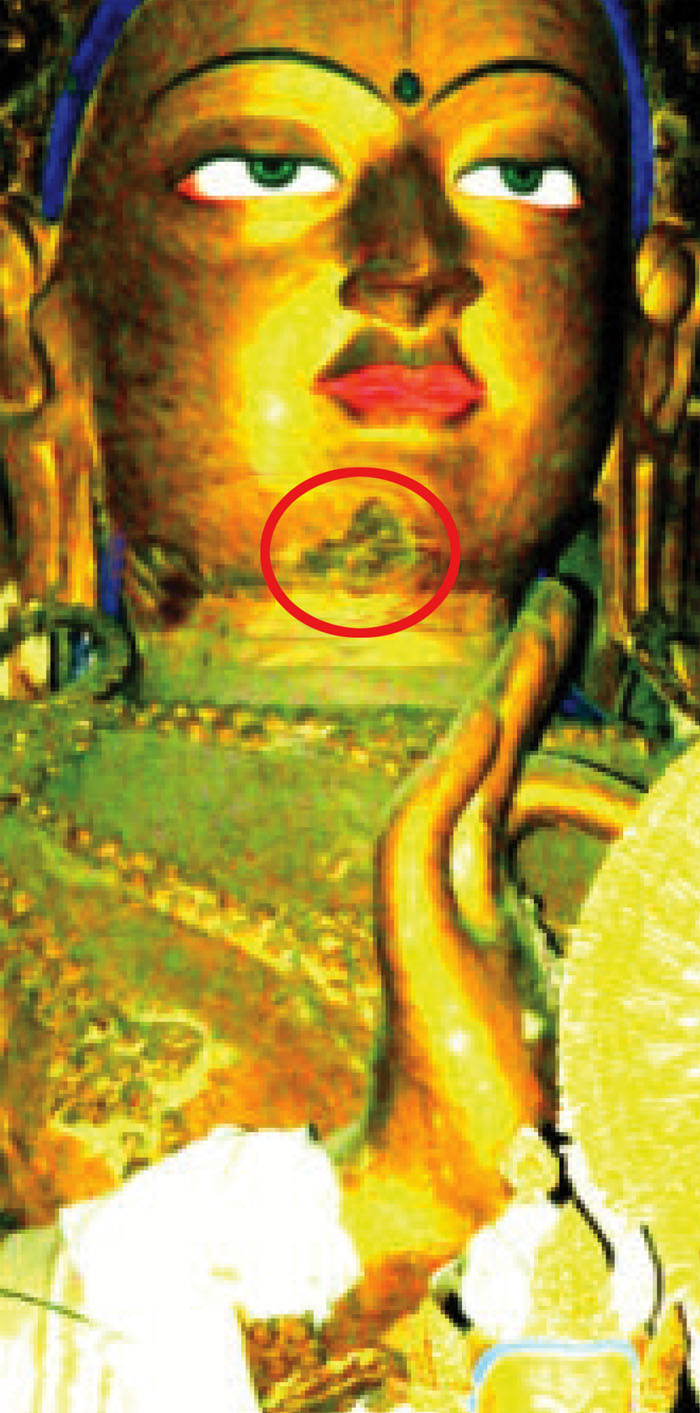
Moreover, Arunachal, one of the 12 biodiversity hostspots of the world, is also known as ‘Land of Festival’. Thus, state’s tourism website should clearly project all festivals & religious monuments, like 450-year-old Tawang Monastery with 27-feet-tall imposing golden Buddha in meditating posture, built by Merak Lama Lodre Gyasto in 1680-1681 to fulfill wishes of 5th Dalai Lama, biggest in the world after Lhasa; over 700-year-old Tserteng Gompa located in Lumpo village of Zemithang circle of Tawang district, whose 15-feet tall statue of Lord Jowa (other name of Lord Buddha) made up of brass with gold coat all over bore the brunt of 1962 Chinese aggression. A bullet shot by a Chinese soldier had hit the statue’s chin, failed to pierce it but hit the rock wall during 1962 Chinese aggression. The soldier had fainted inside the Gonpa premises while others had fled away; Gorsam Chorten (stupa), one of four in the world, whose door opens once in every 12 years for the believers to pay their obeisance; Buddhist monastery at Motongsa or Kongmu, located in inaccessible jungle along Jairampur-Pagsau Pass route in ‘Patkai Bum’ ranges near Myanmar border, mystic land Pemako known as Buddhist Pure Land, Parshuram Kund in Lohit River, Malinithan in Likabali, Tama Chung hills in Upper Subansiri where 2J&K rifleman Shere Thapa had killed about 180 PLA jawans during 1962 Chinese aggression, Dong in Anjaw district where sun ray touches earth first.
India’s only Hornbill sanctuary in Eagle Nest Wildlife Sanctuary in Eat Kameng and unique flying squirrel found in Upper Saing, to name a few.


 20
