
IGNOU expanding through postal services
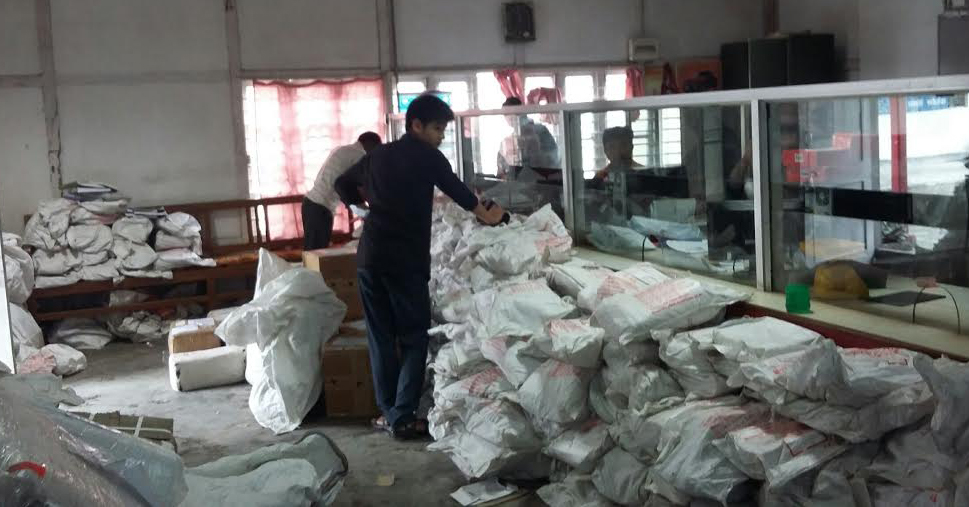
Bundles of books staked all over occupying almost entire inside of Naharlagun post office with hardly any space to walk left me flabbergasted. How such huge quantities of materials being received in this present days when people being internet-mobile savvy were turning their faced against PO, I wondered?
Indian post office set up in 1837 as postal system developed into an extensive, dependable and robust network providing connectivity to almost all parts of India, Burma, the Straits Settlements and other areas controlled by the British East India Company (EIC). Based on the model postal system introduced in England by reformer Rowland Hill, efficient postal services were provided at a low cost and enabled smooth commercial, military and administrative functioning of EIC and its successor, the British Raj.
After India achieved independence in 1947, Indian postal service continues to function on a countrywide basis and continuing to provide many valuable, low cost services to the masses. The PO has always been serving in India remote areas, and intricately woven into day-to-day life of people. This unique instrument of mass communication with widespread network of POs has its presence in NE too.
Composite North East Postal Circle was bifurcated into Assam & NE circles on 28.6.88. With its HQs located at Shillong under administrative control of Chief Postmaster General, it covers Arunachal Pradesh, Manipur, Meghalaya, Mizoram, Nagaland and Tripura with seven postal divisions and one postal civil wing division besides two functional units – postal stores depot at Silchar and returned letter office at Shillong. The NE circle on 31.03.11 had a network of 2912 POs, each PO serving on an average a population of 4,710 spread in 60.25 sqkm area.
Arunachal Pradesh Postal Division was set up in early 70’s with one head PO at Itanagar (whose foundation stone was laid by then Union MoS (Communication & IT) Sachin Pilot on 02.02.10) and 48 departmental sub-POs spread across the state and 250 branch POs, primarily located in rural areas to cover this hilly state. The postal division is headed by the Director Postal Services (DPS) located at Itanagar.
Postal services, from ‘Dak runner’ of NEFA days to present day ‘Cycle runner’, have undergone numerous revolutionary process while carving a niche for itself in the hearts of the masses. Postal services have continued to maintain its demanding roles despite present time gaining ‘IT Age’ sobriquet due to multi-faceted development.
A postal staff, on inquiry, identified the packets as IGNOU study materials for students, which were arrived here from its Delhi HQs and waiting to be delivered to its addressees. A postal staff handed over a pocket to a father. But the numbers of pockets have been rising regularly, the postal staff said, indicating the consciousness among the Arunachalees to pursue education even if through distance mode.
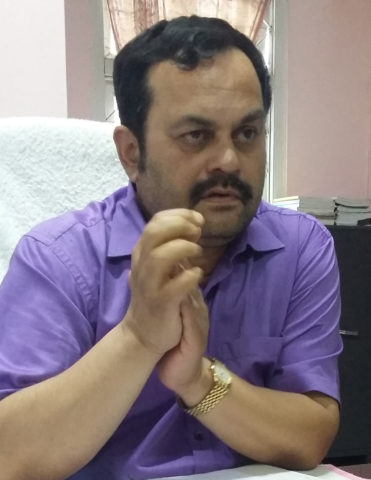
Itanagar IGNOU regional centre director Dr Sanjiv Kakoty today admitted of rising number of students which stood proximately at 10,000 now who are served by eight regular study centres and 12 programme study centres in Arunachal.
Interest in open and distant learning against conventional system and inadequate education facilitates were behind the increasing number, he reasoned but the regional centre here was awarded the best in India in 2014. Dr Kakoty served here during 22.07.06 to 21.06.07 and rejoined again on 02.11.12 to administer the centre.
The central Govt-run Indira Gandhi National Open University (IGNOU), the largest university in the world with over 4 million students, has justified its presence in this land-locked state known for communication hazard.
I was reminded of ‘Dak runner’ when offices in far-flung inaccessible areas used to wait for days for the dak runner to bring mail. The waiting time was uncertain as his journey depended upon weather. Moreover, his mail collection from an air-fed station used to be subject to arrival of Dakota or AN-32 later, depending upon weather condition and clearance by air traffic control. Noted author Y D Thongchi had once elucidated about it citing examples of his past experiences
Thongchi, Sahitya Academy awardee and second longest serving DC/collector of India after Ajit Jogi, had contributed a column – ‘Hill Dak’ – for a long time in an English daily edited me, of course at my persuasion.
Moreover, in “Reminiscence of my school life at Mariyang (1970-1975), border affairs director Dr N Lego, once wrote: “Once Otokung Ratan, dak runner of Mariyang, was observing taboo by offering sacrifice for a boil on his leg. He could not attend to his duties and paid me Rs 30 only in advance to carry the daks from Mariyang PO to Pasighat PO and collect return daks. I was quite happy for that big amount and proceeded to Pasighat. I was even happier when the boatmen at Raneghat did not take fare for ferrying me over Siang River as I was on dak duty. I handed over the daks to the post master, collected return daks and returned to Mariyang”.
NEFA days are passé now but none could deny the vital roles the postal services have been rendering even today.
The IGNOU was set up in 1985 to impart education by means of distance and open education, provide higher education opportunities, particularly to the disadvantaged segments of society, encourage, coordinate and set standards for distance and open education and strengthen human resources of India through education. Apart from teaching and research, extension and training form the mainstay of its academic activities. It also acts as a national resource centre, and serves to promote and maintain standards of distance education in India.
IGNOU hosts secretariats of SAARC Consortium on open and distance learning and the Global Mega Universities Network (GMUNET), initially supported by UNESCO.
Over 50,000 students had passed out from various NE IGNOU regional centres including Shillong regional centre alone enrolling over 9,000 students in 28 years since 1988. Shillong regional IGNOU centre, oldest in NE, was covering five states till 2001, The Telegraph, reported on 29.09.16. However, total 1,42,321 students were pursuing their studies, India Today had reported on 18.08.14.
In fact, total of 4.85 lakh students had appeared in IGNOU examinations at 850 examination centres in India and 32 centres abroad. The IGNOU then conducted examinations in 3,936 courses and total number of answer scripts was expected is 21 lakh, PTI had reported on 27.05.15. But, the IGNOU during its 30th convocation at New Delhi on 13.04.17 awarded degrees, diplomas and certificates to over 2 lakh students of 200 courses including 120 PhDs, 10 MPhils and 66 gold medals besides five cash awards to meritorious students.
IGNOU has started a decentralisation process by setting up five zones – north, south, east, west and north east. The first of the regional headquarters, catering to four southern states, Pondicherry, Andaman and Nicobar and Lakshadweep, was set up in the outskirts of Thiruvananthapuram in Kerala.


 20
