
Beyond the Horizon
By Pradeep Kumar
Ancient Greece had implemented earliest form of democracy since 508 BC approximately. Greeks had a “negative” election, i.e., each year voters, who were the male land owners, were asked to vote for the political leader or “candidates” they mostly wanted to be exiled for the next 10 years. The early ballot system was voters wrote their choice on broken pieces of pots (ostraka in Greek) and ostracize was deprived from this word. If any “candidate” received more than 6,000 votes than the one with the largest number was exiled. If no politician received 6,000 votes then they all remained. Since voters were only male land owners, the number of voters was small. If there was a fairly even spread of votes, no one would be exiled, so usually only very unpopular political leaders were ostracized or exiled.
Modern political science has questioned whether average citizens have sufficient political information to cast meaningful votes. A series of studies by the University of Michigan in 1950s and 1960s argued that voters lack a basic understanding of current issues, the liberal-conservative ideological dimension, and the relative ideological dilemma.
The government was defined by former American President Abraham Lincoln as: “Of the people, for the people and by the people”. In a democracy, a government is chosen by voting in an election: a way for an electorate to elect, i.e. choose, among several candidates for rule. In a representative democracy voting is the method by which the electorate elects its representatives in its government.
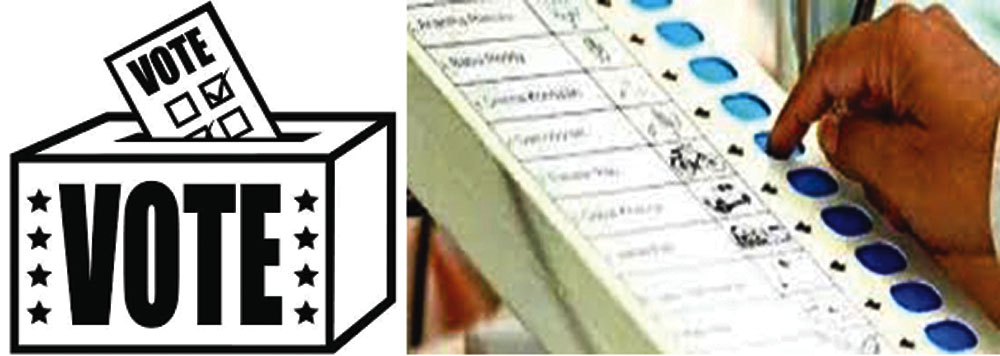
Electoral practices in India have undergone sea changes from ballot papers to EVMs. Electronic Voting Machines (EVM) have replaced paper ballots in local, state and general (parliamentary) elections in India. EVMs were used in assembly and Lok Sabha elections to implement electronic voting in part since 1999 elections and in five states in 2018. There were earlier claims regarding EVMs’ tamparability and security which have not been proved. After rulings of Delhi High Court, Supreme Court and demands from various political parties, Election Commission of India decided to introduce EVMs with voter-verified paper audit trail (VVPAT) system in 8 of 543 parliamentary constituencies as a pilot project during 2014 general elections. VVPAT) and EVMs are now used in every assembly and general election in India.
Regrettably, Arunachal Pradesh after graduating into electoral democracy, i.e., game of number, in 1975 earned the sobriquet of turncoat politics with elected leaders switching over loyalty to political parties overnight indicating ‘Umbrella’ (ruling party in Centre) as the only party. That is why state’s development got neglected beyond expectation despite being a treasure trove with huge untapped natural resources. Who should be blamed – Umbrella – or the electors? In fact, money culture is the root of all corruption in this Himalayan state. However, many leaders have made a fervent appeal to voters to shun such practice in ensuring assembly and Lok Sabha elections to elect good leaders to serve them.
Ruling BJP is totally against such unethical practice, said its general secretary Jarpum Gamlin, adding it should be discouraged by all concerned. The voters should be mindful of five minutes they devote for voting, which could derail development for five years if the adult franchise is exercised under any influence. The voters are free to decide to make or mar the future of their respective areas, he said with conviction. He lauded Arunachal Pradesh Catholic Association (APCA) for launching campaign for free and fair election on 12.08.18 by releasing a pamphlet of “Make Arunachal corruption-free state”.
“Shun money culture to elect good leaders to facilitate multi-faceted development”, said APCC president Takam Sanjoy. The very thought of cash-for-vote goes against the basic principle of democracy. “How could one think of accepting bribe,” he wondered, saying it would reverse Abrham Lincoln’s definition to: “Of the people, for the people and by the people”. “If the voters take a conscientious decision to not accept anything from any candidate to elect good leaders, none could impose their will on them,” Sanjoy added.

Voting against money would lay the foundation of dishonesty not for the voters but for the elected leaders too, said CLP leader Takam Pario, adding the voters have to unite against such unethical practice for this state to develop.
“If one takes bribe for voting, he/she would have no voice to seek development in any form from the elected leader,” said Lower Dibang Valley DCC president Etra Linggi. It is high time to give a new turn to electoral practices for exploring and exploiting state’s vast natural resources to catapult development by making every Arunachalee equal partner of state building, he added.
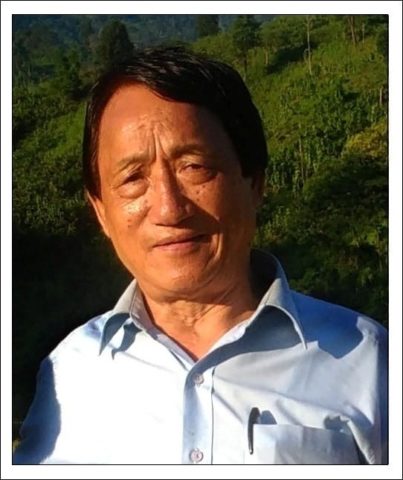
“Money culture is a menace in the state to buy votes, offers a car or bike to become leader. Arunachal politics is void of ethics and issues for which People’s Party of Arunachal (PPA), the lone regional party was formed by Bakin Pertin in September 1979 with Tomo Riba as president to take up local problems,” PPA central working committee chairman Kamen Ringu said.
“I had to resign while serving as language officer in 1979 in Shillong to join politics to serve the people which I continue even today. But my lifelong dedication has no value, but those who have money as weapon to buy votes have been successful. I am worried as the state’s future looks bleak due to money-based politics and my community (Nyishi) is not free from this menace, but I shall continue to serve with my ideology till my last breath,” he said with conviction.
“I welcome and appreciate APCA’s move of launching campaign for free and fair elections,” the veteran leader added.
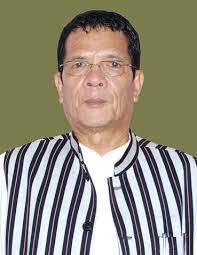
“Assailing money culture,” NPPLP leader Tanga Byaling apprehended that such practice would ruin the state. People have to unitedly stand against such illegal practice to choose good leaders and help the state to march forward. State development means people’s development, thus they have to decide,” he added.


 20

