
By Pradeep Kumar
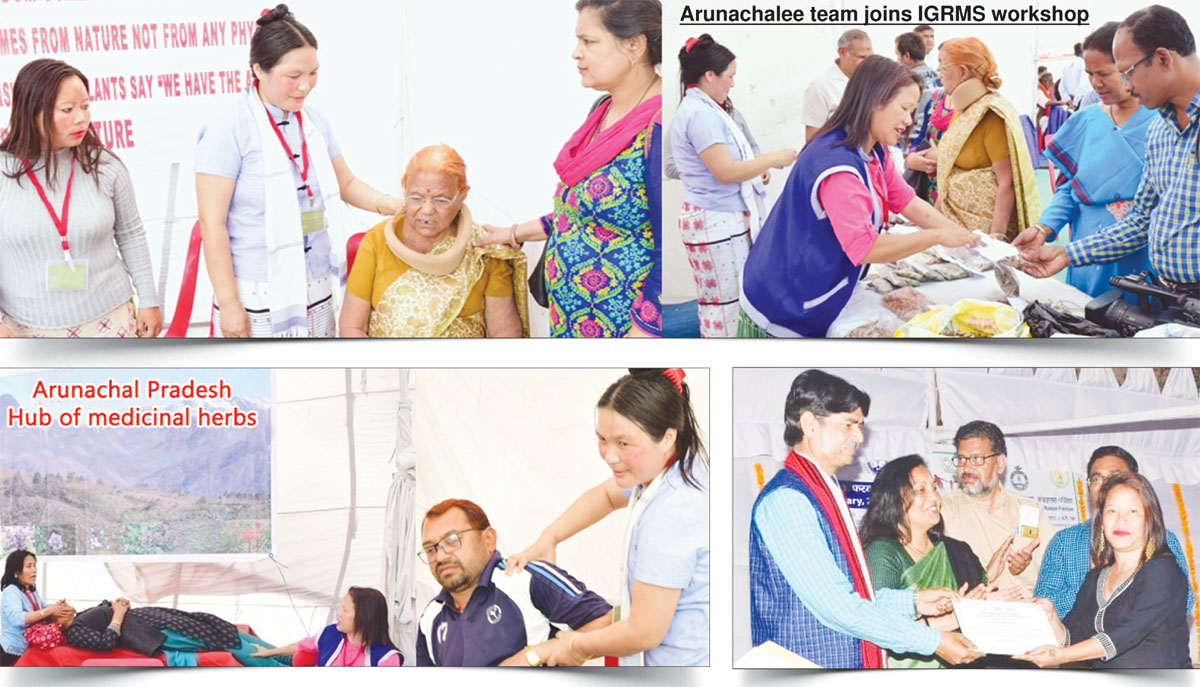
ITANAGAR, Feb 28: A six-member Arunachal team made its presence felt during ongoing five-day national workshop on “tribal healers” at Bhopal-based Indira Gandhi Rashtriya Manav Sangrahalaya (IGRMS).
Pointing out that globalization has become greatest barrier in conservation of medicinal plants; Yanung Jamoh Lego from East Siang district HQs Pasighat advocated concerted efforts by government and non-government organizations. This is the dire need of the hour to facilitate preservation of tribal medicinal plants, he said with conviction, he argued.
Besides treating patients, team leader Nyayir Riba and Tomik Doke, both from Old Deka village of Lower Siang; Ngwagisa Yobin, Nayosa Yobin from Vijoynagar of Changlang district, highlighted that numerous herbal plants grow aplenty in wild but are yet to be collected for medicinal uses for lack of a mechanism, IGRMS PRO Dr. Ashok Kumar Sharma told this daily over telephone.
While responding to queries on herbs and herbal products on display which they had taken with them from the state, they explained the use and impacts of herbs for various ailments. Arunachal is by default an organic state, they said, adding herbs are traditionally used as medicines by tribal people of the state.
Arunachal team, among 80 tribal healers from across India, took part in a brain storming discussion on “Barriers/ problems in collection, conservation and cultivation of tribal medicinal plants” as part of the workshop on Thursday which was addressed by Kerala Institute of Research Training and Development Studies for Scheduled Castes and Scheduled Tribes former director Vishwanath Nayar as chief guest.
Participation of a panel of experts was educative for the participants. Explaining importance of conservation and collection through scientific methods, Prof K.G.N. Gautam said that certain medicinal plants & herbs double as totems for tribals to hint at cultural aspect beyond just biological use of herbs
Dr. Nishant Saxena shared personal experience of contacting 54 bighas land in Dindori district of Madhya Pradesh for growing tribal medicinal plants; Manipuri healer Ashor suggested growing medicinal plants in kitchen gardens for conservation while Jadhav Guruji from Gujarat underscoring the cultural importance attached to herbs advocated protecting lands used for cultivation of medicinal plants like a sacred grove or site.
Shantilal Kharadi from Rajasthan, citing his own example, said that he was instrumental in giving a strip of land to a committee in his village where 123 crops and more than 3000 medicinal plants are grown. Such initiative could be emulated in other places, he said while Jadhav from Maharashtra informed that he has been successfully cultivating herbs in his five acres land to not only conserve but to earn too. Dr. Dinesh Kumar from Jabalpur ICMR, Himanshu Mishra from Babha Research Centre, Mumbai and Dheer Singh from IGRMS were other experts.
With tribal people migrating to urban areas for lack of basic necessities in border areas, herbal plants grown aplenty in higher altitude of hilly areas are becoming inaccessible. There are over 500 species of medicinal plants found in Arunachal Pradesh. That is why Patanjali, headed by Bab Ramdeo, has acquired 10,000 acres of leased land in Arunachal Pradesh for cultivation of aromatic and herbal plants.
Wonder drug: Coptis teeta or Mishmi tita, a small perennial herb which derives its name from her ethnic group Mishmi, locals claim, can cure almost all diseases. It is found in India only and occurs in temperate regions of five districts of Arunachal Pradesh.
However, South-Eastern Asia is known for age-old traditional systems of ndigenous medicines. India, Tibet, China and Myanmar have a rich traditional system of diagnosis of ailments and usage of medicines to treat those ailments. All these systems have their presence in NE states due to ethnic similarity and cross-culture.
India, one of the 12 bio-diversity hotspots in the world, boasts of world’s richest medicinal plant heritages. About 8,000 species of plants are used in local health cultures for human, veterinary and agriculture related applications. Around 1,800 species are systematically documented in the codified Indian systems of medicine (ISM).
Ayurveda, a holistic system of healing widely practiced across the globe, is a medicinal system developed in Indian, perhaps the oldest (2000 BC) among organized traditional medicine. Ayurveda accounts for more than 80% of user profile of traded medicinal plants. The other systems of medicine under the ISM are Unani and Siddha, which account for 52% and 57% of usage of traded medicinal plants.
Arunachal healers taking part in IGRMS event lauded
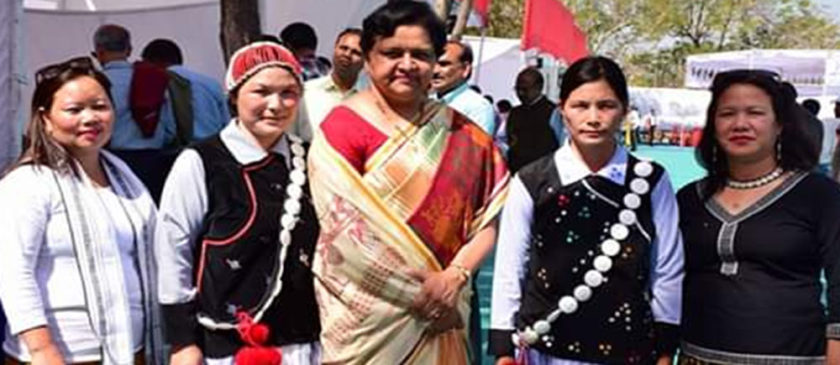
Arunachal team impresses MP additional CS Sikha Dubey
ITANAGAR: “We Arunachaees are proud of our rich cultural mosaic and traditions,” said Culture Minister Jarkar Gamlin while appreciating five-member state team taking part in five-day national workshop on ‘tribal healers’ at Bhopal-based Indira Gandhi Rashtriya Manav Sangrahalya (IGRMS) since Feb 19 last.
“I applaud them for the genuine efforts to promote our state’s traditions which deserve appreciation from all quarters, he added.
If IGRMS is unique anthropology museum engaged in popularization of rich cultural heritage of India through research and other initiatives, Arunachal Pradesh is a hub of unparallel cultures and age-old traditions, said CLP leader Takam Pario.
Appreciating the news published in February 20 edition of this about participation of an Arunachal team led by Nyayir Riba, he said that the ‘tribal healers’ are very common in almost every part of this Himalayan state who have been rendering yeoman’s services to the needy people in far-flung and remote areas.
“State’s young daughters including two from Vijaynagar, located along China border in Changlang district, taking part in this important workshop with participation from all over India is a matter of pride, he said and expressed his confidence that they would succeed in showcasing a unique aspect of our tribal society.


 20
