
By Pradeep Kumar
ITANAGAR, Apr 30: More tigers are expected to be trapped in cameras in this unexplored Himalayan state during ongoing All India Tiger Estimation-2018 (AITE). more than nine tigers trapped in 2014, wildlife DCF Umesh Kumar said.
Kumar flanked by research assistant Dr Bharat Bhusan Bhatt, while talking to this daily, disclosed that nine tigers – six in Pakke Tiger Reserve (PTR) and three in Namdapha TR – were trapped in cameras during 2014 estimation which was tips of an iceberg.
The duo gave the details as desired by PCCF (WL&BD) CWLW Dr Bipin Behari.
Besides notified tiger reserves – PTR, Kamlang TR and Nampdhapa TR -, tigers have been seen Mishmi Hills in Upper Dibang Valley district and most potential Talley Valley, Mouling National Park and Eaglenest Sanctuary for which the AITE will give conclusive evidences about their number, Kumar disclosed.
The wildlife loving NGO who work with state’s environment & forest department (E&FD) as researchers serve as true messengers of unique flora and fauna of the state, he added.
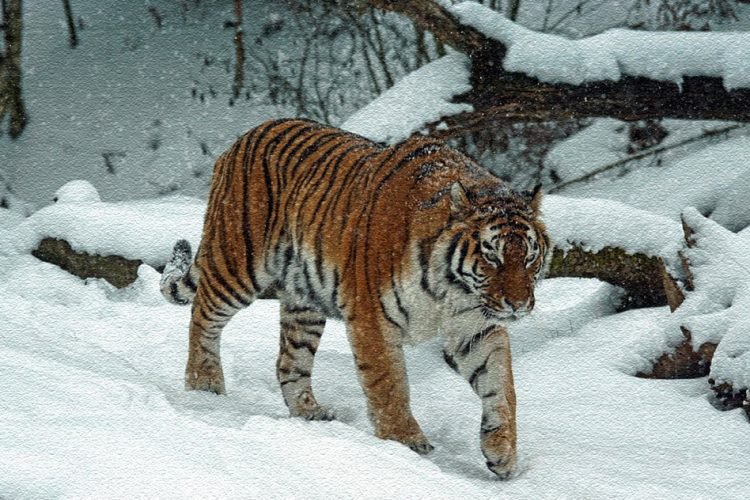
Kumar is right as researchers in 2018 had claimed presence of good numbers tigers in Dibang Wildlife Sanctuary (DWS) at an altitude of 3630 meter as found by 108 camera traps installed in 336 sqkm area with 13,761 night traps inside and outside the protected area had captured a tiger wading through thick snow in January 2017. ”
The DWS, not a designated tiger reserve, is the highest site during 2018 tiger census. As many as 11 tigers were caught on camera traps in a study during 2015 to 2017.
The paper – First Photographic Record of Tiger Presence at Higher Elevations of the Mishmi hills in the Eastern Himalayan Biodiversity Hotspot, Arunachal Pradesh – published in the journal Threatened Taxa, revealed its findings about tiger presence in the Dibang Valley. It may be mentioned that two tiger cubs were rescued near the sanctuary in 2012.
Moreover, the 2014 census report had revealed presence of 201 tigers in northeastern hills and Brahmaputra plain out which five were reported in the DWS. Researchers claim the tigers spotted in the sanctuary could be genetically different from those found in other parts of Arunachal Pradesh.
This was substantiated by Wildlife Institute of India (WII) scientist Aisho Sharma Adhikarimayum, who believed that DWS might be the highest spot where big cats have been sighted, but they may be present in even higher reaches of the mountains, like in Bhutan, where a tiger was photographed at 4,200 M in 2012.
Conservationist Anwaruddin Choudhury, the author of several reports on wildlife of Dibang Valley, who worked with Adhikarimayum, had confirmed this to Times of India.
“It is almost impossible for common people to enter PTR where tigers have been roaming freely and some animal lovers have trapped tiger while crossing Pakke River in campers and uploaded in Facebook”, said Dr Bhatt, adding “we are hopeful of finding more tigers this time in Arunachal, the only state of India where all four categories of big cats (leopard, clouded leopard, snow leopard and tiger) are found.
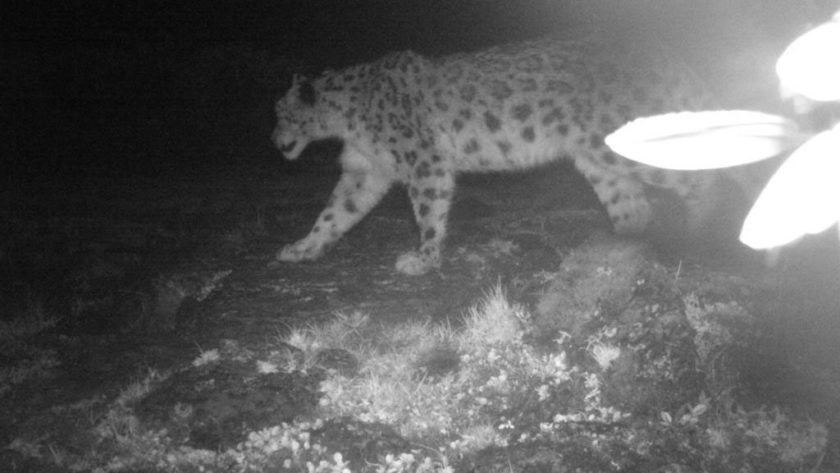
An elusive snow leopard (Panthera uncia) photographed by a camera trap in remote high-altitude Thembang Bapu community conserved areas in West Kameng district on 07.07.17 during state-wide survey by WWF-India in collaboration with state’s E&FD is the glittering proof, Dr Bhat said.
The land of the Dawn-Lit Mountains with 62% (10185.40 sqkm) of forest cover of its total geographical area (83,743 sqkm), 2.5% of the country’s geographic area, criss-crossed by perennial Kameng, Subansiri, Siang, Lohit and Trip Rivers, is ranked second among states and UTs in forest cover. India’s total forest cover in is 7, 08, 273 sqkm, which is 21.54% of the total geographical area of 3,287,263 sqkm, seventh-largest country in the world.


 20
