
Centre grants Rs 1000
Cr to tackle Fani: PM
PM Narendra Modi, while addressing an election rally in Rajasthan, said that the entire nation is with the people Odisha and Andhra Pradesh. “I took latest update from officers. I held a review meeting on Thursday and more than Rs 1000 crore was release to Govts concerned in advance immediately. NDRF, Indian Coast Guard, Army, Navy, Air Force are working with administrations. I assure the affected people that nation & Centre are with them.”
From Pradeep Kumar
CUTTACK, May 03: The strongest cyclonic storm Fani since 1999 Super Cyclone, which had left nearly 10,000 dead and devastated Odisha, is the first cyclonic storm of such severity with gusting winds and torrential rains in India’s oceanic neighbourhood in 43 years, said Indian Meteorological Department (IMD).
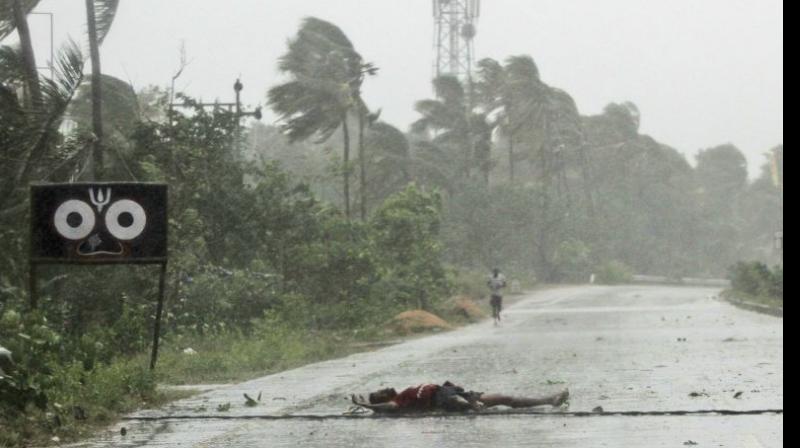
Super typhoon Fani or Category 4 hurricane, having spent days building up power in northern reaches of Bay of Bengal, with sustained winds of 240-km per hour slammed near seaside pilgrim town of Puri around 8 am Friday making already rough sea turbulent. It continued for around three hours snapped power & communication lines, submerged large areas, uprooted several trees and destroyed thatched houses including in Bhubaneswar and roads to leave a trail of devastations, state-run IMD said.
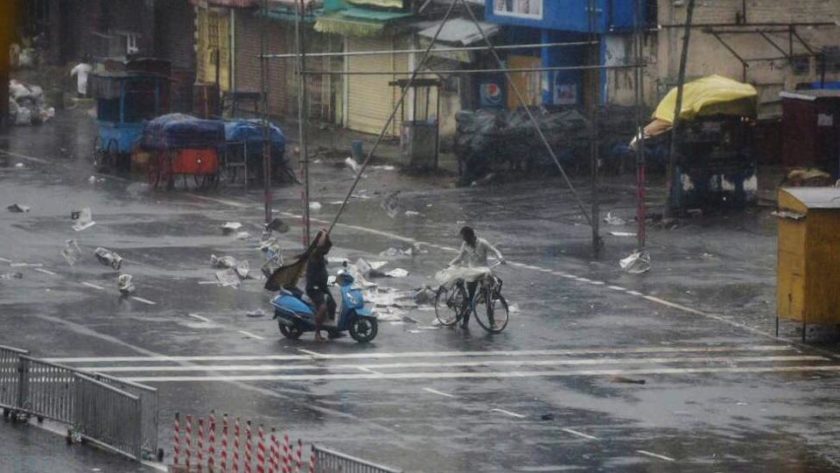
It killed at least 3 people, Odisha state special relief commissioner Bishnupada Sethi told a news agency on Friday: “I can confirm two deaths for now. One old man in one of the shelters died because of heart attack. Another person went out in the storm despite our warnings and died because a tree fell on him”. The stat Govt has allocated Rs 10 crore to face the situation, said Sethi, who has been constantly monitoring the situation.
More than 11 lakh people were evacuated from vulnerable and low-lying areas of at least 11 coastal districts of Odisha within in six hours on Thursday including more than 3 lakh & 1.3 lakh people in Ganjam & Puri districts respectively. The Army, Navy, Air Force, Coast Guard and disaster management agencies were on stand-by while NDRF teams were stationed in different parts to help the public. More than 900 cyclone shelters were set up to house evacuees. About 5,000 kitchens started operating to serve people in the shelters, according to Chief Minister Navin Pattaniak. Even the calm sea in Chandipur was violent, officials said.
About 10,000 villages in 52 towns of nine districts in Odisha were on the direct line of Fani, whose 30-km diameter eye moving fully over land passed through Cuttack, Jagatsinghpur, Kendrapara, Jajpur, Bhadrak and Balasore towards Kolkata and Bangladesh and move throughout Friday and into Saturday, IMD report said, adding it was likely to weaken from “extremely severe cyclonic storm” to a “very severe cyclonic storm” within six hours.
Many water tanks have blown off, electric poles are down, air-conditioners damaged but all patients and students of AIIMS, Bhubaneswar are safe and there is no need to worry.Union Health Ministry has promised all Odisha. “We have enough supplies, ready to support the state” – Health secretary Preeti Sudan tweeted on Friday
Hundreds of tall trees nearby by railway station here, 60-km from Puri, either crashed or got uprooted and tin or asbestos roofs of many houses were blown away as Fani passed during mid-day through Cuttack, set up in 989 CE on the bank of Mahanadi River.

Flights canceled: All flights to and from Bhubaneswar airport canceled from midnight on Thursday. Kolkata airport canceled flights from 9:30 pm on Friday, according to Union Civil Aviation Ministry. The DGCA on Thursday had issued alert and operational advisory to airlines/ operators to ensure safety of all passengers. Schools and colleges in Odisha were also shut. However, three special trains were running from Puri since Wednesday to evacuate pilgrims and tourists.
Technological advancements have helped meteorologists to predict weather patterns well in advance, and authorities have become far better at preparing for the ferocious storms and reducing casualties.
A super-cyclone battered the coast of Odisha for 30 hours in 1999, killing 10,000 people. In 2013, a mass evacuation of nearly a million people likely saved thousands of lives.
The massive loss off standing agriculture and horticulture crops, whose estimation would take time to assess, would undoubtedly cause huge losses to rural economy, a senior officer said.
Army and air force units armed with ships and helicopters were standby in Odisha, West Bengal and Andhra Pradesh. Public were advised to remain indoors, fishermen not to venture into the sea until further notice. The state administration has cancelled all leave of doctors, police personnel till May 15.
The storm is likely to reach West Bengal by 8:30 pm and Bangladesh on Saturday evening. Thus, West Bengal Chief Minister Mamta Banerjee has cancelled her all election programmes for two days to monitor the situation personally.
The Election Commission of India has granted relaxation of model code of conduct in East Godavari, Visakhapatnam, Vizianagram and Srikakulam districts for preventive and relief work because of Fani.
Besides inland flooding a major threat in India, hundreds of thousands of Bangladesh-based Rohingya refugees were ‘at risk’.
Makeshift camps containing hundreds of thousands of displaced Rohingya refugees along the Bangladesh-Myanmar border could face “massive destruction” from Fani, an aid organization has warned.
Bangladesh, a low-lying country, typically suffers flooding and damage from strong winds when tropical cyclones hit, with ramshackle conditions in the refugee camps placing residents at particular risk.
Zia Bangladesh director for aid organization CARE Choudhury said the group was preparing “to respond fast” to potential storm damage.
“The worst scenario will see massive destruction of homes, buildings, roads, electric lines, crops and more. Despite the high level of expertise the Govt and NGOs have in preparing and responding to crises, the real concern this year is for Rohingya refugees. Over one million people living in flimsy shelters, densely packed into a very fragile, hilly, exposed area. We are expecting destruction of shelters, injuries and landslides,” Choudhury said. (with agency inputs)


 20
