
By Pradeep Kumar
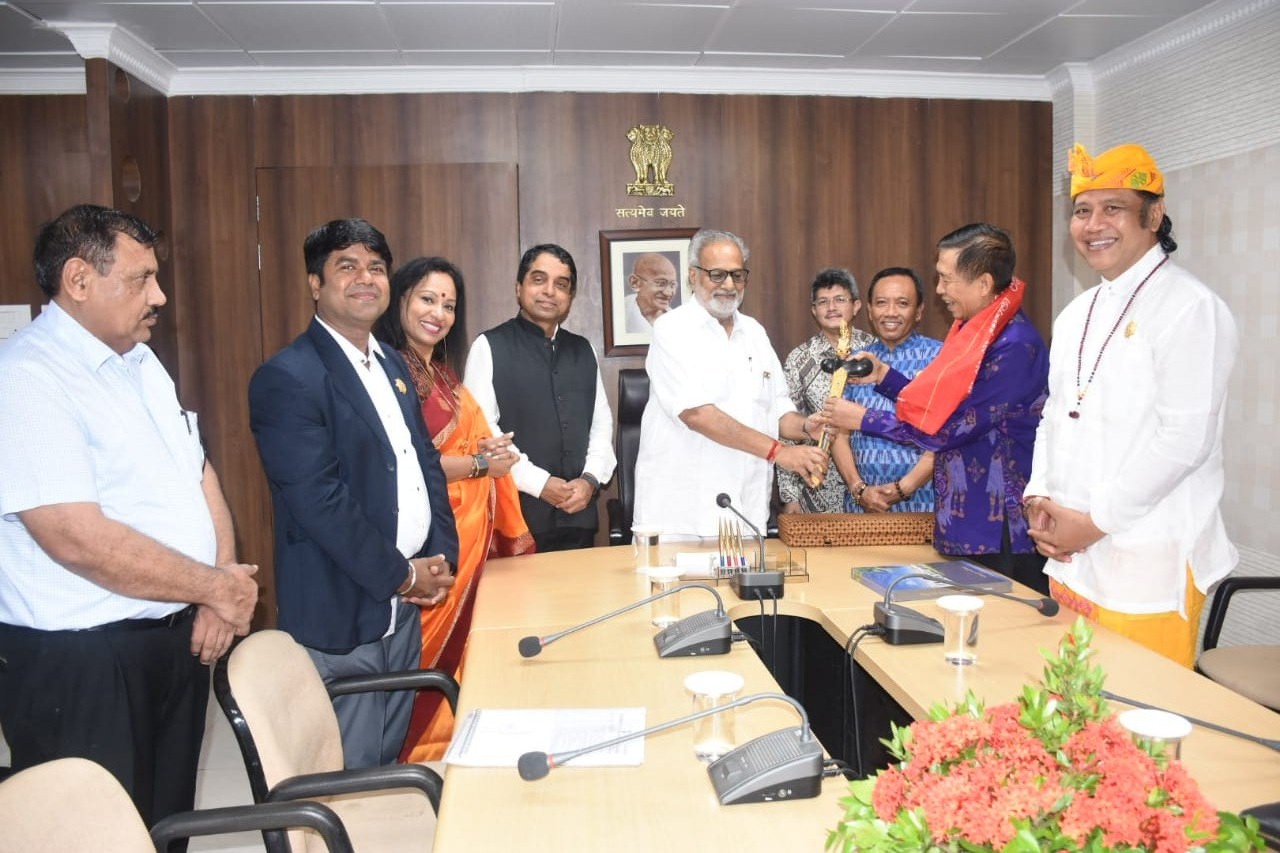
ITANAGAR, Sept 07: Gandhian Agus Indra Udayana Udayana leading an Indonesia team is in Bhubaneswar at the invitation of Odisha Govt on a cultural exchange programme.
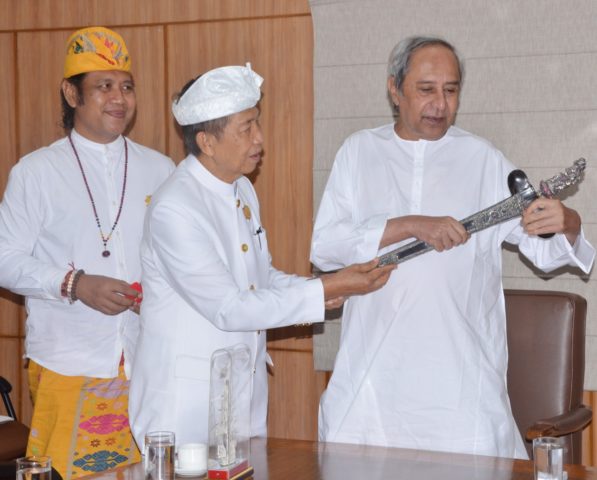
The team called on Odish Governor Ganeshi Lal and Chief Minister Naveen Patnaik and gifted an Indonesian sword to the CM.
Udayana leading an Indonesian team including yoga experts Komang Edi Susanta & Herawati Wayan and Sari Dika, in-charge of 150-year birth anniversary celebration of Mahtma Gandhi and elderly Ketut Oka had attended week-long International Youth Leadership camp, organized by National Youth Project at Kalaktang in September 2018.
“Arunachal Pradesh Govt and its people deserve appreciation for protecting and preserving their age-old rich cultural heritage,” said Gandhian Udayana had said before leaving Arunachal on 21.09.18.
“Glimpses of culture and tradition showcased beautifully in Sate Jawaharlal Nehru Museum reflect the glorious past and present of Arunachal’s tribal society. The museum is living testimony of history about life and works of Arunachlees and how they are zealously guarded. We will love to promote love showered on us by Arunachal people as state ambassador,” he said without mincing any words.
The team’s visit to Odisha revives the ancient socio-cultural and trade relations Indonesia had with then Kalinga or Odra Desha (present Odisha). Kainga had emerged as a maritime power in 1st century CE and its traders used to sail in boats to faraway South East Asian lands, like Indonesia, Bali, Java, Borneo, Sumatra and Ceylon for trading.
The Indonesian islands formed the most attractive destination for the merchants of Kalinga; they were so popular and the trade with them was so lucrative and flourishing that the islands often been collectively referred to by the Kalingan merchants as Suvarnadvipa (Island of Gold or Golden Island), according to Kalingan history, Dr. Benudhar Patra writes in “Connectivity and Beyond: Maritime Contacts of Kalinga”.
The unique Odisha festival of Boita Bandana (worshipping of boats) in October or November before the full moon, when people gather near riverbanks or the seashore and float miniature boats to cherish the ancient history their ancestors.
Ancient Kalinga epitomized valour, opulence, enterprise, adventure and pride which are symbolized by present Jagannath Temple in Puri. Lord Jagannath (Lord of the Universe), though considered a form of Vishnu, some scholars interpret hymn 10.155.3 of Rig Veda as a possible origin, but others disagree to state that it is a syncretic deity with tribal roots but considered a non-sectarian deity. The Madala Panji notes that Neela Madhav transformed into Jagannath and was worshipped alone as a unitary figure, not as the part of a triad. It is significant to note that the early epigraphic and literary sources refer only to a unitary deity Purushottam Jagannath. The tribal origin theories rely on circumstantial evidence as the hereditary priests in Jagannath tradition include non-Brahmin servitors, called Daitas. The use of wood as a construction material for the Jagannath icons may also be a tribal practice that continued when Hindus adopted prior practices and merged them with their Vedic abstractions. The Daitas are Hindu, but believed to have been the ancient tribe of Sabaras or Soras. They continue to have special privileges in the temple.
Puri Temple, originally built by Ganga King Anantavarman Codaganga (1078-1147) is a major pilgrimage destination for Hindus since 800 CE. Lord Jagannath is a part of triad along with his brother Balabhadra and sister Subhadra, whose origin has different opinions. However, annual festival Yath Yatra celebrated in June or July draws lakhs of pilgrims from across the world.
Indonesia had ancient relations with Kalinga, which too had too had relation with Arunachal Pradesh as proved from the ruins found in Malinithan archaeological site, located in foothills of Siang mountains in Likabali under Lower Siang district having uncanny similarity with Orissa architect. Archaeologists believe the temple belonged to early medieval period.


 20
