
By A O News Service
ITANAGAR, Jan 05: Kathak, one of the eight major forms of Indian classical dance, whose Indian origin according to Bary Snodgrass, traditionally attributed to traveling bards of ancient mother India, known as storytellers, is traceable to 400 BCE.
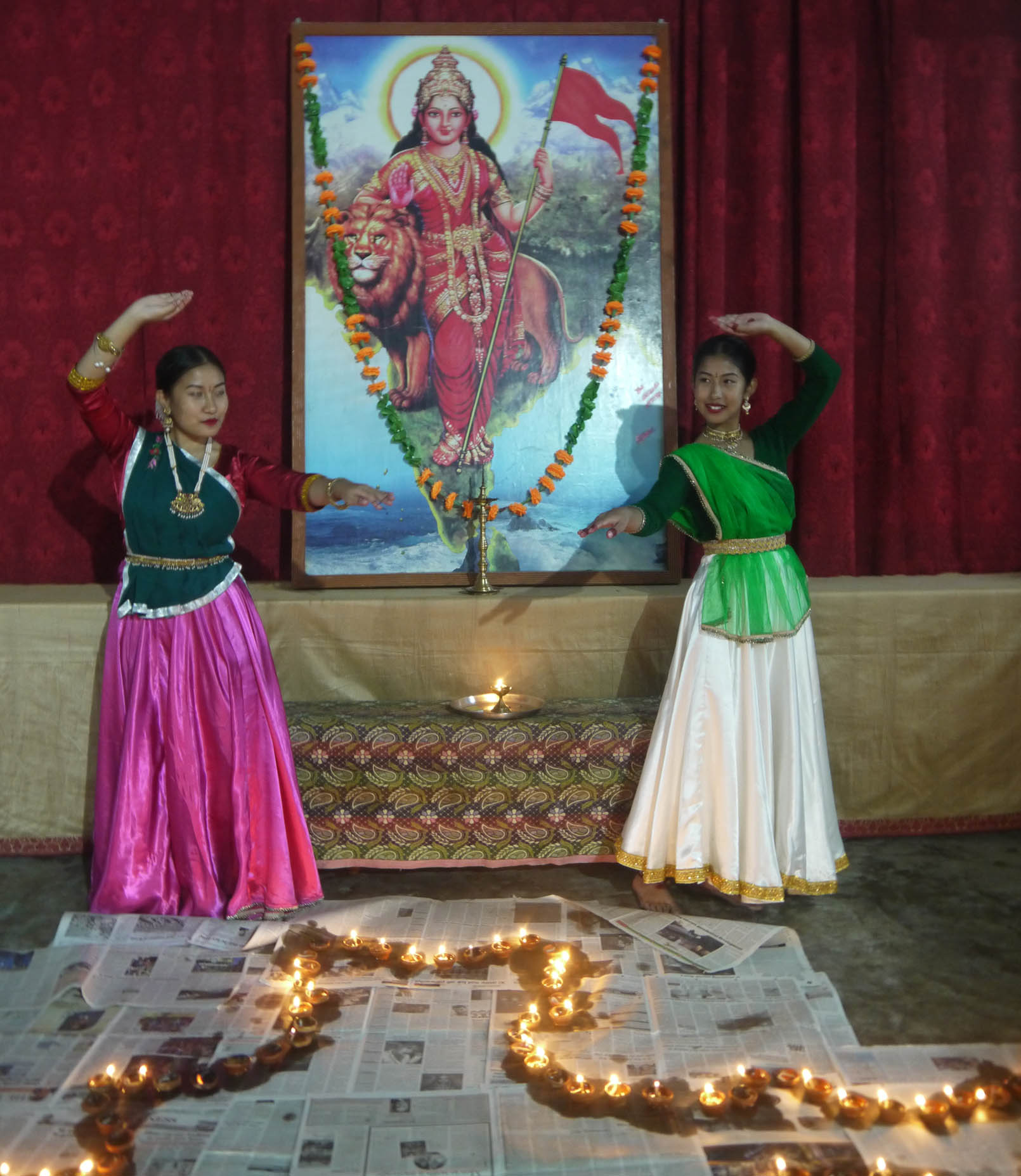
However, many Kathak dancers taught by Itanagar-based Nrityagan Dance & Music Academy (NDMA), founded by Amit Kumar Mukharjee, are springing up to leave the audience dumb founded. This was observed during Kathak dance by 25 students of 3-4 year age group of Nirjuli Vivekananda Kendra Vidyalaya (VKV) on Saturday, conducted by Dimapur-based North East Zone Cultural Center (NEZCC) in collaboration with state’s art & culture department and organized by NDMA.
These kids were taught by Mukharjee’s Guwahati-based teacher Bipul Das, discipline of globally reputed Pandit Birju Maharaj, Mukharjee’s disciple Jyoti Devi and Priyanka Devi.
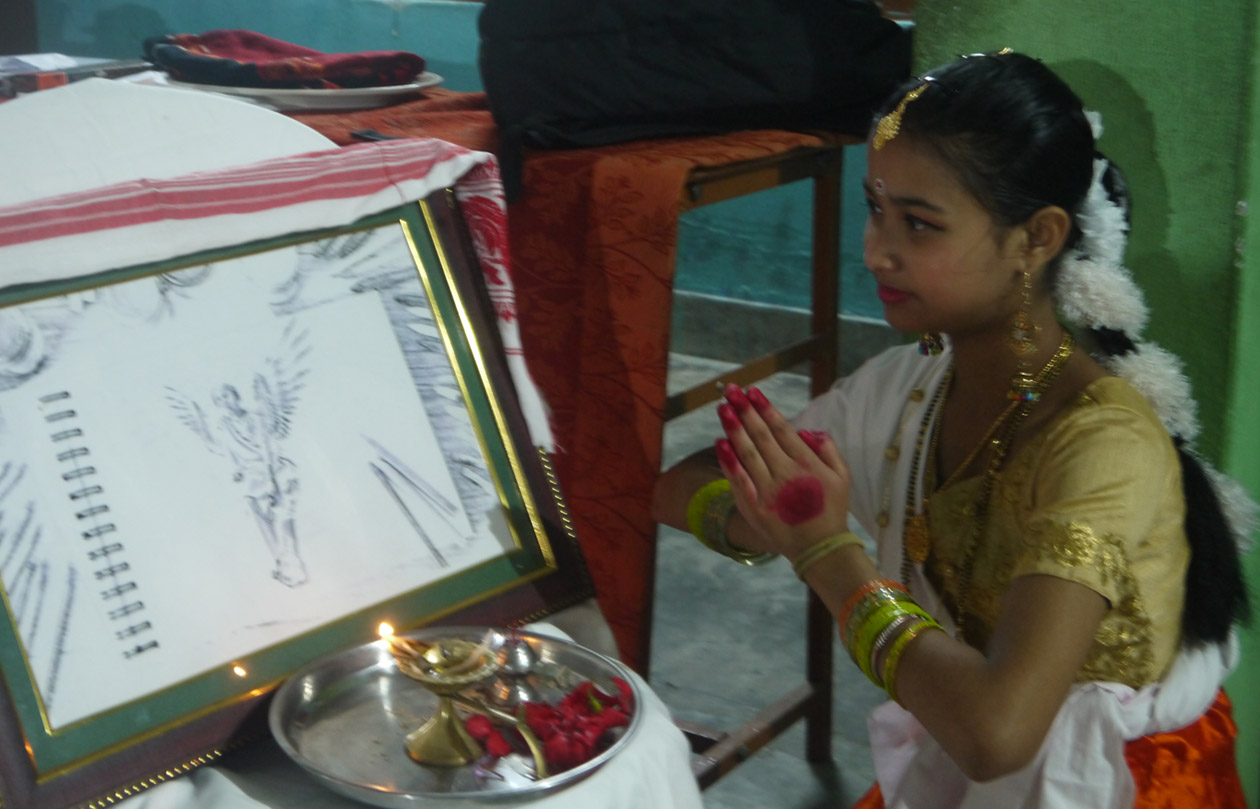
Jyoti, a class-X student and one of senior disciples to turn a teacher, and one of her students – Longjam Priyanka, a student of class-VIII, who had learnt dancing while in class-III. “I followed steps of my sister Jyoti but regular practice in particular time during morning and evening made my life disciplined. I am very happy,” she said responding to question.
Another girl Debarati Nandi, a class-VI student, who also performed, was no less either.
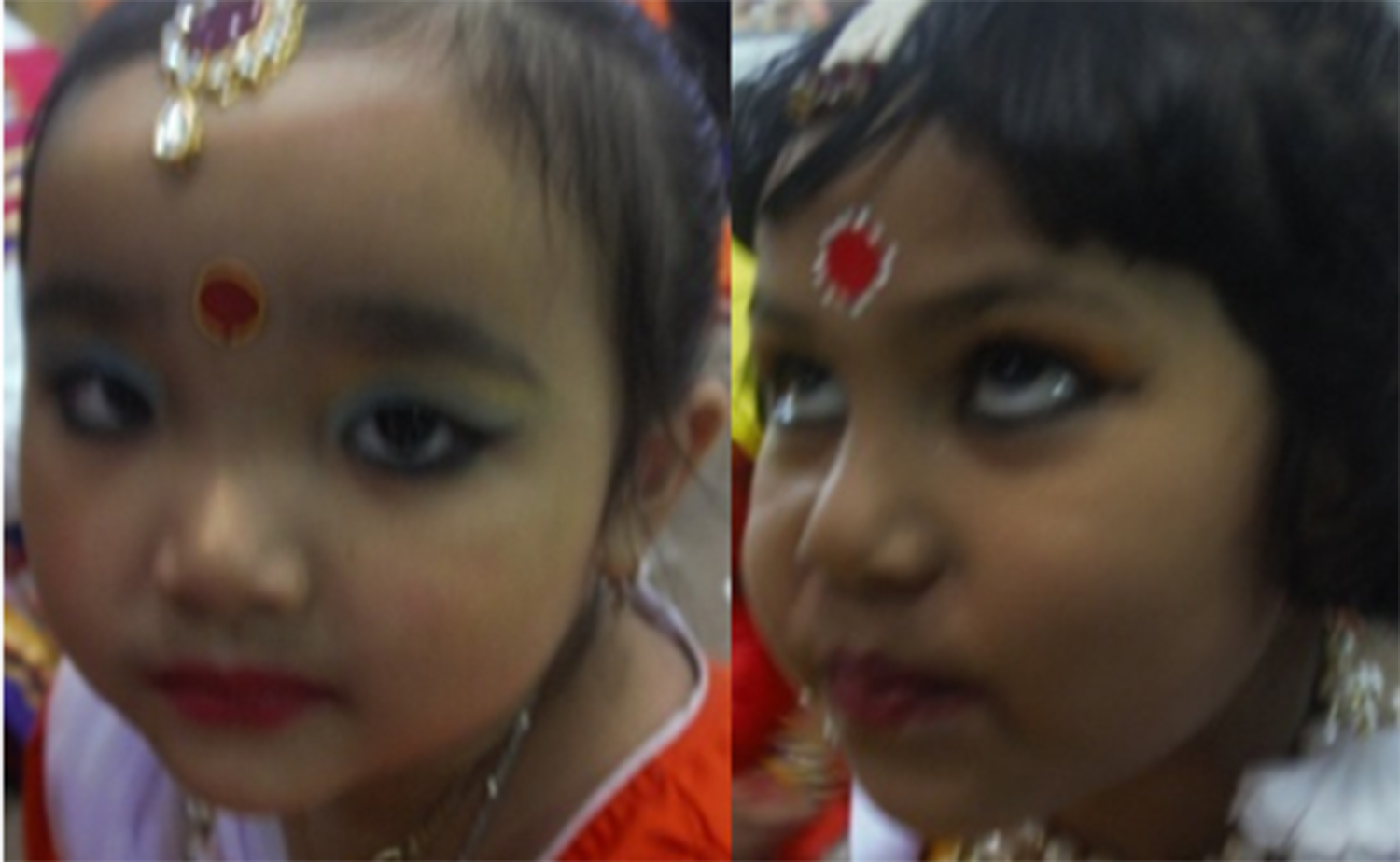
Few tiny tots were incapable of expression anything when asked by their performance was spectacular, reflecting the painstaking efforts of Mukharjee’s team in training the students.
Impressed with the performances of her students, VKV principal K K Reena said that it is unbelievable that they are trained for only 15 days.
Kathak evolved during Bhakti movement, particularly by incorporating the childhood and stories of the God Krishna besides in the courts of north Indian kingdoms. Kathak is found in three distinct forms, called gharanas, named after the cities where the Kathak dance tradition evolved – Jaipur, Banaras and Lucknow. While the Jaipur gharana focuses more on foot movements, Banaras and Lucknow gharanas focus more on facial expressions and graceful hand movements. Stylistically, the Kathak dance form emphasizes rhythmic foot movements, adorned with small bells (ghungroos), and the movement harmonized to the music.The legs and torso are generally straight, and the story is told through a developed vocabulary based on the gestures of arms and upper body movement, facial expressions, stage movements, bends and turns. The main focus of the dance becomes the eyes and the foot movements.
It transitioned, adapted and integrated the tastes of the Mughal courts in 16th and 17th century particularly Akbar, was ridiculed and declined in the colonial British era, then was reborn as India gained independence and sought to rediscover its ancient roots and a sense of national identity through the arts.


 20
