
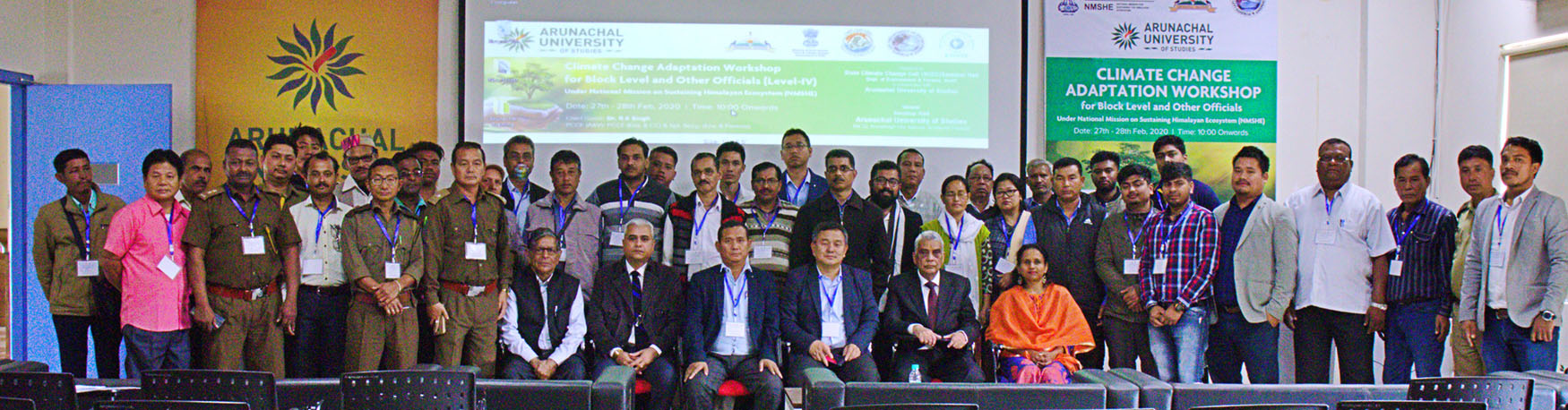
NAMSAI, Feb 27: Acknowledging impacts of climate, Arunachal University of Studies (AUS) vice chancellor Prof. O.P Sharma, in his keynote address to a two-day workshop on ‘Climate change adaptation for block level officers of Namsai district here on Friday, called for urgent steps for conservation, and adaptation for sustainable development.
The workshop is organized by State Climate Change Cell (SCCC) of environment & forests department in collaboration with AUS under National Mission on Sustaining Himalayan Ecosystem (NMSHE) and supported by Union S&T department.
Briefing about NMSHE project, its aims and objectives, its implementer D. Dohu Robin stressed on training of GoAP officers from line departments for mainstreaming climate change into development policies and future adaptation to climate change.
Officers from line departments of agriculture, horticulture & forest are trainees who would be taught about risk assessment to prepare action plan and converge various steps while making detailed project Report (DPR) on priority sectors on the basis of problem analysis.
Guwahati IIT scholar Rupam Bhaduri, during technical session, highlighted climate change science, models, its impacts, risk assessments and vulnerability besides how birds are facing impacts of climate change. He informed on how climate models could be used for climate change adaptation among communities.
Speaking on climate change impacts in Arunachal Pradesh, SCCC scientist Dr. Bhupen Mili using primary and secondary data gave evidences of climate change, like temperature fluctuation, rainfall, natural calamity incidents like landslides, floods etc. He also presented vulnerability profile of various districts developed with support of Union S&T department.
Dr. Biswajyoti Bikomiya Deori, Dr Chowlani Manpong, Dr. Rani Jha and Dr. Pallabi Borah of AUS spoke on characterizing pattern, process of alpine eco-system, land use change, climate change mitigation, climate change and agriculture etc.
The trainees would be on an exposure trip to Deobel village on Saturday to interact with local communities to understand their perception on climate change, impacts on their livelihood, and adaptation measures taken up by them. They would be giving a presentation of their field survey findings during conclusion.


 20
