
*Constitutionality of orders and actions during PR?
By Pradeep Kumar
ITANAGAR | Jun 15 | Sensitive border state of Arunachal Pradesh since it graduated to parliamentary system in 1975 is witness to politics the way chameleon changes colours to suit its surroundings.
Prem Khandu Thungon, who had facilitated formation of Congress but switched over to Janata Party to fight the 1st election to form the Govt as first chief minister, earned the sobriquet of ‘Father of turncoat politics’, according to his own admittance. The state known for turncoat politics witnessed perhaps one of the worst phase of its political history recently posing unthinkable questions to analysts.
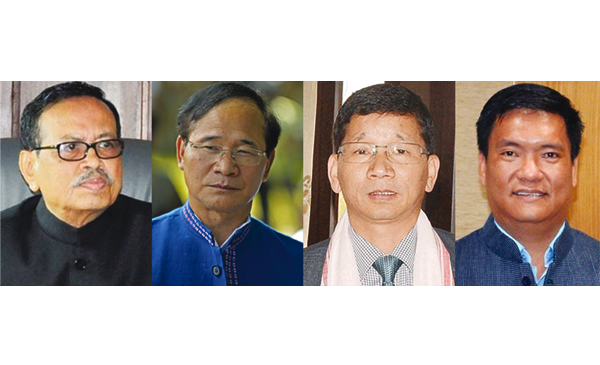
Political upheaval begun with appointment of Governor J P Rajkhowa on 12.05.15, who had preponed assembly session from 14.01.16 to 16.12.15 that led to constitutional crisis; Speaker Nabam Rebia impeached on 16.12.15 when the state witnessed the ugliest face of democracy with Ministers & MLAs shouting outside locked assembly gate; Chief Minister Nabam Tuki Govt toppled on 17.12.16; Kalikho Pul elected CM on 17.12.16; President’s Rule imposed on 26.01.16 and lifted on 19.02.16; Kalikho Pul sworn-in as CM, Supreme Court vacated its order of maintaining status quo in the state on 13.07.06 and revoked President’s Rule and declared governor’s letter advancing the assembly session as “unconstitutional”; CM Tuki took charge again to resign on 16.07.16 by proposing Pema Khandu to head the Govt; Pul allegedly committed suicide in CM’s official bungalow on 09.08.16 leaving a Hindi hand written note – Mere Vichar; 43 of 44 Congress MLAs including CM Khandu on 16.09.16 merged with the People’s Party of Arunachal (PPA), part of NEDA; 33 of 43 PPA MLAs including CM Khandu had merged with the BJP on 29.012.16 and governor was removed on 13.09.16.
However, state’s additional advocate general attached to the SC Anil Srivastav on constitutionality of orders and actions taken during President’s Rule, wrote to state’s joint secretary (administrative reforms), available with this daily, reads: “Since the SC had no occasion to pronounce upon the validity of Presidents Rule and the petitioners did not pursue WPC No. 53/2016, it logically follows that there has been no pronouncement by the SC on the validity of the orders passed by the Governor during the period of the Presidents Rule.
“All orders passed by the Governor during the period of Presidents Rule must be deemed to be valid until the same are challenged individually as being violative of some law/rule governing the action taken. In the case of “Gokaraju Rangaraju Vs State of Andhra Pradesh” decided on 15.4.1981, the SC has held that the acts of an officer or the Government are valid as long as such acts had been performed in exercise of valid power existing in them.
“When a Govt and its officers exercise power existing in them. When a Government and its officers exercise power according to the Constitution, the Law and the Rules such decision taken by them will be held to be valid even if the appointment of the officers is subsequently held to be invalid. The decisions taken by the Executive officers/Government during the period of their illegal appointment cannot be set aside automatically when their appointment is declared illegal and such decisions will have to challenged separately and individually as being violative of some constitutional or statutory provision. If all decisions taken by the Govt and its officers were to be declared invalid simply because the appointment of the Govt or its officers has been subsequently held to be invalid, there would be utter chaos and disorder in society.
“In the case above, the SC has also gone to the extent of saving the acts performed by functionaries even though subsequently their election as president, vice president, MP or MLA was subsequently declared null and void. All that is required to be satisfied during the tenure of such members is whether the acts performed by them had the sanction of law and were legally performed. The setting a side of their election or appointment does not have any effect on the decisions taken by them during the period of their appointment so long as such acts were performed as per the law and the rules. In order set aside or nullify such acts or decision, they will have to be challenged separately as being violative of the law.
“Applying the principles stated by the SC in the above mentioned case and also considering that the challenge to the imposition of the President Rule in the state was not pursued by the petitioners in WPC No. 53/2016, the reverted employees cannot claim that the orders of the Governor passed during imposition of PR must be rolled back and their officiating appointment be restored. If they are to challenge their reversion then such challenge must be made separately under the relevant service law and rules and they cannot get any benefit by virtue of the judgement of the SC dated 13.7.16. The said judgement as state above, was on a separately set of facts completely unrelated to the imposition of PR or the decision taken by the Governor during Presidents Rule.
“Applying the principles stated by the SC in the above mentioned case and also considering that the challenge to the imposition of President Rule in the state was not pursued by the petitioners in WPC No. 53/2016, the reverted employees cannot claim that the orders of the Governor passed during imposition of PR must be rolled back and their officiating appointment be restored. If they are to challenge their reversion then such challenge must be made separately under the relevant service law and rules and they cannot get any benefit by virtue of the judgement of the SC dated 13.07.16. The said judgement as state above, was on a separately set of facts completely unrelated to the imposition of PR or the decision taken by the Governor during Presidents Rule. It is opined as above and the department may dispose of the pending representation in terms of this opinion”, Srivastav added.
Considering the opinion of a legal luminary, the facts surfaced are mindboggling as to what has happened, why, and who should be responsible?


 20
