
By M. Jayashankar & Mahendra Devanda
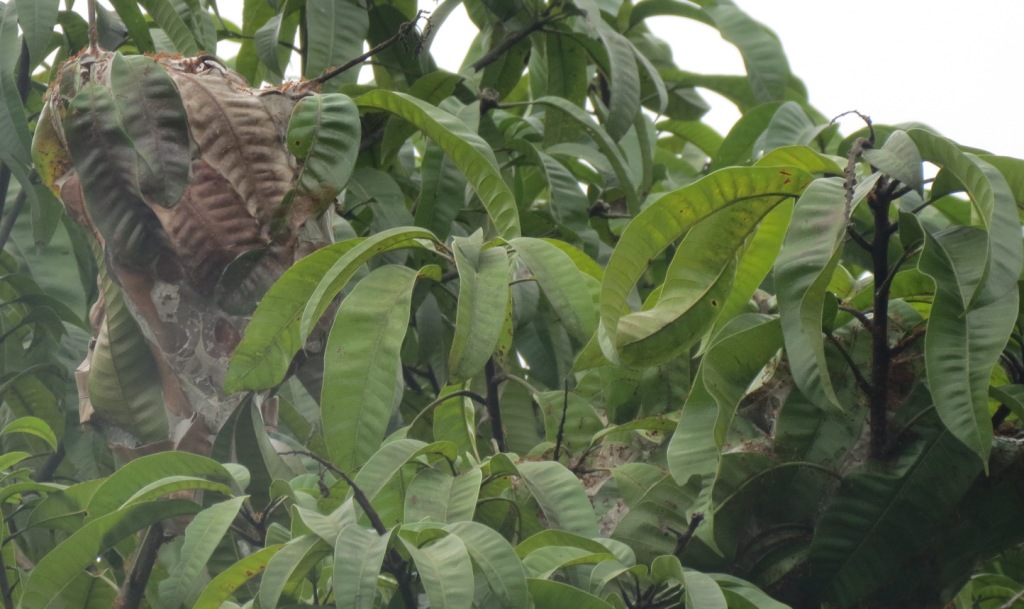
All students enrolled for Green Skills Organized at APRC/ZSI-BSI were set into a task of random sampling of fauna in the APRC campus of ZSI during the field practical session of collecting animal samples. Each came with a unique collection of his/her catch of various insects. One Joram had a green ant caught; there was joy of finding a new species. That is because we had instructed the students, if the insect collected was found to be a new species reported for the first time from Arunachal Pradesh it will bear his/her name. However, the big green ant was already known to the scientific world, the queen mother of the Asian weaver ant, Oecophylla smaragdina (Fabricius), a social and arboreal “Champions of Cooperation” recognized by their nest building behaviour. Weaver ants are eusocial insects, belonging to the family Formicidae (ant family) and order Hymenoptera (Ants, bees and wasps). Weaver ants are reddish ants that live in the tropical forests of Africa and India and many countries in Southeast Asia and Australia. These reddish tropical myremecofaunal species form chains of at least 10 ants, spanning over 5 cm in length; a number of leaves are stretched into position for binding each held in place by rows of workers. The ants then use their own larvae to secrete a silk that is used to stitch leaves together to create a nest. Yes, larvae are gently squeezed to cement the walls of the leafy nests, sisters squeezing their siblings. Though it might seem these hexapods having blood thinner than water (squeezing tiny larvae), but glue for leaves saves (makes) the colony. Their colonies are among the largest in the ant family, built in less than 24 hours. There are reports of individuals of mature colonies in the range of 1-5 lakh!. The number of nests constituting the colony varies (may be above 100 in number), 3-5 nests were observed in vegetation in APRC/ZSI residential campus. Weaver ant queens are typically around 20-25mm and green in colour (also called green ants, Joram’s catch!), a mature colony is strictly monogynous (one queen per colony), and loss of the matriarchal queen signals the demise of the entire colony. Worker population is polymorphic-smaller minor caste workers tending to brood and larger major caste workers performing the duties of foraging, assisting in brood care of the queen and defending the colony territory. They coordinate their activities using a chemical communication system of pheromones in combination with visual and tactile cues. A trail (trail pheromone) of weaver ants along a fence, on tree bark are common scenes observed.
Weaver ants tend to be very aggressive and responsive to disturbance (alarm pheromones), a character that has made them to be used for many centuries by farmers as potential biocontrol agents (hence referred as living insecticides) of economically important crop pests like Mango leafhoppers, thrips, fruit flies, tip borers etc. These generalist predators have been used against pests in orange orchards since 340 AD in China. But they are also a “nuisance pest” in fruit orchards hindering fruit harvest. In addition to being used as a biological control agent to increase plant production, they are utilized directly by humans as a protein food source, especially the larvae. The larvae of weaver ants are also collected commercially as an expensive feed for insect eating birds in Indonesia and the worker ants are used in Indian and Chinese traditional medicine. Traditional healers in Chhattisgarh believe that regular intake of O. smaragdina will prevent rheumatism, gout, ringworm or other skin diseases. The tradition of including Oecophylla ants in food (entomophagy) and/ or traditional medicine (ethnoentomology) has been reported from various cultures in Thailand, India, Myanmar, Borneo, Philippines, Papua New Guinea, Australia and Congo. The Kattunaikkan tribes and Koraga tribes of Kerala, practice entomophagy utilizing the brood and adults of O. smaragdina. Oecophylla and other dominant ants act as keystone species exerting a strong controlling influence on the other arboreal insect fauna through predation and competition for food resources.


 20
