
Beyond the Horizon
By Pradeep Kumar
India-China relations have come to a never before flashpoint as culmination of decades of wrong China policy pursued by India since first Chinese aggression of 1962 which killed 20 Indian soldiers including a colonel triggered oin June 14-15 night in Galwan Valley in eastern Ladakh, writes columnist Barun Das Gupta.
India attained independence in 1947 while China in 1949. The new leader of Communist China, Mao Zedong was a totally unknown figure in the comity of nations. It was Indian Prime Minister Jawaharlal Nehru, who introduced Mao to the world leaders. Again, it was Nehru who declined India’s permanent membership of the United Nations Security Council offer in favour of China.
The first thing the Communist China did was to occupy and annexe Tibet in 1950. India helplessly saw subjugation of an independent country by China. Nehru explained later, India had no strength to prevent China. Monk Dalai Lama, who fled to India with his close associates, was given asylum by Nehru and China resented it greatly.
Thus, China known for its expansionistic policy eyeing Indian Territory is a foregone conclusion, which the Community nation has been doing since India gained independence.
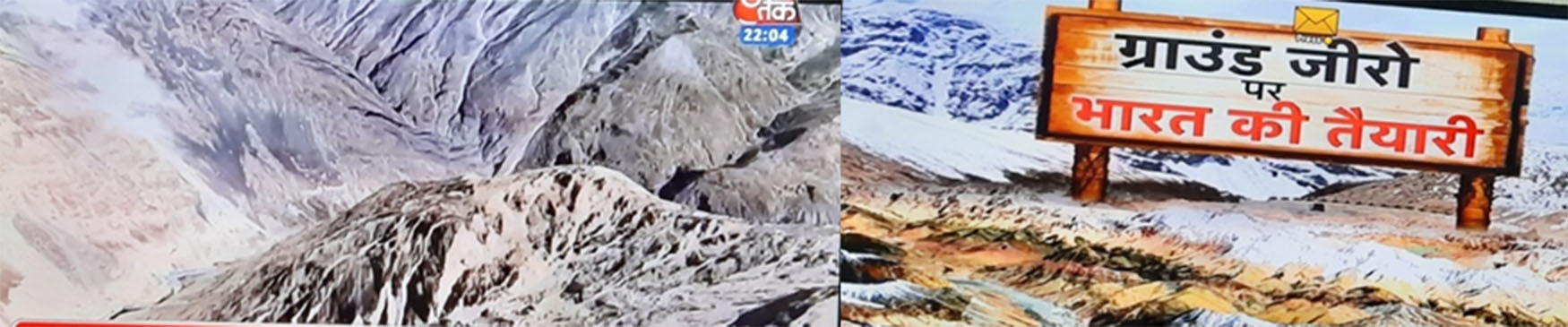
But people could only imagine where confrontation took place until the electronic media reached there to showcase the reality, the way Aaj Tak news anchor and Executive Editor Sweta Singh flashed the tell all story from ground zero of Galwan Valley. The noted award winning journalist active in media since 1996, originally in print, deserves kudos for the breaking news against all odds.
Flashing every spot of that hilly region, including Apache attack helicopters and MiG-29 fighters which have been making aerial rounds to keep constant vigil along the LAC – was eye opening. Few local residents interviewed by her categorically explained that the hilly area criss-crossed by perennial rivers and rivulets is very tough and one could move by horse only. This gave a clear idea about under what cirumstances Indian solders guard the Indo-China border.
The BRO engineers and labourers with heavy equipments were busy building roads to facilitate smooth movement of Army vehicles with personnel, arms and ammunition.
The first indication of China’s intention towards India became evident in 1959 when Chinese People’s Liberation Army (PLA) entered Longju in North-Eastern Frontier Agency (NEFA, now Arunachal Pradesh), on August 25, 1959. They clashed with border grading 19 Assam Rifles. Next came Aksai Chin in Ladakh.
But before going into Aksai Chin, it is worth recalling that immediately after the Communists consolidated their rule in China, they started building a 1200-km road connecting the Xinjiang Province of China with Western Tibet. Of this, 180-km ran south of Johnson Line through Aksai Chin which is in Ladakh. The Chinese army entered Ladakh, occupied it and claimed it to be their territory.
India did not offer military resistance toeing Nehru’s Hindi-Chini Bhai Bhai policy, but on July 1, 1954, Nehru categorically stated that Aksai Chin had been part of Ladakh (India) for centuries and that the border, as defined by the Johnson Line, is non-negotiable. PLA pinpricks throughout the Sino-Indian border have continued. Most of these were considered insignificant and many incidents of Chinese incursion into Indian Territory went unreported.
Then came the great betrayal by China. On October 20, 1962, the PLA made a massive invasion in Arunachal. The feeble military resistance by India collapsed like a house of cards. Through Arunachal, the PLA proceeded upto Tezpur on the north bank of the Brahmaputra in Assam. Then suddenly they declared a unilateral ceasefire on November 20 and went back.


 20
