
- Land of the Lamas, Yaks and Yetis
I am told that ‘Dzong’ in Tibetan means a fort. I am also told that in those days such forts had a small military or police contingent of sorts to maintain law and order as also collect taxes in kind, and favours from local women. The master of such a Dzong was a ‘Dzongpen’, or a magistrate, with selected lamas who helped administer the territory under the Dzong, called ‘Dirang Dzong’.
The Dzongpen of Tawang owed allegiance to the quasi political and religious leader, Dalai Lama at Lhasa. Prior to 1951, Aksai Chin, Leh, NEFA (Arunachal) were all Dirang Dzong that were administered by their respective Dzongpen as Tibetan territory with absolutely no allegiance or recognition of Delhi, either British or Indian. So the relevance of the McMahon line was mostly to do with the border along the northern Aksai Chin and Leh area, and the north eastern NEFA, all of which, tactically speaking, was a non contentious no man’s land during the colonial past. It was the land of the Lamas, Yaks and Yetis, all of them of little interest to the men of the early 20th Century.
It became contentious half a century later, around 1950-51, when China occupied Tibet and the 14th Dalai Lama Tenzin Gyatso ran off from Lhasa and took political asylum in new independent India. A pro-Chinese interim Govt was installed in Lhasa. It became necessary for politically naive, rather new Indian Govt to have a militarily defensible border with the Chinese occupied Tibet, especially keeping in mind India’s then foreign policy of abetment of Tibetan aspirations. The border became a bone of contention around 1958- 60 as a result of several clashes between Chinese and Indian Army patrols to jockey and occupy mountain passes in the Himalayas that controlled thriving trade route between Tibet and India at several places.
To give the Chinese due credit, then Chinese Premier Chow En Lai, wrote many letters to Indian Prime Minister Jawahrlal Nehru to try and resolve the problems amicably. However, Nehru, though wise and sagacious in so many ways, was besotted by his own rising unpopularity in Parliament as well as the political brinkmanship strategies of the inflexible and highly autocratic Defence Minister VK Krishna Menon, who was probably perceived by Nehru as his mentor and saviour.
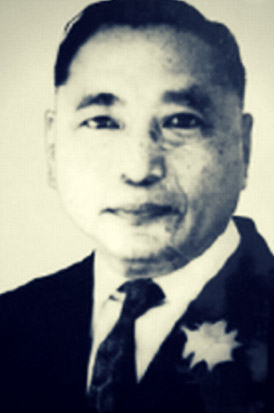
India refused to give any importance to Chow En Lai letters, who then came to India in 1962 with an unusually large 135-member trade and military delegation, armed with trade concessions, historical maps and records to prove rightful borders of Tibet (specially Aksai Chin and NEFA). The trade concessions were olive branches sticking out of the barrel of a gun. The GoI did not notice this. The delegation returned to China empty handed. Menon ordered the Indian army to do forward posturing. The 1962 War was triggered by Indian Army incursion at Namka Chu, an east-west stream which separates the Thag La and the Hathung La ridge, and at Se La pass, north of Tawang. But I am jumping the gun, this is a success story, not one of defeat and humiliation. It is the story of Maj Khathing who captured Tawang in 1951, around the time that the Chinese were occupying Tibet.
Khathing was born on 28.02.1912 in Manipur’s Ukhrul district. He was a Tangkhul Naga. The Christian missionaries had a profound influence on his psyche and one of them adopted him as his son. He studied at Sir Johnstone High School in Imphal, did his matriculation from Shillong and joined Cotton College in Guwahati. When he failed to clear his BA examinations in 1936, he was determined not to return home until he had obtained a degree. So he went to Harasingha in Assam’s Darrang district and founded a school where he also taught. A year later, after he had managed to graduate, a family friend SJ Duncan, who was then the British sub divisional magistrate of Ukhrul, convinced him to leave the Harasingha School and return to Ukhrul High School as it’s head master. In 1939 when WW-II precipitated worldwide mobilisation, 27-year-old Khathing immediately enrolled in the British Army and was sent to Officer’s Training School in Dehra Dun.
Commissioned into the 9/11 Hyderabad Regiment (now Kumaon Rgt), he had Thimaya (later General) as his company commander and TN Raina (later COAS) as fellow subaltern. In 1942, Khathing was transferred to Assam Regiment in Shillong and became a captain. He was soon attached to the USAAF contingent at Jorhat for the ‘Hump Lift’ as a logistic liaison officer. ‘I am Capt Ranenglao Khathing’, he would introduce himself. It was too much for the Americans to mouth. ‘Yes Bob’, they would respond. Soon Capt Ranenglao Khathing morphed into ‘Capt Simply Bob’. (to be continued)


 20

