
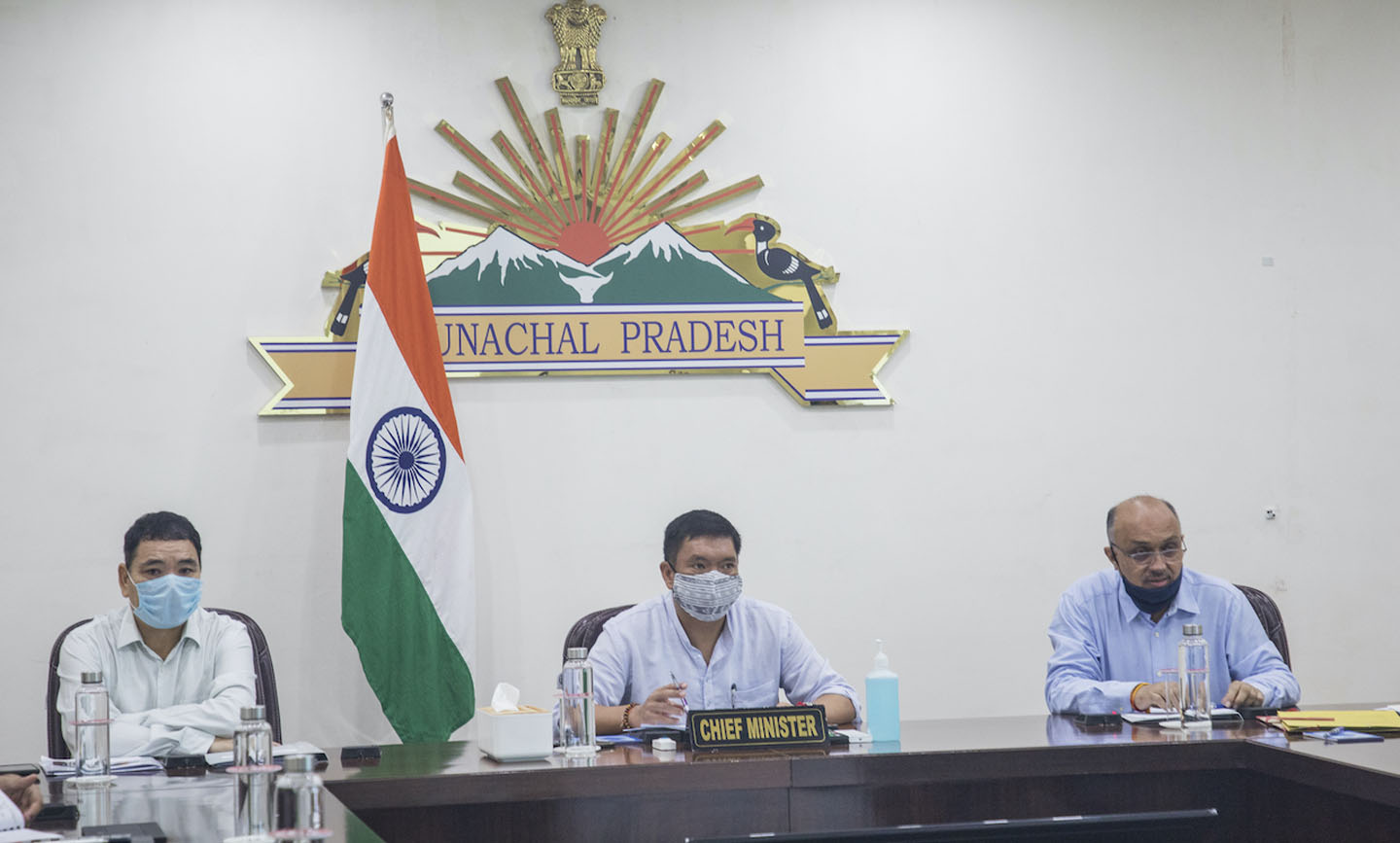
ITANAGAR, Sept 30: Chief Minister Pema Khandu advocated dovetailing schemes of other departments to reach a larger people to benefit them, especially the poor ones, while reviewing ongoing implementation of important central schemes – women & child development (WCD) and social justice, empowerment & tribal affairs (SJETA) departments here on Wednesday.
The secretary-led departmental officials gave details of those schemes – Ekalavya Model Residential Schools (EMRS, by SJETA), Rashtriya Poshan Abhiyan (RPA) and Pradhan Mantri Matri Vandana Yojana (PMMVY, both by WCD) in presence of WCD and SJETA Minister Alo Libang and chief secretary Naresh Kumar.
Seven schools have been approved till date for Arunachal Pradesh under Union Ministry of Tribal Affairs (MoTA)-sponsored EMRS scheme. While two at Bana (in East Kameng) and Lumla (Tawang) are functional, rest at Kampu (Kurung Kumey), Khela (Tirap), Tirbin (West Siang), Medo (Lohit) and Dambuk (Lower Dibang Valley) are under construction and scheduled to be completed by March next.
Every block with more than 50% ST population and minimum 20,000 tribal persons will have an EMRS for which its completion target is 2022. These schools will be at par with Navodaya Vidyalaya with special facilities for preserving local art & culture besides providing training in sports & skill development. Five more state schools are under process for approval by the MoTA officials said.
The RPA has been launched to bring nutrition to the centre stage of national development agenda with a mission to address malnutrition in a targeted approach. As the RPA is being implemented through a web based application, the Govt is providing smart phones to each anganwadi worker to monitor through software application. The WCD is waiting for the ministry’s specific guideline on smart phones which could be procured through GeM portal.
The PMMVY is a maternity benefit with provision for conditional cash transfer for pregnant and lactating women of 19-year-old or above for first live birth. Total Rs 5000 in three installments (Rs 1000, 2000 & 2000) is transferred into bank account of the beneficiaries. However, internet connectivity in rural areas is posing a major problem in its successful implementation, officials said.
Accepting concerns and hindrances in successful implementation of these schemes, specifically due to ongoing pandemic, Khandu said that these schemes being women and child centric, all difficulties have to be overcome to reach out to extend benefits to them. He assured to take up state-specific issues in implementing the schemes with the ministries concerned. (CMO)


 20

