
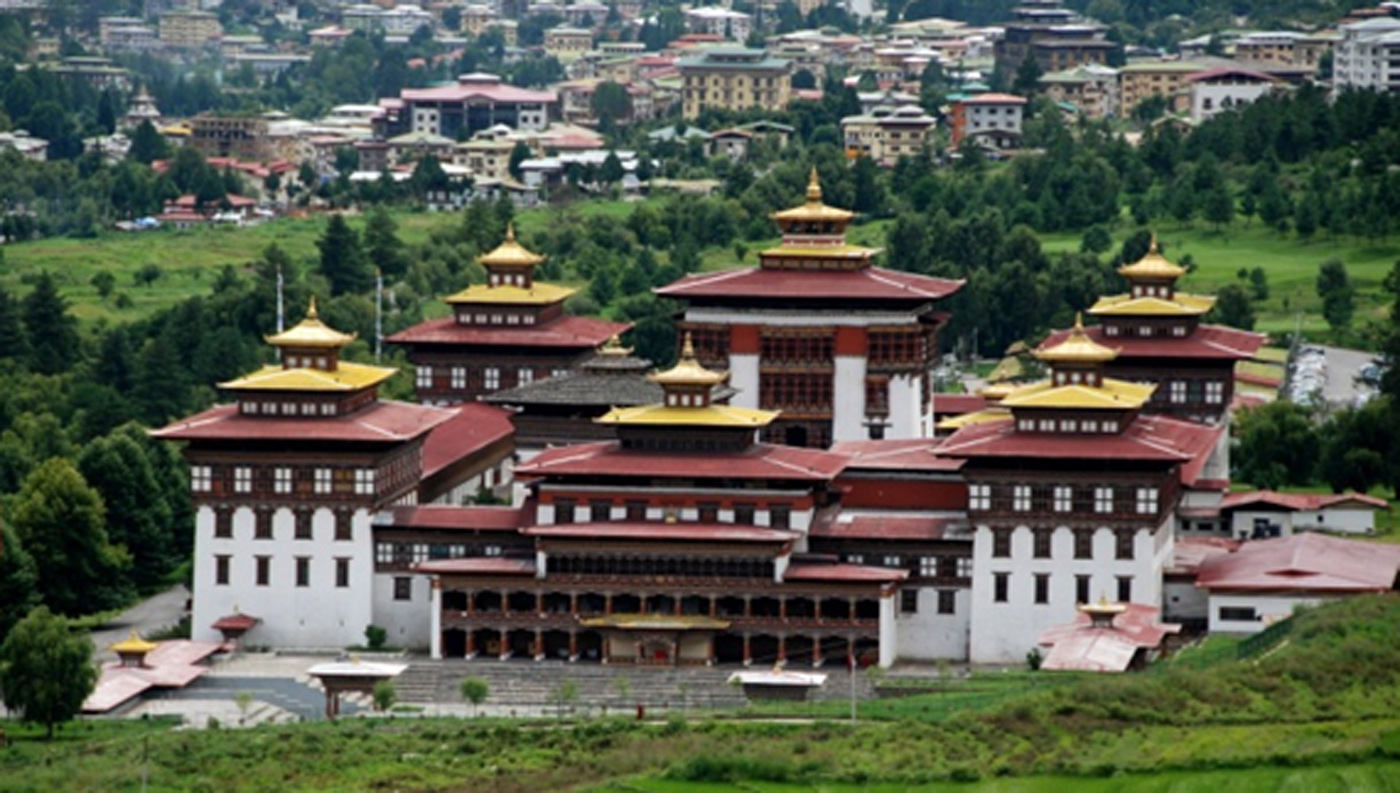
Why Bhutan is world’s happiest nation?
Bhutan, a tiny nation sandwiched between two economic giants India and China, is the happiest nation of the world with may unique records.
Sikkim, spread in total 38,394 sqkm area with 72% still under forest coverage and inhabited by only 7.5 lakh population, is the only Buddhist Kingdom on the earth but lone nation to measure development of the people with Gross National Happiness (GNH) index.
It may be recalled that the GNH, happiness interwoven with balanced economic development, was a concept introduced by Bhutan King in 1972 as an alternative to Gross Domestic Product (GDP).
The GNH is one of the million development goals (MDGs) of Asia’s happiest nation that graduated to parliamentary democracy in 2008 at the insistence of 4th King Jigme Singye Wangchuck.
The GNH with four pillars – 1) sustainable socio-economic development by taping hydropower and setting up of industries to enrich national coffer; 2) protect environment, forests and rivers (Constitution prescribes 60% nation’s total area to be under forests); 3) cultural protection and promotion of religious-rich people by protecting monasteries, promoting festivals and 4) good governance.
The concept gained global recognition after Bhutanese Prime Minister Jigme Y. Thinley in his address to the UNO in 1983 had quoted Czechoslovakia’s former foreign minister to drive home the value of GNH: “Capitalism knows how to create wealth but does not know how to distribute wealth. Communism knows how to distribute wealth but does not know how to create wealth.” I believe that economy of GNH should be the combination of both in the sense that we should know how to create wealth as well as how to distribute wealth on the basis of equity and justice. Bhutan became UN member in 1971.
In fact, my quote – Arunachalees do not know what they do not know! – justifies in Bhutan’s GNH philosophy. Responding to queries from HH 14th Dalai Lama during his visit to Tawang in 2009 as to how every individual was happy and smiling in this difficult terrain, his interpreter had said that the people remain satiated with whatever they have without craving for the modern things. HH had quipped: Why not spread Arunachal’s smile to the humanity?
During a national seminar conducted by economics department at RGU on 31.10.15, I had urged the academicians to conduct an in-depth research to assess the mental status of Arunachalees, mostly in far-flung and inaccessible areas, who live far away from the hustle bustle of modernity, but would prove to be the happiest ones in India. For they remain satiated with whatever they manage from the earth without depending on outside supply.
Interestingly, lack of funding, poor infrastructures hit higher education in NE. Dearth of investments; poor infrastructure and lopsided planning intensify the problems.
While Sikkim in the lap of Himalayas has developed as tourism hub of NE India, its capital Gangtok was awarded as cleanest city of the NE region by Union UD Minister M Venkaya Naidu in May 2016. But how and why?
Arunachal’s first border trade centre (BTC) was inaugurated by then Union MoS (Trade & Commerce) Jairam Ramesh on 24.11.07 at Nampong in Changlang district, some officials were also posted but withdrawn and the BTC was never made functional though the route is the best window to South East Asia, where world’s 50% rich live.
The BTC buildings are lying unused as the ongoing traditional border trade practiced by the people of Changlang with their Myanmar counterparts is yet to get official seal. Myanmarese are allowed free passage to Nampong every Friday while Arunachalees get that permission on 10th, 20th & 30th day of every month to visit the border town of Pangsau Pass.
The attitude of the Sikkimese could be attributed to their speedy and greater success. Other NE states. particularly Arunachal Pradesh could take a cue from either Bhutan or Sikkim to take this Himalayan state to much greater level of multi-faceted development.


 20
