
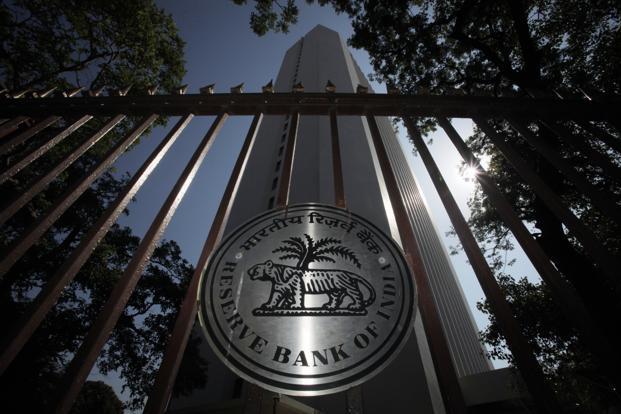
Arunachal caught in demonitisation catch 22
Arunachal Pradesh is still caught in demonitisation’s catch 22 situation with none of the banks having small denomination currency notes even eight months after Prime Minister Narendra Modi announced demonetization effective from 09.11.16.
Reserve Bank of India, framed under Reserve Bank of India Act, 1934, is meant to provide a framework for supervision of banking firms in India. Though Section 22 of the Act says that only RBI has exclusive rights to issue currency notes in India, Arunachal people have been facing acute crisis of small (5,10, 20, 50 and 100) currency notes even in twin capital cities while the ATMs remain defunct mostly for want of small notes.
Any sane person could imagine the magnitude of currency crisis when Itanagar and Naharlagun SBI ATMs need Rs five crore daily and digital money transfer remain a far cry with BSNL proving to be ‘Bhai saab na lage‘ making mobile money transfer a distant Digidham.
RBI sends currencies to banks in the state directly as per their requirements. Such highly sensitive information may not be available off hand, but the ongoing crisis clearly indicates the RBI’s complete ignorance of Arunachal situation.
This agrarian society has been contributing immensely to India’s GDP through huge sale proceeds of kiwi (Arunachal is India’s highest producer), its large size cardamom (production initiated by National Youth Project in Anjaw district), sold in south India at double the market rate and supply of other agri-horticulture products to rest of NE India and Bangladesh. But demonitisation has added salt to the injuries of bank account holders by crippling their socio-economic development.
The state, spread in 83,743 sqkm area bordering Bhutan, China, Tibet and Myanmar, with people living in vast inaccessible and far-flung inhabitations, has only 180 bank branches, including 57 SBI branches (the lead bank), but financial inclusion sill remains a mirage.
It is laudable that the RBI is expected to introduce Rs 200 notes before 2017 end to ease pressure on lower-denomination currencies that are in short supply. The new notes will greatly help in narrowing the demand and supply gap in smaller-denomination currency bills, as was informed by the RBI on July 4 last, adding soon, a notification may be issued by the Reserve Bank of India with regard to issuance of new Rs 200 bills. This exercise of printing Rs 200 denomination notes is being undertaken to further improve the currency situation in the country, sources said, adding the problem people are facing due to high-value Rs 2,000 notes would also be taken care of with the circulation of Rs 200 notes.
The PM’s intention was check fake currency making inroads from across the border and black money scandal which were eating away the vitality of Indian economy. But the cost of withdrawing high-denomination currency notes to wipe out black money from India will be about Rs 1.28 lakh crore during the 50-day window till 30.12.16. But the overall cost could be much higher, as estimated by private economy watcher – Centre for Monitoring Indian Economy (CMIE) -, ET Bureau had reported on 25..11.16.
The denomination had invalidated 86% of Rs 17.8 lakh crore of currencies in circulation on 28.10.16. Emphasising that all estimates were conservative and limited to the 50-day window, the CMIE had said that the Govt and the RBI are estimated to bear a cost of Rs 16,800 crore, largely on account of printing new currency notes and transporting them to banks, ATMs and post offices.
Businesses are expected to pay the biggest price of demonetisation and the immediate impact could be about Rs 61,500 crore, or 48% of the total cost of the exercise, the CMIE had said.
Many senior bankers while discussing these issues with this editor today admitted that these are solvable if steps are taken in right direction. But the steps are beyond our control and left to the last resort of all banks. Without naming they hinted at the RBI, the printer, issuer and controller of Indian currencies.
Is the RBI forwarded the ‘action to be taken proposal’ to the Govt of India, the longest channel in the world, disabling it to take any step to solve Arunachal problems? Or well aware that shortage of small currencies and high-value Rs 2,000 notes causing problem for Arunachal people, is RBI in deep slumber or forgotten that Arunachal Pradesh is part of India?


 20
