
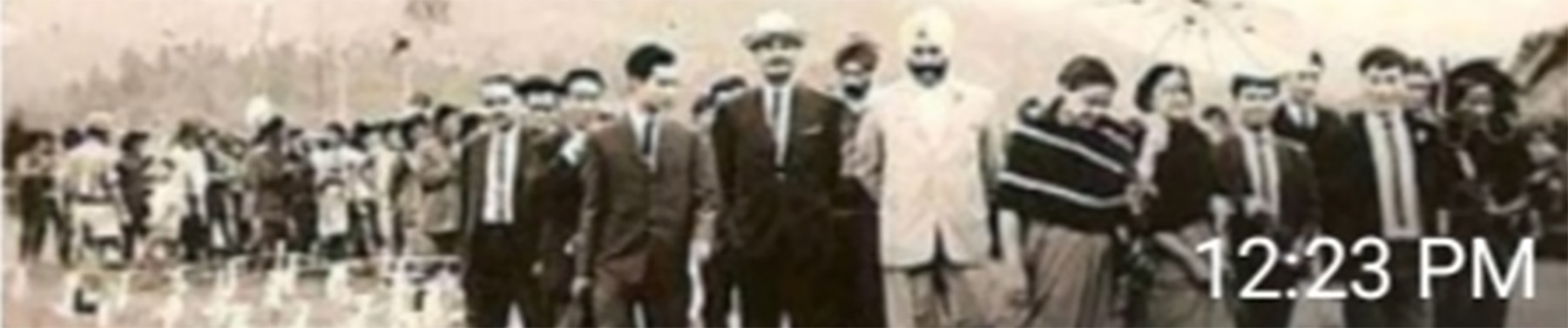
Luthra and Nag with Kojee
Beyond the Horizon
By Pradeep Kumar
Most festivals of Arunachal Pradesh are agriculture based so also Dree. The Apatanis, proud habitants of pine clad Lower Subansiri district headquarters Ziro valley, are famous for their unique but sustainable wet rice cultivation, adjudged by UN Agriculture Organization as best traditional practice in the world. Thus, Dree is centred around agricultural practices. According to mythology, human beings in the beginiing of civilization wandered around foraging for food.
It was Anẁ̀ Donw and Abba Lwbo who had began cultivation in the fertile lands of Wpyo supuñ. Thus Anẁ̀̀ Donw was the first human to start a settled life while Abba Lwbo was the first to start cultivation. With the first batch of spades – Turú dipe and the first batch of machetes – Twgyó ilyo’, bushes and vegetations were cleared from large tracts of land. Invoking the winds from the north and the south, the leavings were burnt. Next, the soil was prepared for sowing.
Plots of agriculture were ready, but no paddy seeds were available. So, search for seeds begun. In the process, Anẁ̀ Donw and Abba Lwbo reached Murtú Lembyañ from where they obtained the seeds of pyapiñ and pyare varieties of paddy along with the seeds of cucumber and corns from Murtú Yariñ. However, it was in the stomach of the dilyañ kubu – the field rat that they found the seeds of empu and elañ varieties of paddy. They trailed the field rat with the help of a dog and finally located the source of the seeds. At a place called Hirẃ Lyandiñ, the paddy seeds were found stuck high above on the branches of Hirẃ Tanguñ tree, along with tayú and tagyá – varieties of bees. Thus, the empú and elañ were obtained from Hirẃ Anẁ. All the varieties of paddy – pyapiñ and pyare, obtained from Murtu as well as empu and elañ, obtained from Hirẃ were originally obtained from Hintẁ Anẁ.
However, from stomach of Pyokuñ Pembò Pyoyi Tadù emerged swarms of insects, pests and rice eating birds and attacked the crops in the fields resulting in poor harvest, and subsequent hunger and famines.
It was in order to counter the menace of insects, pests and diseases, and to alleviate the impending hunger and famines that a series of rituals were observed in the month of Dree. This series of rituals concludes with Mepiñ, which is performed to seek blessings for healthy crops and well being of mankind.
In the modern Dree, the Danyi is also propitiated for fertility of the soil, abundance of aquatic lives in the rice fields, healthy cattle and for prosperity of all human beings.
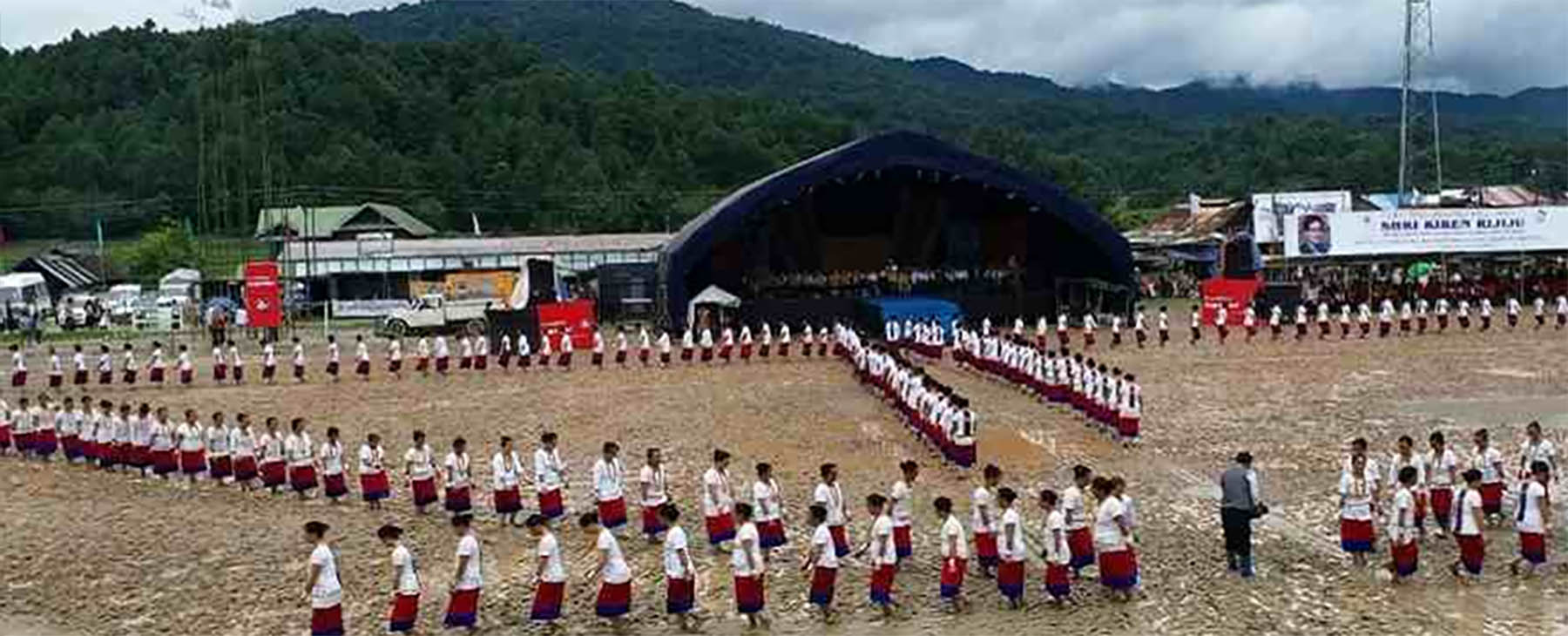
In olden days, each village performed Dree rites separately at their respective villages on different dates as per the convenience of the village level organizing committees. It was in the year Senior students of Apatani society led by Lod Kojee organised Dree centrally at a common ground at Swlañ Ditiñ for first time in1967. Since then, celebration during taboo period takes place centrally with fun and gaiety and various competitions. Though modes of celebration have changed with time, the original rituals started by the ancestors in Wpyó Supuñ are meticulously followed even today with the same objective – healthy crop, a bumper harvest and overall prosperity of mankind. This Dree is the famous festival of Apatanis community.
The first central Dree festival was inaugurated at Nenchalya in 1967 by Assam governor’s advisor P N Luthra as chief guest and Ziro deputy commisioner R S Nag as guest of honour with Lod Kojee as general secretary of Dree celebrtion committee.
Pointing out that festivals promote diversity, bring good understanding among neighbours, foster creativity by giving opportunity for civil improvement for improving all round wellbeing of the people, the guests had wished a happy and prosperous Dree celebration.


 20
