
Mizoram revoked FRA
Mizoram assembly had passed a resolution revoking the FRA Act on November 19.11.19 by misinterpreting Article 371 (G). Mizoram has a special provision under Article 371 (G) of the Constitution, which makes it mandatory for all legislations of Parliament pertaining to land ownership and transfer to be first passed by the state’s assembly through a resolution before it can be implemented in the state.
“The revoking of FRA using the special status provision of the Constitution by the Mizoram Govt is similar to how the enactment of FRA was prevented in Jammu and Kashmir using Article 370, when the Bharatiya Janata Party and People’s Democratic Party-led Govt was in power in,” says Tushar Dash of Community Forest Rights- Learning and Advocacy, an advocacy group of experts and activists working for creating awareness about FRA, reports Down to Earth.
By Pradeep Kumar
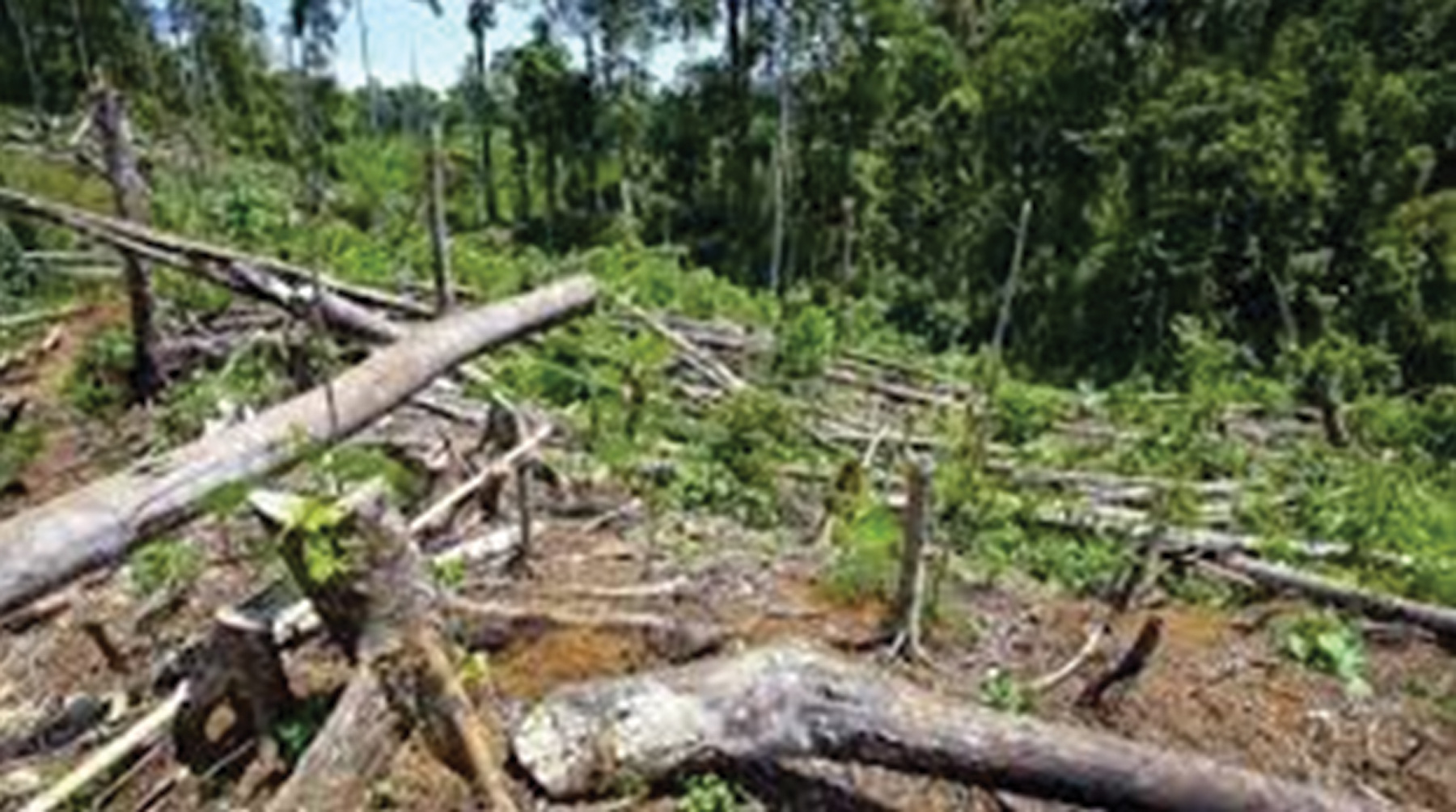
ITANAGAR, Sept 02: Arunachal Pradesh environment and forest department (E&FD) has launched eviction drive to clear encroached 25 sqkm of wildlife sanctuary in Capital Complex as informed by Environment & Forest Minister Mama Natung to assembly on August 28 last, which is only tips of an iceberg as total 53,000 hectares state’s recorded forest area (RFA) is under encroachment.
Total 13.35 lakh hectares of RFA of India is under encroachment now as per data tabled by Union Ministry of Environment and Forest (MoEF) in recent monsoon session of the Parliament. This amounts to encroachment of around 2% of country’s total RFA of over 7.67 lakh sqkm.
Madhya Pradesh (5.41 lakh hectares) and Assam (3.63 lakh hectares) top the chart while Karnataka (83,000 hectares), Maharashtra (61,000 hectares), Arunachal Pradesh (53,000 hectares), Andhra Pradesh (34,000 hectares), Odisha (33,000 hectares), and Jharkhand (26,000 hectares) too have considerable forest encroachment.
Natung, had said that state capital’s 140.8 sqkm area comes under wildlife sanctuary excluding 11.25 sqkm in response to local MLA Techi Kaso’s question: If it was a fact that LPCs of Tarajuli, Burung, Papu, Jully and Model villagers would be cancelled being within forest land?
Pointing out that vast Arunachal forest generate oxygen to serve as lungs of the universe, Natung had urged all members to spread mass awareness on the issue. It may be recalled State Forest Research Institute director P Subramanyam, during a DDK interview on 15.05.12., had said: “Arunachal Pradesh, with over 50,000 sqkm of moderate to very dense forests, is equivalent to 550 million cubic metre growing stock or living assets (equivalent to 2000 million metric tons of carbon dioxide) that serves as one of the major ‘carbon sinks’ or ‘lungs’ of the globe.
Describing carbon as “a blanket of the earth to allow life to sustain,” Subramanyam, who is also member-secretary o Arunachal Pradesh Biodiversity Board, had said Arunachal and Arunachalees have been shouldering a huge responsibility as conservators of the great ecosystem through their traditions and customs. The ecosystem represents huge tropical, temperate and Alpine forest ranges not seen anywhere else in the country.
Considering the destructive effects of human activities, the concept of ‘development and environment’ has changed to ‘green development’ to strike a golden mean between development and conservation, while also adopting new methods of lifestyle in tune with the inevitable impacts of climate change, he had said.
In fact, the E&FD is acting in tune with the directive of the MoEF to prioritise encroachment removal and ensure that no further encroachment takes place as per the existing acts and rules, according to its report. Removing encroachments falls in the domain of state/UT Govts,
Arunachal Pradesh has RFA of 51,407 sqkm which is 61.39% of its total geographical area. The reserved, protected and unclassified forests are 20.60% and 19.02% and 60.38% of the recorded forest area respectively, as per 1999 of Forest Survey of India report. The state boasts of one of the highest 79.63% forest cover of its total geographical area of 83,740 sqkm. Arunachal holds 3rd position while Lakshadweep with 90.33% tops the chart followed by Mizoram 85.41%.
Data misleading?
However, researcher and forest rights activist Tushar Dash said that that the encroachment data of MoEF tabled in the parliament is misleading, It has also considered as encroachment all forest land under possession of tribal communities even as they got the legal right to use that land under Scheduled Tribes & Other Traditional Forest Dwellers (Recognition of Forest Rights) Act, 2006 (FRA), he added.
As per the data, MP has the highest forest encroachment, but it is also a state where 60% of nearly 6 lakh claims for land filed by tribes and forest dwellers under the Act have been rejected as of January 2020.
“On the contrary, the MoEF never disclosed the extent of encroachment that really matters and needs to be removed, including illegal diversion for mining and other commercial interests,” he said.
The RFA was enacted as a result of the long struggle by tribal communities to assert their rights over the forest land due to their traditional dependence on them, Dash said.
The Act, he informed, listed 13 types of rights, including rights over land being cultivated, rights to non-timber forest produce, and most crucially, the right to protect and conserve forests, which no Indian law had ever recognised as a right before.
According to him, this Act was crucial to livelihood of millions of tribals and other forest dwellers across the country, as it was meant to uphold the individual as well as communities rights in forest areas
The preamble of the Act itself says that the Act has finally paved the way to undo the ‘historic injustice’ done to the tribals and other forest dwellers who were deprived of their rights over forest land from colonial times, Dash was quoted as saying by Vivek Gupta in THE LEAFLET.


 20

