
- ‘First Lady of Physics’ honored, Lata Didi soon
Beyond the Horizon
By Pradeep Kumar
Numerous methods were used to indicate that postage had been paid on a mailed item throughout modern history for which different men received credit for inventing the postage stamp.
In 1680, English merchant William Dockwra and his partner Robert Murray had set up London Penny Post, a mail system, to deliver letters and small parcels within London city for one penny by using a hand stamp instead of a separate piece of paper. Many historians consider it to be world’s first postage stamp.
On 13 February 1837, British Parliament Member Robert Wallace gave evidence before Commission for Post Office Enquiry which eventually become first unambiguous description of a modern adhesive postage stamp though the term “postage stamp” originated at later date.
India has a long and varied postal history of producing postage stamps. Indian Postal Service issued stamps on many themes – relating to history, architecture, nature, culture and heritage.
Though British rule in India began effectively in mid.1860s, the first adhesive stamp was issued in 1852, 12 years after the first Penny Blackwas issued in England. This was the Scinde Dawk followed by East India company lithographed issues and a long series of engraved stamps portraying Queen Victoria, King Edward VII, King George V, and King George VI.
Provisions exist for organisations and interested bodies to suggest the printing of special commemorative stamps as well as first day covers and cancellations. The Indian Post runs philatelic bureaus, operates deposit based philatelic services, a philatelic magazine and also publishes lists of stamps from time to time.
The Centre has decided to introduce a commemorative postal stamp to honour singing legend Lata Mangeshkar. Speaking at India Today Budget Round Table, Railways, Communications and Electronics & Information Technology Minister Ashwini Vaishnaw has said that the stamp would be an appropriate honour for ‘Nightingale of India’. Lata Mangeshkar had sung over 50,000 songs in 14 languages since her radio debut in 1941. She passed away on 06.02.22 at the age of 92 at Mumbai Breach Candy Hospital.\ Once the stamp is issues, who would be among noted personalities like Rani Lakshmi Bai (15.08.1957), Madam Bhikaiji Cama (26.01.19620) Ramabai Ranade(15.08.1962) and Dr Annie Besant (01.10.1963).
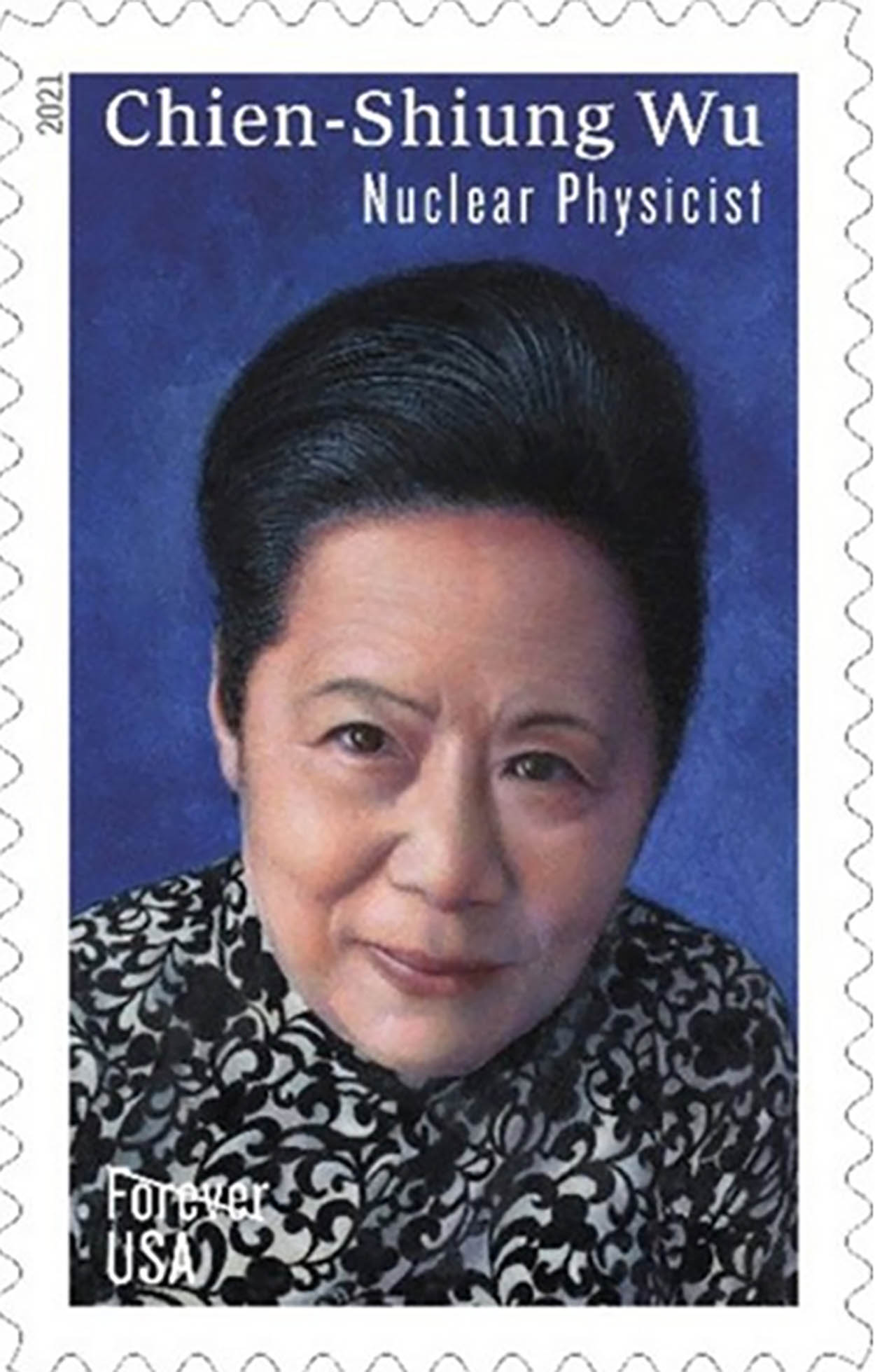
The U.S. Postal Service on February 11 unveiled a new postage stamp honoring Chien-Shiung Wu, a trailblazing Chinese-American nuclear physicist whose myriad accomplishments earned her the nickname “the First Lady of Physics.”
The stamp’s release coincided with International Day of Women and Girls in Science, an annual event that was established by United Nations General Assembly in 2015 to celebrate female scientists and promote equal access for women and girls in science and technology.
Kristin Seaver, executive vice president of the Postal Service, called Wu “one of the most influential nuclear physicists of the 20th century.”
Wu “made enormous contributions to our understanding of radioactivity and the structure of the universe,” Seaver in a taped virtual ceremony marked the stamp’s first day of issue.
Wu was born in China in 1912 and migrated to the United States at the age of 24. She received a doctorate from the University of California, Berkeley.
Wu is best known for her experiments in 1950s on a quirky but fundamental property in physics known as parity symmetry. Physicists at the time thought that processes in the real world — basic interactions such as electromagnetism, for instance — should be indistinguishable when those same processes are viewed in a mirror. In other words, while a mirror may interchange left and right, it was thought that nature did not distinguish between the two.
But Wu’s research in 1956 with two theoretical physicists, Tsung-Dao Lee and Chen Ning Yang, found that when some radioactive particles decay, they defied parity symmetry.
The discovery was made using a sample of cobalt-60, a radioactive form of cobalt, which emits particles that spin either in a left direction or a right direction as it decays.
“She showed that the mirror image of the decay process that was happening in the laboratory could never happen in the real world,” Brian Greene, a professor of physics and mathematics at Columbia University, said during Thursday’s ceremony.
“That established that this left-right symmetry that we thought was just a convention — the universe doesn’t care about left or right — she showed that the universe does care about left and right,” Greene said, adding that the breakthrough, “pushed the boundaries of understanding in a profound way.”
Lee and Yang were awarded the 1957 Nobel Prize in Physics for the discovery, but not Wu. Many felt her contributions were unfairly overlooked, particularly because the groundbreaking research had been known as the “Wu experiment.”
Prior to her work on parity violation, Wu assisted Manhattan Project, experimenting with uranium enrichment during World War II. Later in her career, she studied molecular changes in red blood cells that helped answer crucial questions about sickle cell disease.
Wu, who spent most of her career at Columbia University, was also an advocate for women in science and academia.
“She would always mention that the number of women in senior faculty member positions was very limited. She thought that was not fair,” said Vincent Yuan, her son, a nuclear physicist at Los Alamos National Laboratory. “She thought it was terrible that women couldn’t have necessarily the same ambitions and hopes that men could, if those opportunities were limited.”
Wu’s accomplishments over her 40-year career helped pave the way for subsequent generations of female scientists in a field that was, and still is, dominated by men. She retired from Columbia University in 1981, and died in New York City in 1997 at the age of 84.
The new postage stamp was designed by Ethel Kessler, with original art by Kam Mak. The portrait features Wu in a black-and-white, high-collared traditional Chinese gown.
With the release of the stamp, Wu joins an elite club of scientists who have received such honor, like physicists Albert Einstein and Richard Feynman, geneticist Barbara McClintock, astronomer Edwin Hubble and theoretical physicist Maria Goeppert Mayer.


 20
