

- GSDP to turn many bird watcher guides: Robin
Beyond the Horizon
By Pradeep Kumar
One Yolisa Yobin, who was among 19 locals to undergo 160-hour green skill development Programme (GSDP) training on bird identification and basic ornithology in Miao’s Namdapha jungle camp recently, has spotted eight bird species at Mugaphi in Vijaynagar area, said Yofuna Yobin (1st pic), who also underwent the training.
 Those eight species of birds spotted by Yosila, a Miao-based tour operator, are: Rofous-throated (Coudatus, 52 No), Mishmi (Bodeigularis, 32 No), Chin Hills (Oatesi, 45 No), Pale-throated (Kinneari, 22 No), Naga (Chocolatinus, 22 No), Grey-bellied (Reptatus, 8 No), Tawny-breasted (Longicaudatus, 35 No) and Lisu (Lisuensis, 6 No), Yofuna informed.
The training was conducted by Arunachal ENVIS Hub under Environment, Forests & Climate Change (EFCC) department in collaboration with Society for Environment Awareness and Conservation of Wild life (SEACOW). Environment director-cum-ENVIS coordinator D. Dohu Robin deserves applause for making the MoEF&CC initiative a reality as it has yielding desired results.
Though treasure trove Arunachal Pradesh boasts of 867 species of birds, including globally threatened 50 species and one each endemic and introduced, according to Avibase bird check lists. These global bird checklists are part of bird links to the world, which are designed and maintained by Denis Lepage and hosted by Birds Canada, a co-partner of Birdlife International.
However, one after another new bird is spotted from time to time in this Himalayan state as Three-banded Rosefinch was spotted in high-altitude coniferous forests by a team of scientists of Bombay Natural History Society on 08.02.21.
Yofuna, a known social activist, was one of the 547 youths, mostly girls/women of all nine circles of Changlang district, who were given skill training in various trades, particularly home stay, by National Youth Project (NYP) in August 2011.
Vijaynagar, also called “East of the North East”, is the most remote circle HQs of the state in Changlang district. It is 157-km from Miao and located in Indo-Myanmar-China tri-junction with a thick forest cover of Namdapha National Park on north side. Spread in 2050 sqkm, it is inhabited by total Lishus or Yobins population of 4,438 (2011 census) in 12 villages. The first Assam Rifles (AR) expedition led Maj. Gen A.S Gauraya in 1961-1962 had found this uninhabited zone of Indian Territory and named it Vijaynagar in honour of his son “Vijay.”
It finds first mention in history about invasion by Japanese Forces along India-China-Burma frontier during 1945 WW-II as the Allied forces while retreating from Fort Hertz (now Putao, Myanmar) accidentally took Chaukhan Pass route to reach Miao after a treacherous foot march for three weeks. The forces were rescued by AR and maintained by air drops. Moreover, Chinese tribal hunter parties in pursuit of musk deer had also discovered the valley in 1950s-1960.
Yofuna, a resident of Vijaynagar, said that “we got opportunity to learn a lot about ornithology and how to identify birds”. She could be a guide for tourists, researchers and ornithologists, like Shelina Phinya, a guide for endemic bird Bugun Liocichla.
Bugun Liocichla, a small babbler (20 cm) with olive-grey plumage, a black cap, face marked with prominent orange-yellow lores, wings with yellow, red & white patches, with fluty & distinctive voice, is the best example as it was first spotted in 1995 in select pockets of 234 sqkm Eaglenest Wildlife Sanctuary (EWS) and Singchung Bugun Village Community Reserve (SBVCR), owned by 27 Bugun families.
Found only in Arunachal Pradesh in small numbers, it can live in degraded forests but possibility of its discovery in other areas of Arunachal or neighbouring Bhutan cannot be ruled out. The bird was again spotted in same area in 2006 by birdwatcher-cum-astronomer Dr Ramana Athreya and recognised as a new species while International Union for Conservation of Nature (IUCN) classified it as Critically Endangered.
Bugun tribe won India Biodiversity Award-2018 in ‘Conservation of Wildlife Species’ category given jointly by the Centre and United Nations Development Programme for its efforts to protect the rare bird. The bird has been named in honour of efforts of Bugun community of Singchung village in West Kameng district in conserving the wildlife and forest.
Former MLA-cum-chief adviser of SBVCR management panel Naresh Glow lauded local girl Sheleena Phinya for turning into a guide for visiting bird watchers.
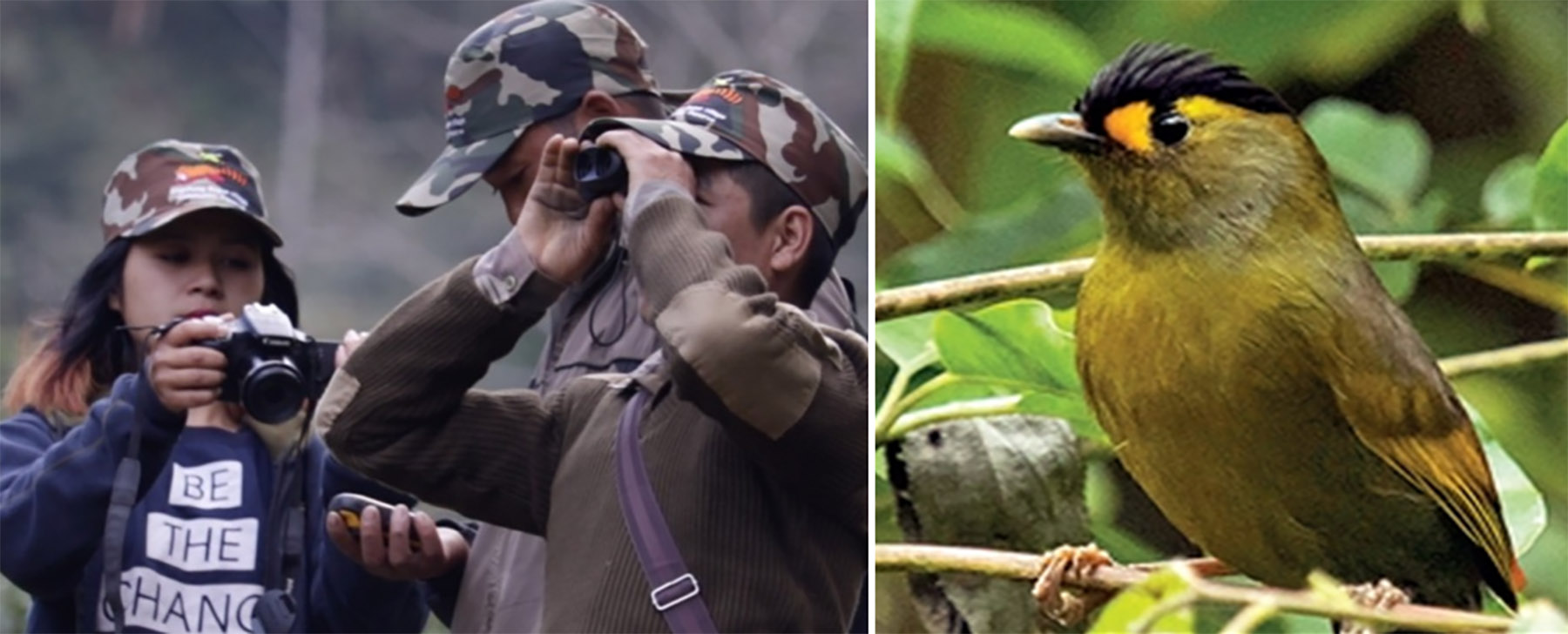
Phinya, when contacted, told this daily over telephone that the number of bird watchers was less since 2020 due to COVID-19 pandemic which undoubtedly would increase as the virus impact is decreasing rapidly.
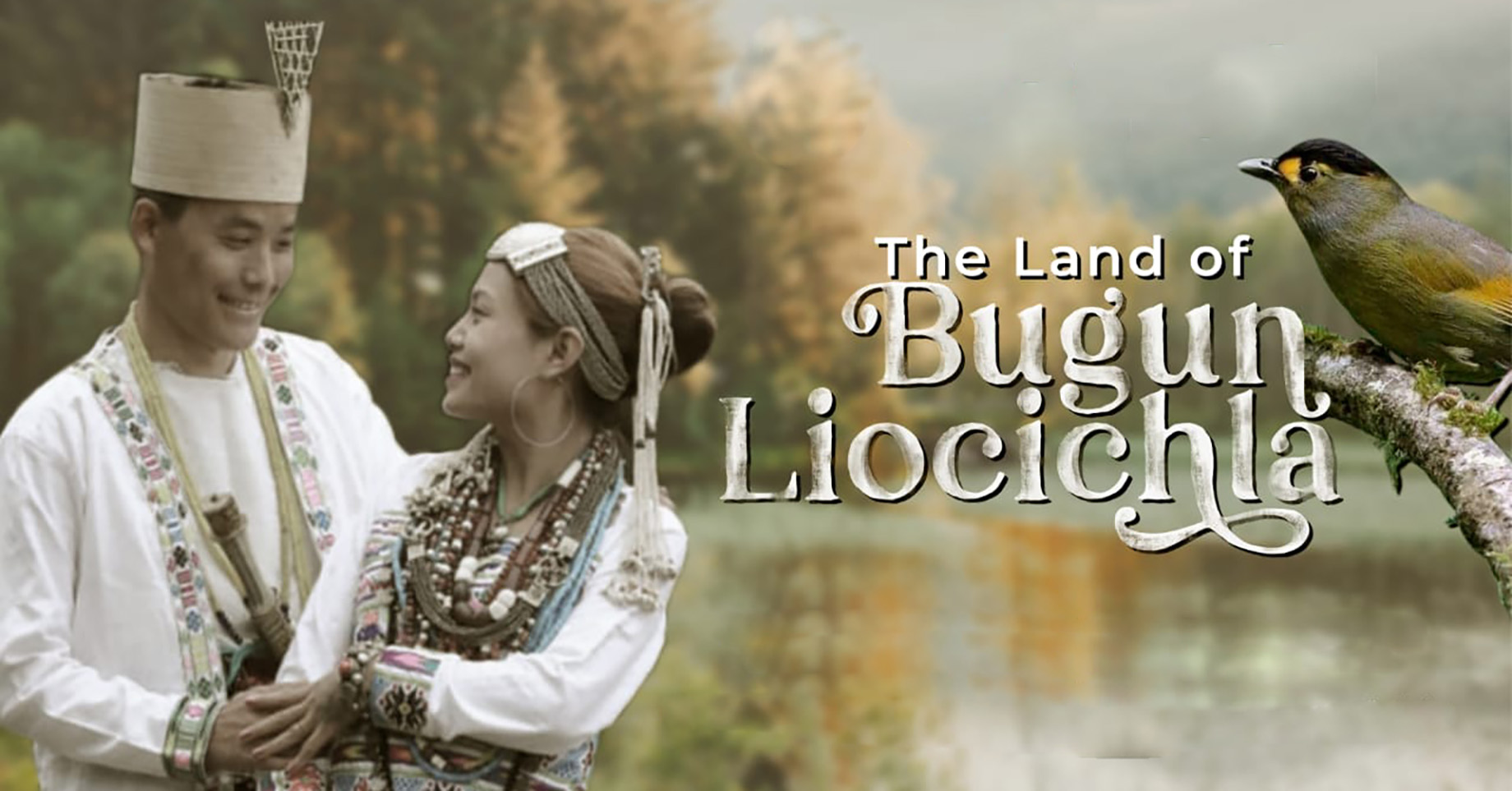
However, Glow in collaboration with his friend noted film maker Dorjee K Thongun had made a documentary – The Incredible Buguns. It had won NE Best Film Award and Best Tribal Film Award of Madhya Pradesh Govt. His second, a 29-minute documentary film – Wildlife-Our Lifeblood – broke many a records and digitally screened in World Documentary Forum (WDF) and Cultural Affairs of Paris in October 2020 and 15th edition of International Wildlife Conservation Documentary Film Festival in December, 2020.
Glow, also made a 90-minute future film Land of Bugun Liocichla in 2020 and got it approved on 19.09.21 by Central Board of Film Certification as a video film, which has made him a trend setting film maker to document most unique aspects of this ‘Land of Nature’.
A five-day Bugun Liocichla Utsav was celebrated in October, 2021 at EWS to mark 15 years of Bugun Liocichla with Forest Minister Mama Natung saying: “Bugun Liocichla has made the EWS and SBVCR a must-visit destination for tourists and wildlife lovers. The Buguns and the Bugun Liocichla are the pride of our state.”


 20

