
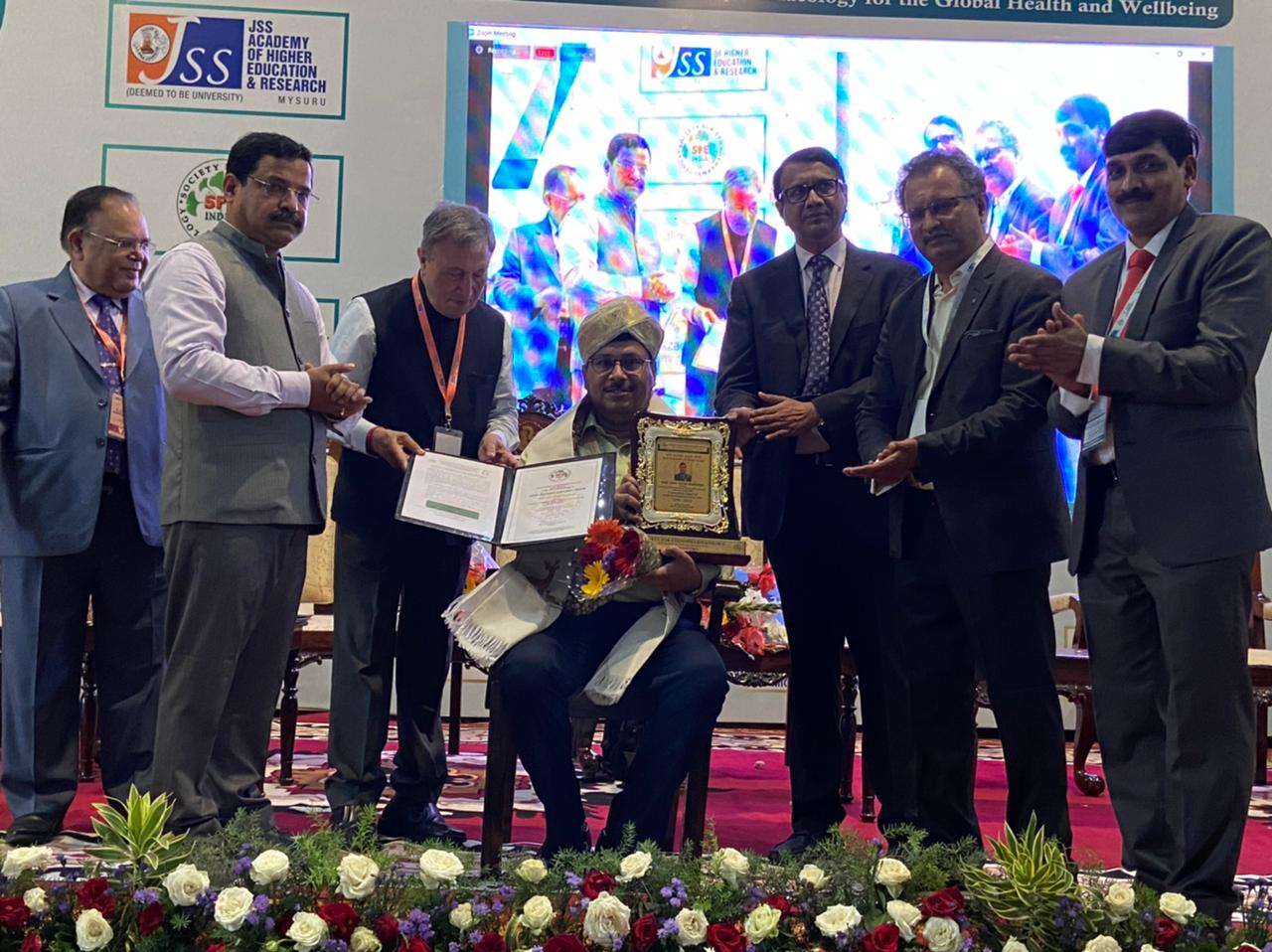
GUWAHATI, Apr 27: The Institute of Advanced Study in Science and Technology (IASST) director Prof. Ashis K. Mukherjee has bagged prestigious SFE Zandu Award 2022 for his contribution in developing drugs for treatment of snakebite and thrombosis-associated cardiovascular diseases (CVDs).
This award instituted by Emami and Indian Conglomerate Company was conferred to him during 9th International Congress of Society for Ethnopharmacology at Mysuru in Karnatka recently.
Snakebite is declared as a tropical neglected Ddsease by the WHO and Prof. Mukherjee has been conducting research on pharmacological reassessment of medicinal plants used traditionally for the treatment of snakebite patients for more than 25 years, but without scientific validation.
He demonstrated the usefulness of several traditional medicinal plants, like root of Mimosa pudica and Rauwolfia serpentina and leaves of Azadirachta indica, as antidotes against snakebite envenoming.
The CVDs is prime cause of mortality and morbidity worldwide and antithrombotic drugs used currently are not free from adverse effects, thus he his search for antithrombotic drugs from traditional medicinal plants proved successful.
He made significant contribution in identifying the traditional medicinal plants used for treating CVDs, active phytochemicals and their mechanism of cardioprotective action, understanding the antithrombotic potential of herbal drug prototypes, and pointing to their future clinical use as potent antithrombotic drugs.
He has also been working on phytochemical marker(s)-assisted quality control of traditional herbal medicines that can prevent batch-to-batch variations in their quality and production to be accepted by consumers and clinicians. This approach could augment commercialization and globalization of traditional herbal drugs. The Centre recently has signed a memorandum of agreement with WHO to set up global center for traditional medicine in India.
Prof. Mukherjee took keen interest in identifying and conserving medicinal plants of the region and has developed traditional medicinal plants garden in IASST campus here. His team is also working on ethnic functional foods in NE India. The team recently discovered next-generation probiotic bacterium Lactobacillus plantarum JBC5 from a traditional dairy product prepared by an ethnic group of Assam that shows great promise in promoting healthy aging. “We should make all out effort for conservation of biodiversity, traditional medicinal plants, and cultural heritage of NE region.” Prof. Mukherjee added. (PRO)


 20

