
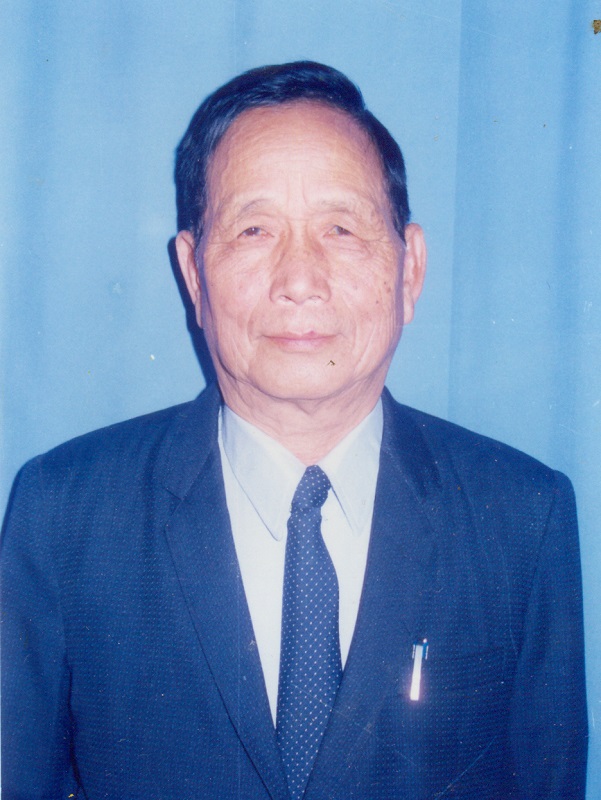
By Tokong Pertin
My 2nd innings as a Govt officer was as district information and public relations officer (DIPRO) begun with initial posting at Khonsa, present Tirap district HQs) before Changlang and Longding districts were carved out of it. Tirap, Changlang and Longding districts are now known as TCL.
Before selection as DIPRO, through rigorous process, I was working as AIR programme executive, selected through Union Public Service Commission (UPSC), from which I had to resign to join as DIPRO in early 1980s.
I was fortunate enough to join in the service at Directorate of Information and Public Relations and Printing’s (DIPR&P) office at Naharlagun, instead of my posting place, for one week training on office functions and press reporting under direct supervision director Lummer Dai and remained in the post till his superannuation in 1998.
Within a week, he gave me a lasting impression. To me, he was a great scholar, novelist, philosopher and champion of woman’s causes, a social reformer, which was evident from his writing as a guide, a father figure and a good friend. Love for humanity was always the most appealing part of late Dai’s amiable nature.
I joined duty at Khonsa but after a couple of months summoned to Naharlagun for an urgent works. While returning to Khonsa by official DIPRO vehicle (Mahendra jeep) bearing registration No. ART-81 (ART stands for Arunachal Tirap), it had developed some mechanical snag and stopped at about 5-km away before reaching Dhemaji town in Assam. When I enquired about the exact location, I was told that it was Hatigarh on NH-52. On closer observation of nearby area, I could notice a milestone indicating Jonai and Silapathar – 105-km and 40-Km respectively and in opposite direction, it indicated Baihatha Chariali and North Lakhimpur at 405-km and 60-km respectively.
My driver late Gopal Rai made his sincere efforts to re-start the vehicle which did not buzz. Few vehicles stopped on my signal, but they politely refused to extend help as they didn’t carry any tools. The local residents assembled on the spot but could not help either despite their willingness.
Thus, I was held-up at Hatigarh for over two hours and in distress as there was faint hope for any help. But, a jeep suddenly stopped and a man alighted. At first glance, I could not recognize the man due to impact of dust but recognized him when dust settles down.
He was none but my director late Payi Lummer Dai, who came walking towards my vehicle and called my name. He enquired as to what had happened. I thought it was Godsend help and announced to the small gathering that he is “Lummer Dai, the great Assamese novelist and I am an officer in his department”.
On hearing his name, a sudden but spontaneous welcome arrangement was made below a tall Simolu trees, few such trees are still standing tall at Hatigarh. Some elders present even invited both of us for light refreshment to which Payi politely refused due to time constraint. In the meantime much needed help too came immediately. A Good Samaritan managed to snap one of the telephone stay cable from the nearby telephone post, through which my jeep was towed up to M/s Dhemaji Mechanical Motor workshop, Dhemaji, by the director’s vehicle.
Since then, as a prized souvenir, I used to carry that very telephone post stay-cable in my vehicle as a blessing rope/tool to use for myself or to extend help to others in need on the road in the event of similar eventualities. On reaching the workshop, I informed one of the mechanics that other gentlemen was Lummer Dai and asked him to inform his owner. The owner soon appeared with customary Assamese namaste to Payi and offered phulam gamucha, tea and snacks to us. Before proceeding for Aalo (Along, the then district HQs of undivided Siang district), he requested the garage owner to repair the soon as it would travel long distance to Khonsa. My jeep was repaired and I reached Khonsa safely and on time.
Payi then was accompanied by his dear and only little son Mibom (known as Bobom by close family members). I was told by Payi that he got delayed for more than 2½ hours at Lakhimpur for Bobom who insisted to buy a new cricket bat. Whenever, I happen to pass this very spot, Hatigarh the Simolu trees and milestone always reminds me of the sweet memories of yesteryear.
Late Dai’s literary works got late recognition in literary world toeing the adage: Better late than never. But late Payi always got spontaneous love and affection from thousand of Assamese admirers and readers where ever he went. The physical and moral support extended to him and his family members by Assam people was visible when he was undergoing treatment at Down Town Hospital, Guwahati and also after his demise, as a tribute to their emotional recognition. Their tribute was truly touching gesture as Luminous Lummer Dai served as a literary bridge between the peoples of Arunachal Pradesh and Assam in true sense.
Arunachal Pradesh people cannot forget the support extended to one of our own sons and his family in distress. This reflected solidarity, which again proved that had he got timely recognition and encouragement, could have scaled many more literary ladders while popularizing Assamese literature. But the almighty will was different than what we felt and desired.
Late Dai, born on 01.06.1940 as youngest son of late Jobu Dai and late Komsak Dai of Siluk, a non-descriptive Adi village, about 40-km from East Siang district HQs Pasighat, and breathed his last at 4.15 AM on 05.04.2002 at Down Town Hospital and his mortal remains were laid to rest at his Naharlagun residence at 11.45 AM on 06.04.2002. May the great soul rest in eternal peace! (The author, who retired as trade & commerce director recently,can be reached at tokongpertin@gmail.com)


 20
