
By A O News Service
ITANAGAR, Jun 05: Arunachal Pradesh, an ethnically diverse state spread in 83,743 square km area and sharing a 1,129-km border with China’s Tibet Autonomous region, is one of the 12 biodiversity hotspots of the world.
Criss-crossed by many perennial rivers and boasting of Kangto, the highest peak at 23,160-feet and Nyegi Kangsang, the main Gorichen peak and other tall Himalaya peaks, like Eastern Gorichen peak, 61.39% (51,407 sqkm) of its geographical area covered with lush green forests, and village Dong known for receiving the first ray of sun, has justified as treasure trove of the nature with rediscovery of lipstick plant in Anjaw district of the state after 100 years.
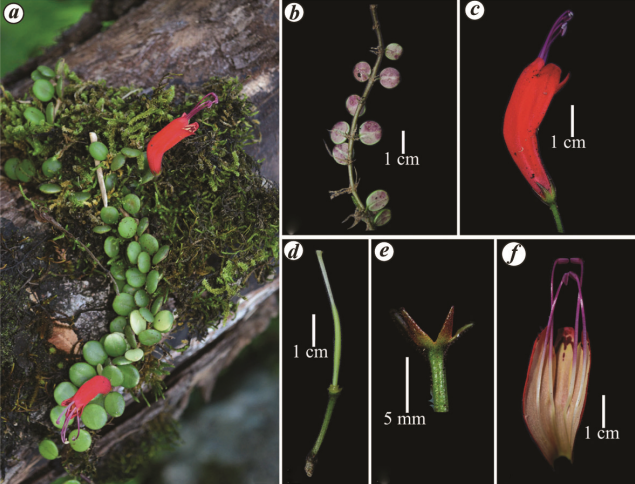
A team of researchers have rediscovered the Indian lipstick plant (Aeschynanthus monetaria Dunn) after 100 years from Hayuliang and Chipru regions in Anjaw district of the state.
As per the abstract of current Science journal, the genus name Aeschynanthus is derived from the Greek aischyne or aischyn, which means shame or to feel embarrassed, respectively, and anthos, which means flower, alluding to the generally red-colored corolla.
“Due to the appearance of tubular red corolla, some of the species under the genus Aeschynanthus are dubbed ‘lipstick plants”, said a scientist of Arunachal Pradesh Regional Centre of Botanical Survey of India.
Stephen Troyte Dunn, a British botanist, identified this species in 1912 based on plant samples gathered from Arunachal Pradesh by another English botanist Isaac Henry Burkill.
A review of the relevant literature, as well as a critical study of fresh specimens and digital photographs of specimens in Kew Herbarium Catalogue, confirmed that the specimens were A. monetaria, which had never been found in India since Burkill in 1912.


 20

