
By Pradeep Kumar
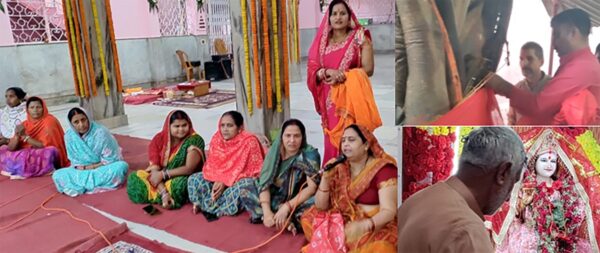
NAHARLAGUN, Mar 25: Prayers have been renting the air with female devotees led by Sujata Kumari praying Goddess Ambika and Durga for greater welfare of the humanity as observation of Navaratri begun at Shiv temple here at 9 am on Wednesday last with great religious fervor along with rest of India.
An imitative of social activist Manoj Rai, the festival begun with chanting hymns by pundits Ram Avtar Sharma and Nanda Kishor Upadhaya.
This annual Hindu festival Spanning over nine nights, in Chaitra and Ashwin months, is observed over nine nights and 10 days in March/April month for different reasons across Indian cultural sphere.
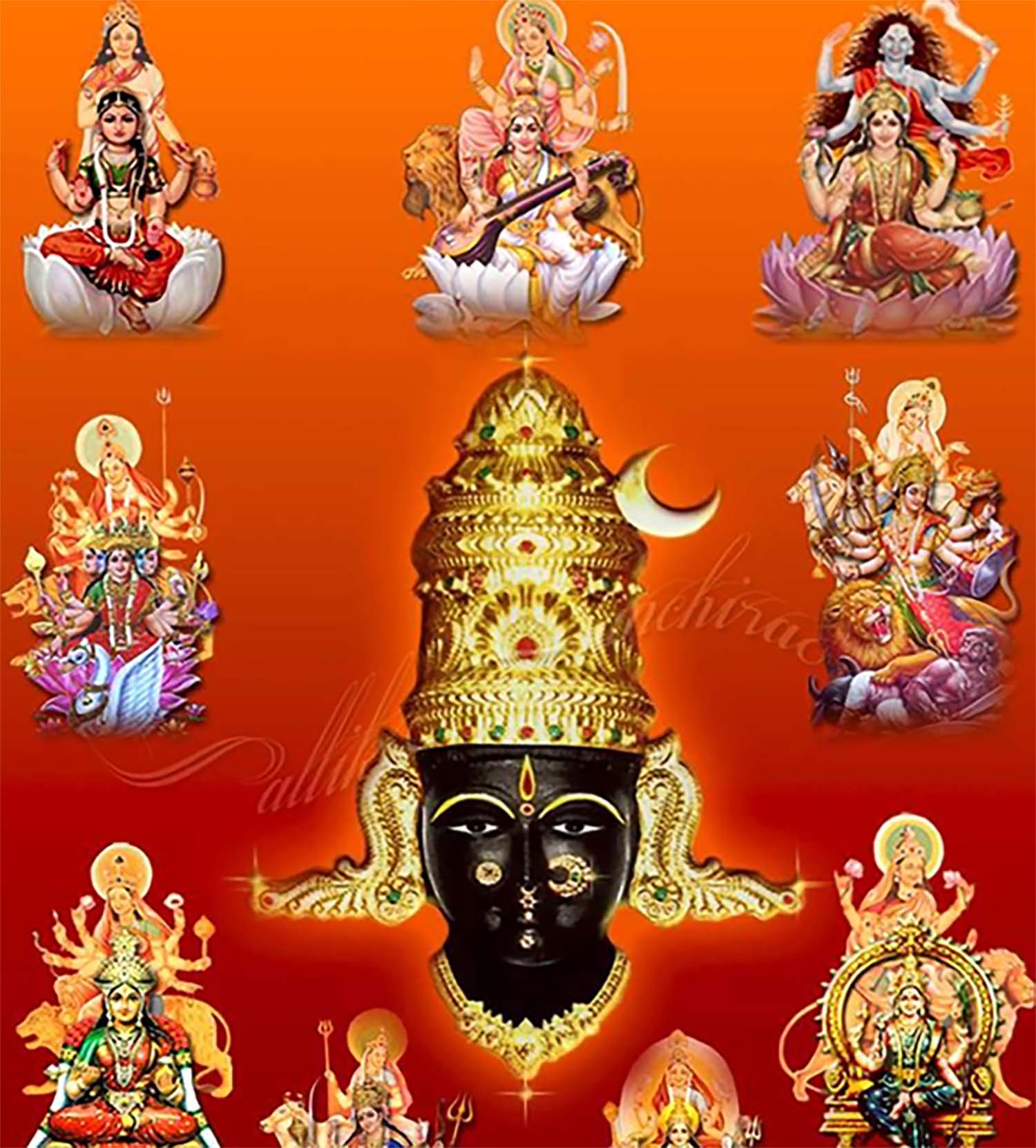
Significance: nine goddesses (Navadurga) are worshipped in Navaratri. It is associated to the prominent battle between Durga and demon Mahishasura to celebrate victory of good over evil. These nine days are solely dedicated to Durga and her nine avatars. Each day is associated to an incarnation of the goddess.Day 1 (Shailaputri): Known as Pratipada, this day is associated with Shaliputri (Daughter of Mountain), an incarnation of Parvati. Durga in this form is worshipped as the daughter of Himavan (Guardian God of Himalaya). She is depicted as riding the bull (nandi) with a trishul in her right hand and lotus in left. Shailaputri is considered to be direct incarnation of Mahakali. The colour of the day is yellow, which depicts action and vigor. She is also considered to be a reincarnation of Sati (Shiva’s first wife, who then reincarnates as Parvati) and is also known as Hemavati.
Day 2 (Brahmacharini): On Dwitiya, Goddess Brahmacharini, another incarnation of Parvati, is worshipped. She is a Yogini in her unmarried self and worshipped for emancipation or moksha and endowment of peace and prosperity. Depicted as walking bare feet and holding a japamala (rosary) and a kamandala (pot) in her hands, she symbolizes bliss and calm. Green is the colour of this day. The orange colour which depicts tranquility is sometimes used so that strong energy flows everywhere.
Day 3 (Chandraghanta): Tritiya commemorates worship of Chandraghanta, the name derived from the fact that after marrying Shiva, Parvati adorned her forehead with the ardhachandra (lit. half-moon). She is embodiment of beauty and symbol of bravery. Grey is the colour of the third day, which is a vivacious colour and can cheer up everyone’s mood.
Day 4 (Kushmanda): Goddess Kushmanda is worshipped on Chaturthi. Believed to be creative power of the universe, she is associated with endowment of vegetation on earth and the colour of the day is orange. She is depicted as having eight arms and sits on a Tiger.
Day 5 (Skandamata): The goddess, mother of Skanda (or Kartikeya) is worshipped on Panchami. The white colour is symbolic of transforming strength of a mother when her child is confronted with danger. She is depicted riding a ferocious lion, having four arms and holding her baby.
Day 6 (Katyayani): Born to sage Katyayana, she is an incarnation of Durga and is shown to exhibit courage which is symbolized by red colour. Known as warrior goddess, she is considered one of the most violent forms of Devi. She rides a lion and has four hands in this avatar as Parvati, Mahalakshmi & Mahasaraswati.
Day 6 (Shardiya Durga) is celebrated on shashtami (sixth day) while it is, Maha Shashti in eastern India.
Day 7 (Kaalaratri): Considered the most ferocious form of Goddess Durga, Kaalaratri is revered on Saptami. It is believed that Parvati removed her pale skin to kill the demons Sumbha & Nisumbha. The colour of the day is royal blue. The Goddess appears in red-coloured attire or tiger skin with a lot of rage in her fiery eyes, her skin turns dark. The red colour portrays prayer and assures devotees that the Goddess will protect them from harm.
Day 8 (Mahagauri) symbolizes intelligence and peace. It is believed when Kaalaratri took a bath in Ganga River and gained a warmer complexion. The colour associated with this day is pink which depicts optimism. She is celebrated on Ashtami (eighth day).
Day 9 (Siddhidatri): On last day of the festival known as Navami (ninth day), people pray to Siddhidatri. Sitting on a lotus, she is believed to possess and bestows all types of siddhis. Having four hands, she is also known as Mahalakshmi. Purple colour of the day portrays an admiration towards nature’s beauty. Siddhidatri is Parvati, wife of Lord Shiva and also seen as Ardhanarishvara form of Shiva and Shakti. It is believed that one side of Lord Shiva’s body is that of Goddess Siddhidatri. Therefore, he is also known as Ardhanarishvara. Lord Shiva attained all the siddhis by worshipping this Goddess, according to Vedic scriptures. In most parts of India, tools and weapons are worshiped in a ritual called Ayudha Puja.
A large dance hall with intricately carved pillars, a structure entirely made of stone, was built by Padmanabhaouram Palace in Tamil Nadu in about 1600 CE has had. This dance hall has traditionally been known as Navaratri Mantapa.
The Hindu diaspora that migrated as indentured servants during colonial era to various plantations and mines around the world, as well as those who migrated on their own, continued to observe Navaratri traditions in Malaysia, Singapore, Thailand & Sri Lanka, built Hindu temples in Southeast Asia in 19ht century, and Navaratri has been one of their major traditional festivals. In Trinidad & Tobago, Guyana, Suriname, Fuji, Mauritius, Canada, South Africa, the United States & the United Kingdom, Navaratri and Diwali have been one of the most visible celebrations by local Hindu communities since mid-20th century.


 20

