
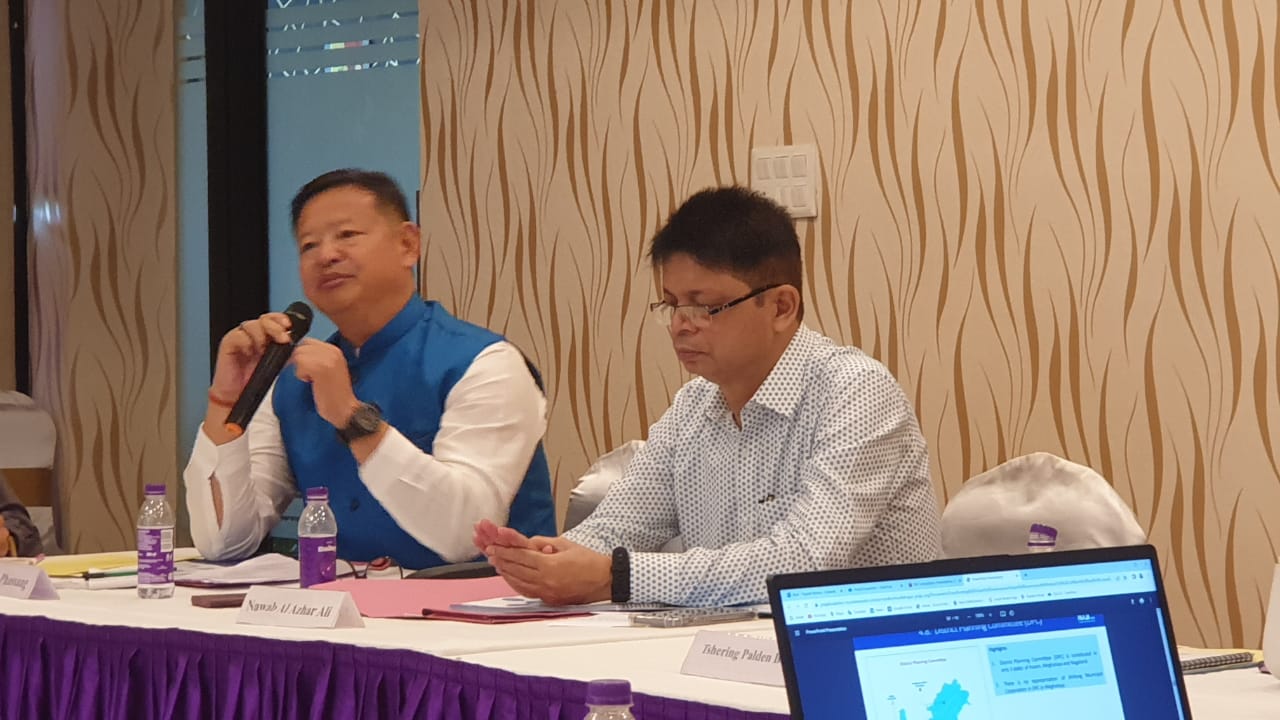
GUWAHATI, Apr 25: IMC Mayor Tame Phassang Tuesday attended a daylong conference of mayors and deputy mayors of all north-eastern states being organized by Praja Foundation, a national consultation on urban governance, at a city hotel here.
Attending the conference as one of the panelists, Phassang highlighted the significance on “Active citizen participation in urban governance”.
Phassang also briefed the conference about how IMC is giving its best effort against all odds for a better milieu in IMC jurisdiction and the state as a whole.
He informed that the IMC with the help of its official and corporators are going the extra mile to keep the city clean, green, and peaceful city with the help of its stakeholders.
He added that to manage daily garbage from the IMC jurisdiction is a major challenge but to tackle the issue, IMC has already started the construction of a solid waste management plant (SWMP) to dispose it without disturbing the environment as well as sewerage treatment plants following the guidelines of NGT.
Phassang also stressed on sharing information and assistance with each other to protect the environment.
Reiterating that Jan Bhagidari (public participation) plays a vital role to keep the city clean and green, the mayor added that besides, the public participants; the IMC has full support from the state government led by Chief Minister Pema Khandu who has been extending financial grants and logistic support for the smooth functioning of the corporation.
Praja Foundation conducted research and prepared the Urban Governance Index (UGI) that focuses on the themes of empowering mayor, council, fiscal empowerment of city governments and citizens, as well as research on sustainable development goals (SDG), climate change and urban planning.
UGI has now been completed in the north eastern states of Arunachal Pradesh, Assam, Manipur, Meghalaya, Mizoram, Nagaland, Sikkim and Tripura.
The objective of the conference was to discuss the findings of the report of UGI and identify the common problems including levers and barriers facing the NE states, identify possible urban governance reforms and build a network and stakeholder capacity for implementing reforms.


 20

