
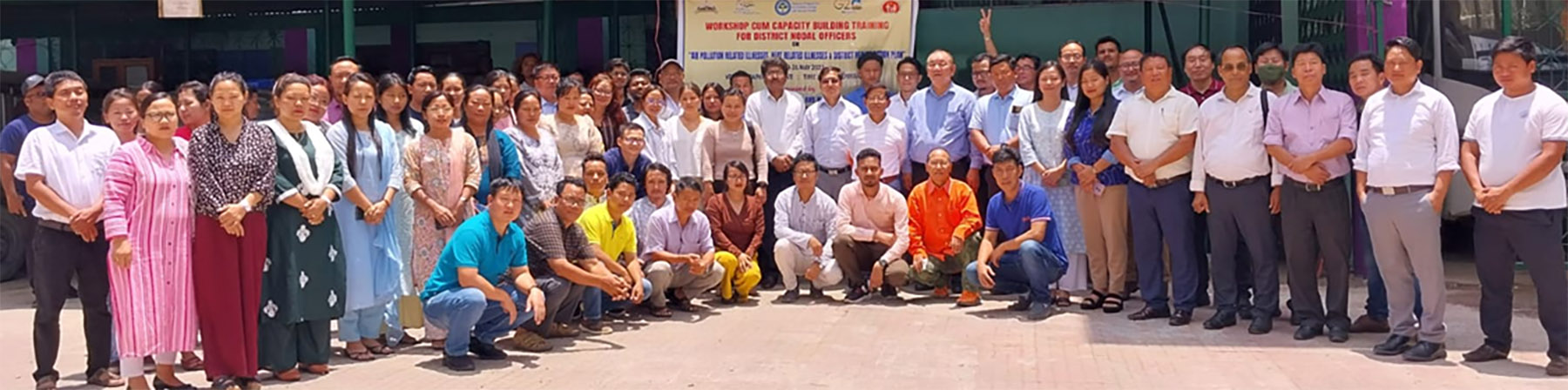
NAHARLAGUN, May 29: A three-day workshop-cum-capacity building training on climate change and human health (CCHH) for district surveillance officers (DSOs), district epidemiologists (DEs) and data manager (DM)/data entry operator (DEO) of all 25 districts of state and Itanagar Capital Complex began in Administrative Training Hall here on Monday.
Chief conservator of forests Rajesh S, speaking Aas chief guest, elaborated on Pakke Tiger Reserve 2047 Declaration, way forward, report and role of health department in CCHH.
National Health Mission MD Marge Sora advised to stress on action plan and encouraged the participants to carry forward the skills they learn from the training in public health intervention in the state.
Health services director Dr Moromor Lego shared his experience with climate change and motivated participants to inculcate self-motivation to upgrade knowledge followed by TRIHMS faculties taking sessions.
Associate professor (TB chest medicine) Dr Tamar Paleng, took insightful session on health effects attributed to air pollution. MD (Medicine) Dr Ratan Ram took a session on health effects attributed to ambient positive temperature departure. MD (PSM) Dr Pallavi Boro discussed on evidence gathering and scope for research on effects of air pollution and heat wave on human health.
Consultant Dr Bomto Riram took on heat related illness surveillance, air pollution related illnesses surveillance and introduced state action plan on CCHH, called for district plan according to its geography and social demography.
The workshop, expected to provide understanding about importance of climate change to human health, its surveillance and monitoring mechanisms as per guidelines ofrom National Centre for Disease Control, Union Ministry of Health and Family Welfare, besides train district surveillance units in better planning and implementation of vertical health programs.
Climate change is defined as “a change of climate which is attributed directly or indirectly to human activity that alters the composition of the global atmosphere and which is in addition to natural climate variability observed over comparable time periods.”
All weather disasters and change in climate ultimately affects Humans’ Health directly or indirectly. It affects social and environmental determinants of health like – clean air, safe drinking water, sufficient food and secure shelter. It negatively affects human health and more so, on vulnerable population like pregnant women, children and old. Increased temperature causes rise in heat related illnesses and deaths, exacerbate cardio-respiratory and allergic diseases and certain cancers. Increased precipitation can cause landslides, floods and droughts, costing lives directly. Deforestation and global warming increase animal borne, water borne, food borne and vector-borne diseases and overall increased risk of disasters and malnutrition. Indoor air pollution (i.e. due to using wood in Kitchen) would increase probability of cancer and damage vital organs.
Thus, this workshop encompasses all those aspects with focus on prevention of effects to Human health. The training programme aims to build a skilled public health workforce, ready to face Climate Change related health threats, both anticipated and those not expected. In addition, the training also focuses on building relationships between Department of Health with all Stake Holders of Climate Change, so that they can complement each other in various public health response related activities.
Hands-on training on planning of district health action for CCHH will be organized by SEHC with help from JHPIEGO team, followed by presentation of draft plan by all districts, according to an official release.


 20

