
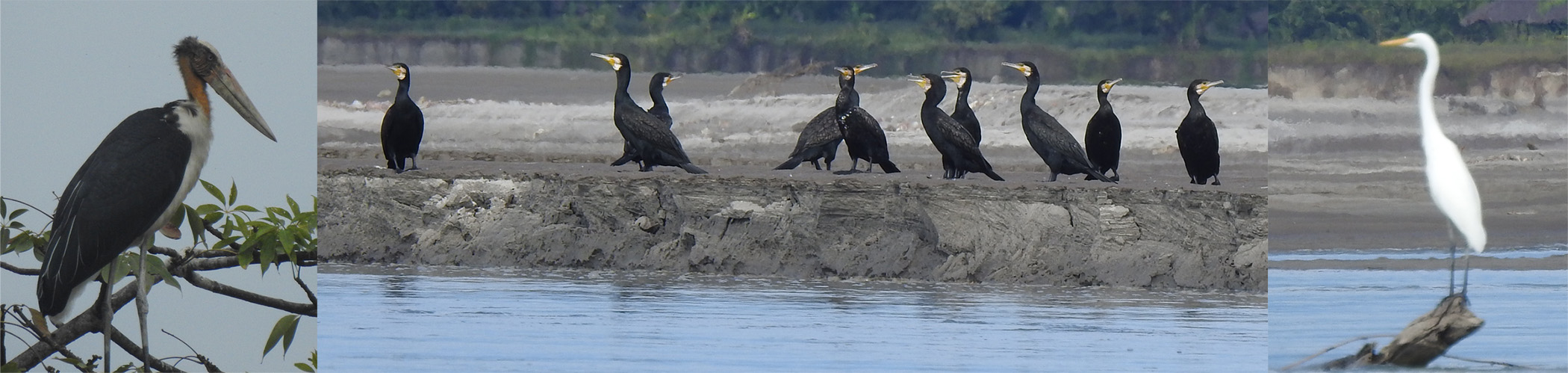
- Matter of concern: Ornithologist
DEWS saw over 150
bird species in 2022
AONS adds: The DEWS, established in 1978, spread in an area of approximately 190 sqkm, sandwiched between Siang and Sibya Rivers in Arunachal Pradesh-Assam boundary boasts of rich biodiversity. It receives few hundred migratory birds annually. In 2022, over 150 bird species, including endangered Bengal florican, were recorded, as per Bombay Natural History Society data. It had also drawn attention of BirdLife International in 2020 to identify important bird areas.
Arunachal Pradesh has eight wildlife sanctuaries (WS): Eagle Nest WS, Pakhui Nature Reserve, Talle Valley WS, Dibang WS (largest), Daying Ering Nature Reserve, Mehao WS, Kamlang Nature Reserve and Itanagar WS. But Eagle Nest WS, a known bird watching destination, is home to almost 454 bird species.
However, India has around 72 bird sanctuaries (BS), which boast of protecting around 1,210 bird species. The Vedanthangal BS set up 1796 is the oldest while Bharatpur BS is the largest.
From Our Correspondent
PASIGHAT, Dec 13: The migratory birds from colder regions, like Siberia and Mongolia used to arrive in various sanctuaries in India in the Himalayan region, including Daying. Ering Wildlife Sanctuary (DEWS) under Pasighat forest division here by November and December, which has been late this year with lesser number of birds, said Delh-based ecologist, ornithologist and conservationist Tarun Kumar Roy.
Pointing out that climatic change was responsible for such phenomenon, Roy said, adding if the birds arrival too late in less numbers, it would be a matter of concern and require in-depth study, said Roy who has also been studying on birds in DEWS since 2019. The DEWS boasts of the finest and biggest wetland in this Himalayan state and surrounded by numerous tributaries of Brahmaputra River to make it a favoured destination for migratory and other wetland birds, Roy reasoned.
Three fishermen fishing inside the DEWS area, including fish mahaldars and driftwood timber operators from Assam were intercepted near Assam-Arunachal Pradesh boundary and their fishing nets, boats and timber cutting saws were seized during field survey. Thus, Roy said that such illegal movements in wetland area should be checkes as it would disturb the waterbirds. He also questioned as to how fishing permissions have been granted as commercial fishing and commercial driftwood timber operation would have adverse affects on the ecology region and movement of waterbirds.
Roy as resource person conducted a six-day training-cum-waterbird census in Borguli, Sibiyamukh and Anchalghat wildlife ranges of DEWS. The training-cum-census was conducted in association with teams of Eco-Development Committee (EDC) and Community Monitoring & Surveillance (CSM) of the sancturary and supported by Guwahati-based renowned NGO Aaranyak.
Notably, Roy is also a member of Indian Bird Conservation Network (IBCN), IUCN SSC (TWSG, EC, Red-list Authority), AWC Delhi State Coordinator-Wetlands International (South Asia).
The training and census was for three days each covering all wildlife ranges with whole hearted support of DEWS divisional forest officer Tasang Taga. The census begun from Borguli Wildlife range headed by range officer C.K. Chowpoo.
Interestingly, late Daying Ering’s daughter Ponung Ering Angu, a retired ICDS joint director, who also joined, said that such initiative would help regain lost glory of DEWS. She assured all possible support for the sanctuary’s protection being one of the most favoured wildlife hubs in the NE that lures eco-tourists. This would benefit local communities, she said.


 20

