
A chapter from history
Beyond the Horiaon
By Pradeep Kumar
Muslim invader Bakhtiyar Khalji after destroying Nalanda and killing Buddhism had invaded Bengal after overthrowing Sena dynasty in Gaur between 1198 and 1202 to become its Governor and started spreading Islam. Bengal king Lakshmansena had fled without any fight. The invader had then started eyeing virgin North-East. He was in a tearing hurry as he deeply desired to be like Mahmud Ghaznavi..
He became ambitions to conquer Tibet in far North-East known as ‘forbidden land’, which historically had good trade relations with Bengal, Bhutan and Kamrup (Assam) along the Tea-horse route. Tibet had prized possession of rugged horses just like that of Central Asia.
Since it was near Bengal, Khilji wanted to wrest this route and with this, he thought he would be able to control part of the strategic Silk route. Kamrup was named after Hindu god of love, Kamadeva who in this region only by Lord Shiva by opening his third eye as he had broken his tapasya (deep meditation).
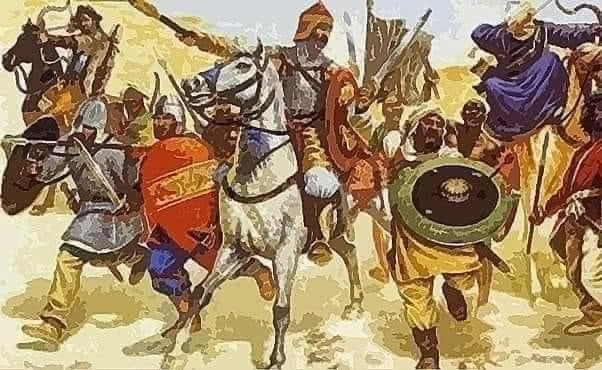
Khalji in C.1206, planned to raid Tibet via Kamrup with his 10,000 ghazis (soilders) to take control of the region, get rid of Buddhist monks who had reached there after fleeing from Nalanda and spread Islam in hitherto virgin mountains. Isam (majhab) was limited either to deserts or to the plains as none of the rulers had attempted to spread Islam high in the mountains till them.
The expedition was guided by Kachari tribal chief Ali Mech, who had converted to Islam just a year ago in 1205. He was considered the first Muslim convert in Assam and a father figure of local Muslims of the region as he became staunch anti-Hindu after conversion.
On his way to Tibet, he crossed Kamrup regions, where he invited Hindu king Prithu to join him on the plundering expedition. But, the latter refused but allowed Khilji to pass though his territory. The Turkish army quickly reached Tibest’s Chumbi Valley, located between Sikkim and Bhutan, without any resistance, whose reason become evident soon as the unfamiliar cold mountain passes were no game for Khilji’s Army.
The Tibetans had lured Khalji and his army into a trap and inflicted heavy casualties on Turkish Army and Khalji decided to retreat. But, all along the escape route, the Tibetans continued to carry out relentless guerrilla-style attacks on the retreating army. Khalji’s men were so badly defeated that the starving soldiers were forced to eat their own horses to stay alive.
On their way back to Bengal, the army passed through the plains of Kamrup (now North Bengal) and while passing the territory through sub-alpine Himalayan hills reached the ancient stone bridge on the foothills near Teesta River. But Kamrup army blocked the roads, cut off his supplies and inflicted enormous casualties on Khilji’s Army near present Siliguri. Khalji’s 10,000-strong force lost large number of men and horses reducing tt to only around 100 men.
Thus the Tibetan and Kamrup Armies had defeated Khalji squarely by using strategic deception and he was forced to retreat to Bengal. During withdrawal, he was reduced to such misery as he had nothing to eat, so much so that he was forced to kill his beloved horse to eat it so also his soldiers. After returning to Devkot (present Dakshin Dinajpur district), h went into depression and murdered by his trusted commander Ali Mardan, Another account speaks of his death due to ill health and injury during retreat after Tibet and Kamarupa debacle. This defeat has proved that the Turks were not invincible when fought with enough deception and subterfuge.
An inscription near Guwahati records complete defeat of Turks on 27.03.1206. Prithu took many Muslim soldiers prisoner. But, he was also inflicted with Prithviraj syndrome. All were subsequently pardoned and asked to settle in Assam. Prithu lovingly called them Gaudia as they originally came from Gaud or Ghor. Even now, Muslims in Assam are called Gaudia. After the dust settled, these soldiers started converting local Hindu Assamese people to Islam. The Hindu generosity was unnecessarily showered on the wrong people at the wrong time.
However, before venturing to invade Tibet with surplus looted funds, he had built several mosques and madrassas over the temples. He is credited for converting Bengal into a Muslim majority province. Thus, he is immortalized in Bangladesh and treated with highest respect. His conquest began 500 years of Islamic rule in Bengal which ended with the Battle of Plassey in 1757. The Nalanda railway station is ironically named Bakhtiyarpur for his brutality. Prithu, however, remained unsung. (With inputs from Ramesh Negi)


 20
