
By Pradeep Kumar
ITANAGAR | Oct 15 | The ongoing expansion of NH-415 for the proposed four-lane has been exposing the past history of state capital Itanagar. The highway was known as NH-51B in the past.
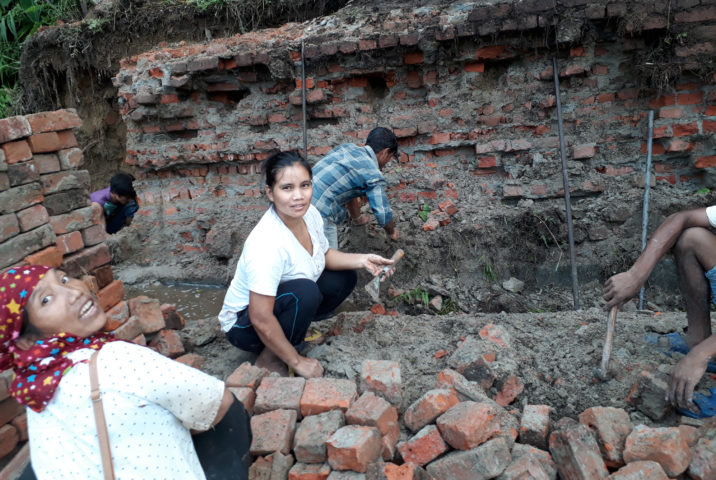
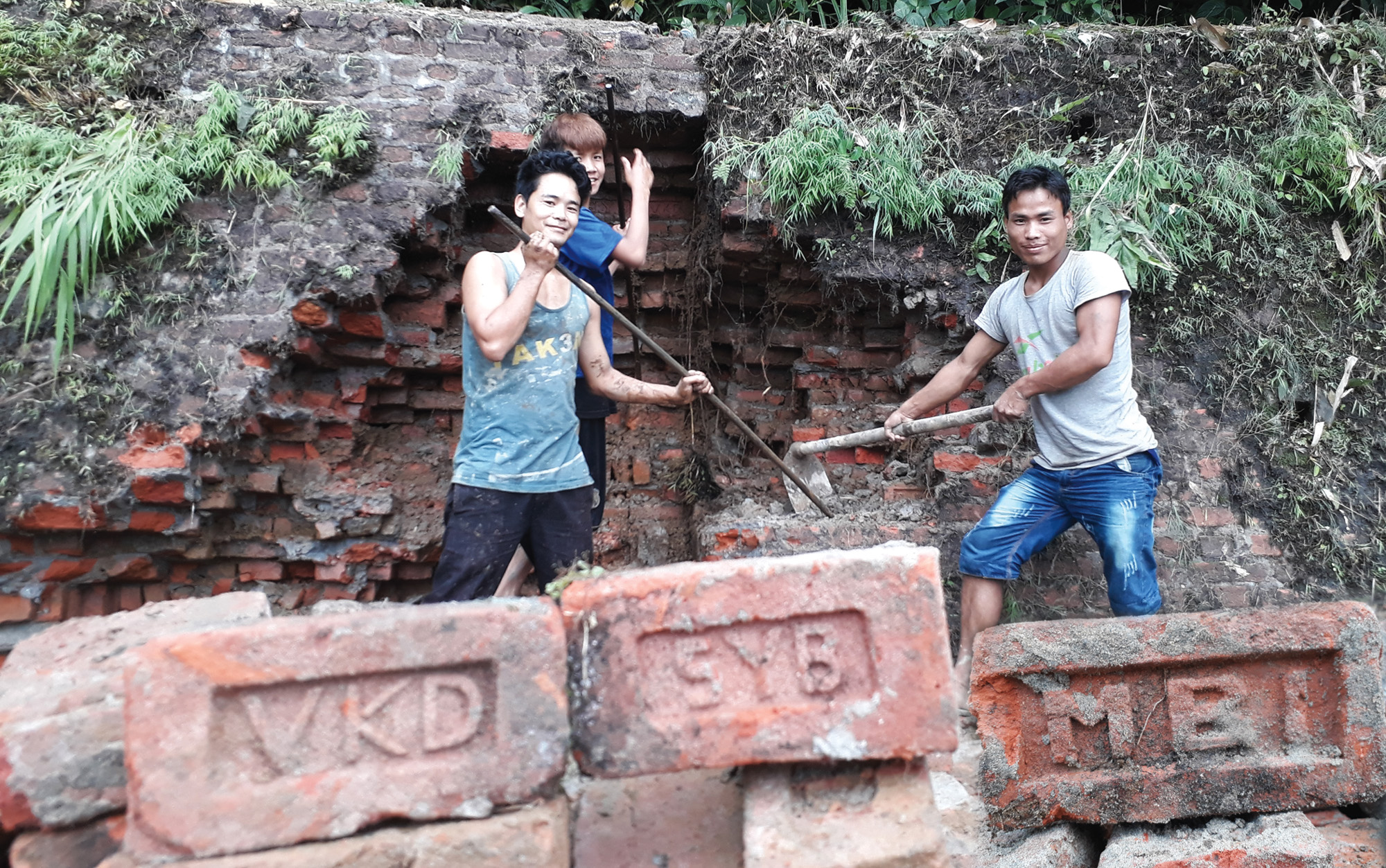
Very strong brick walls of three-feet width built to protect the present Itanagar-Naharlagun road, the lifeline of the state capital, is being dismantled to make space for the four-lane.
The walls are so strong that few labourers using jampers were finding it difficult to break and remove the bricks.
Most probably, these walls were built by the Central Public Works Department (CPWD), which continued to work during 1981 to 1983 before the state PWD was formed.
A senior local labourer, who was engaged to restore the water supply line in higher reaches of Poma area on 18.0717 damaged by heavy shower, after recognizing me, said that this brick walls were built long long ago.
The wall’s work undoubtedly proved its excellence while the bricks were looking fresh with marking of the makers – VKD, SYB, MBI – totally intact, reflecting the quality of works. Theses bricks might have been built somewhere in Assam though present brick clings are mostly located at Borgong in Sonitpur district, which meet the requirements of Capital Complex.
It would be wise to recall here that A senior officers’ conference chaired by development commissioner KAA Raja was held at Along (Aalo) in 1971 to finalize the site for shifting NEFA capital from Shillong. Raja, who was in a hurry to shift the capital, ordered immediate construction and the capital was completed in a record one year and was declared open at Ganga by Assam Governor BK Neheru. Though the pioneering endeavours fetched Tem Tai a state award (silver medal), the contributions of innumerable people who struggled in dense jungles, braving wild animals and inclement weather to make the road to Itanagar went unrecorded.
Dastidar, who led a survey team from Ziro, had told that wild animals were seen even during daytime. The corpses of a tiger and an elephant were found near Itafort. Their tusks were preserved in state assembly but were stolen later. Daria Hill, Buram, Tarajuli, Mobpop, Chu-lupu (Ganga), Bat, Poma, Beicha, Teipu and Yupia were the only inhabited areas then, with few thousands population. There was no road, no market, no hospital and school, except the one at Daria Hill. Even for salt one had to go to either Gohpur or Harmuti. Much water have flown down Dikrong and Pachin rivers while Arunachal would celebrate its 22nd statehood on February 20 next.
These protection walls might have been built only in 80s after experiencing repeated road blockage by landslides because of the loose status of the soil. These walls could be as old as 35 year if built during 1981-83.
Those involved in the construction of these walls are neither available nor contactable nor records available to ascertain their exact age. But none could deny these structures as part of the state history. New ones replace the old as part of the evolution process, like remains of Ita Fort stands stall near the Raj Bhawan and Itanagar police station while those behind their construction are part of history today.


 20
