

Beyond the Horizon
By Pradeep Kumar
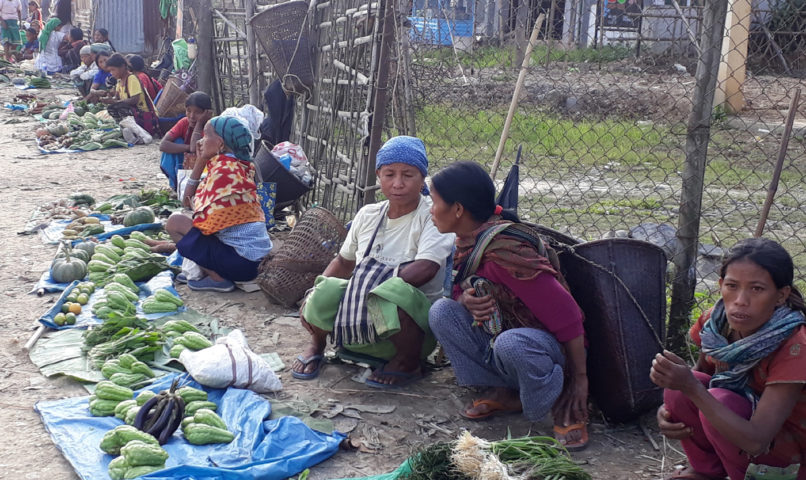
Longding carved out of erstwhile Tirap district on 19.03.12 as 17th district, even after five years & seven months, paints a very paradoxical picture of development of its denizens.
Longding joined Tawang, W/Kameng, E/Kameng, P/Pare, K/Kumey, L/Subansiri, U/Subansiri, W/Siang, U/Siang, E/Siang, D/Valley, LD/ Valley, Lohit, Anjaw, Changlang and Tirap as Arunachal’s new offspring. A recent visit to district HQs Longding gave a very pathetic site of development, including dilapidated single road, lack of forward & backward linkage to benefit poor farmers. Rows of thatched houses in the periphery of district HQs with few RCC buildings standing prominently justifying the adage – first impression lasts long!
Women vegetable growers selling fresh vegetables at very cheap rates in the main market was understandable, but a woman offering bamboo mat just for Rs 200 was shocking. She makes it in five days but her distress sale at through away price indicated dire necessity.
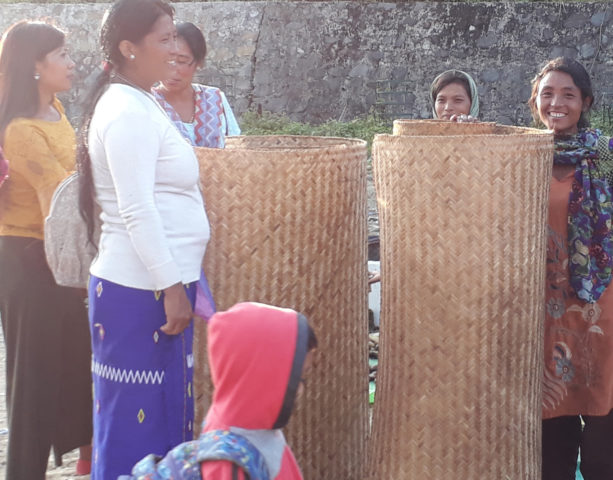
The local residents mostly farmers would have been earning sustainable livelihood had there been good roads to provide forward and backward linkage to nearby Assam. There are road links from Tirap district HQs Khonsa, Kanubari and via Nagalang to reach Londing. The drive from Kanubari through the narrow potholed road took over two hours. But while returning en-route Zedua, Chating, Tijing (police check gate) though the time was same, but the hilly road of Nagaland offered a pleasure ride. This raises enough question as to why Arunachal engineers have failed to build good roads in the same Patkai Hill range though road link holds key to development?
This district’s vast visible and invisible natural resources are yet to be taped. To name a few:
Paan (betel leaf) having global market, is a life sustaining creeper for thousands of Longdingians, as documented by journalist-turned lawmaker Gabriel D Wangsu, in his remarkable documentary Triumph over Tisa. Many die while falling from tall tress while climbing them by using the bamboo clamps fixed on trunks to pluck the leaves. Numerous remain maimed for lives in such accidents with no ex-gratia whatsoever as life continue to flow along the current of Tisa, from Myanmar border to Assam.
The cultivators pack the leaves and transport it through hand-made ordinary bamboo rafts while sustaining on catching fish from Tisa and resting for a while mid-way, before reaching the market in Assam. Tisa is live-giver, like other two important rivers Tissing and Tewai, which record the testimony of Wanchos’ struggle for survival.
Green gold: Tea is the most important non-food crop of the NE region. Assam and Tripura are the largest producers of the tea in the region and they accounts for more than 54% of the total tea produced in the country. A group of foreign tea growers from Canada, New Zealand, USA and UK had visited the Abali Organic Tea Garden (AOTG) in Lower Dibang Valley district, after Canadian organic tea expert Kel Kelly advocated growing of organic tea in the wild without destroying the forests to create a sustainable source of livelihood during his visit to the state in March 2010. Why not popularize organic tea cultivation?
White gold: Environment-friendly Rubber has equal growth potential in Longding that could woo numerous jhum cultivators to earn white gold. Reportedly, the RBI has targeted rubber cultivation in 4,000 hectares during the 12th Five Year Plan with a subsidy of about Rs 52 crore, if the state has takers.
Hidden gold: The reserves of oil trapped in coal deposits in Arunachal Pradesh (including Londging) and Assam can produce 140 million tones of oil per year to sustain India’s fuel need for the next 100 years, as officially told by former geologist OIL CMD Chudamani Ratnam and substantiated by then Union Petroleum Minister Mani Shankar Aiyer on 10.11.05 at Itanagar in presence of then chief minister Gegong Apang and PRI leaders from all over the state”.
Black gold: The state’s profile records coal reserves including the Namchik-Namphuk coal mine in Tirap district estimated at 90 million tones. Large coal and oil deposits have been found in Longding district especially in Kanubari area.
Liquid gold: Arunachal with 58,000 MW (Central Electricity Authority) is considered to be the future power hub of India. And with three perennial rivers, Londing has the potential too. The GoAP could tap hydropower through the community like in Bhutan.
Tourism: Wanchos are known for their rich cultural mosaic, very colourful dresses and ornaments and their war dance draw the attention of one and all when and wherever presented.
The Noctes, one of the major tribes of this tribal dominated state, performed a unique ritual (Pohornyu khaam siet) at Lapnan village on March 11 to revive their centuries-old custom, perhaps after 200 years, to install new log drum (khaam), considered world’s largest and longest musical instrument, symbolizing the spirit of Arunachal Pradesh, is a glittering example in hand.
If Nagaland could draw huge tourists from within and outside India for its Hornbill Festival, why not the Longdingians could follow suit by mooting “Wancho or Nocte Festival”? Will tourism department evolve a plan?
Longding calls for higher commitment in American President John F Kenedy’s words: Ask not what your country can do for you – ask what you can do for your country? I recalled this when Donyi (Sun) was going down the distant horizon.
Longding with peculiar topography offers many a challenges for which the planners need to adopt situation specific strategy for development. The desired commitment would undoubtedly help it to march ahead of other developed districts. But how long it would take is a million dollar question? Why not wake up now before it is too late?


 20
