
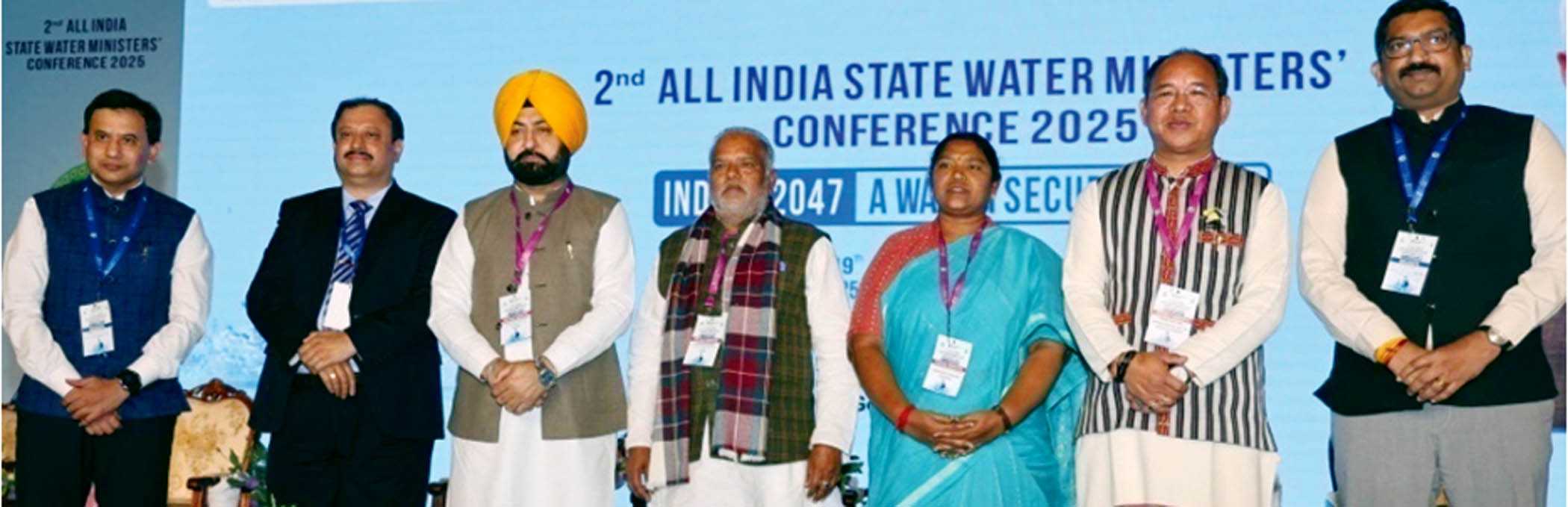
UDAIPUR, Feb 19: While showcasing best practices in water conservation and reviving drying water sources, PHE&WS & Home Minister Mama Natung reflected commitment of Arunachal Pradesh to sustainable water management during the concluding day of 2nd All India Water Ministers’ Conference (AIWMC)-2025 in this famous Rajasthan city here on Wednesday.
Natung, while co-chairing a thematic session on ‘water delivery services with focus on drinking water’, proposed to to host the next Jal Jeevan Mission (JJM) meeting in his state for its unique position in the NE as India’s only male river enters the state at Tuting as Siang, asBrahmaputra River in Assam and as Jamuna in Bangladesh to serve as a crucial water source for the NE states to support agriculture, biodiversity and hydroelectricity generation.
This move aims to promote the state’s initiatives in water management and conservation, as the minister is committed ts to conserve water resources and promote sustainable practices being vital for state building.
This two-day conference, themed ‘Water Vision @ 2047’, organised by National Water Mission of Union Jal Shakti Ministry, saw participation of top policymakers and experts, ministers and officials to shape India’s water security vision through innovative solutions. (OSD)
PIB adds: This 2nd conference, based on the first conference held in Bhopal in January 2023, aims to shape India’s water security future.
The theme aligns with PM’s vision of a developed, water-secure India while stressing importance of sustainable water management to support agriculture, industry, and domestic use for preserving rivers and ecosystems for future generations.
The conference revolved around six thematic pillars central to water management – strengthening water governance, water storage infrastructure, augmenting supply, water delivery services with focus on drinking water, water delivery services with focus on irrigation and other uses, demand management & water use efficiency, integrated river and coastal management.
It addressed crucial aspects of water management, including effective governance, transboundary cooperation, innovative financing and community participation. It also stressed on technological solutions, efficient water use and better coordination across sectors to ultimately achieve the goal of a water-secure, developed India by 2047, where access to safe and sufficient water is ensured for all citizens.


 20

