
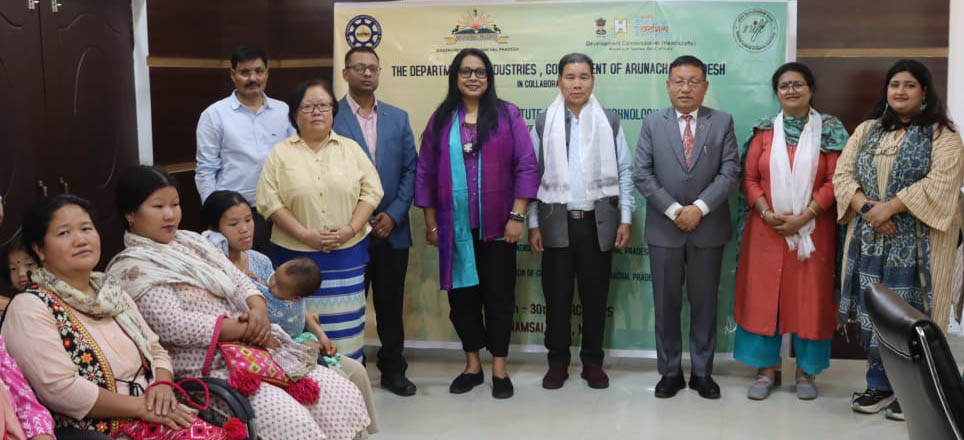
TEZU, Mar 27: A two-day workshop-cum-seminar under Comprehensive Handicrafts Cluster Development Scheme of Union Textiles Ministry Kolkata’s National Institute of Fashion Technology (NIFT) in collaboration with state’s Industries Department begun here on Thursday.
Industries commissioner Saugat Biswas, in his inaugural address, reaffirmed the GoAP’s commitment to empower participating 100 local artisans by refining their skills with modern designs through advanced training.
The department has been collaborating with premier institutions, like NIFT, Ahmedabad’s NID and National Bamboo Mission to ensure high-quality mentorship and training for artisans.
A dedicated session would be devoted to explore unique craftsmanship, design aesthetics, and color patterns of state’s tribal communities, he added.
Lohit DC Kesang Ngurup Damo, In his address, stressed the significant role of NIFT in skill development and encouraged artisans to take advantage of such initiative to refine their skils to widen market reach of their their products.
Tezu ZPM Balong Tindiya exhorted the trainees to enhance their craftsmanship and explore new market opportunities.
Industries deputy director Pemchom Lama highlighted transformational potential of the workshop and urged them to fully utilize the benefits in own interest. She stressed that participation in such initiatives could add significant value to their existing skills while GoAP schemes offer financial and technical assistance for their benefit. Modernizing designs while retaining traditional authenticity could help enhance presence of their products in national and international markets, she added.
Themed “Creating Avenues to a New Identity,” the workshop is being conducted by a team of expert designers led by NIFT’s Fashion & Lifestyle Accessory department chairperson Prof. Jayati Mukherjee and NID experts.
The trainees would be given hands-on training and interactive discussions on raw materials and production techniques to strengthen their knowledge of sustainable sourcing and efficient production.
Artisans were introduced to ways of integrating traditional motifs and weaving techniques into modern markets while maintaining cultural authenticity and educated on promoting their products effectively through improved market linkages and branding. They were also.
The artisans were also introduced to various Govnt schemes and financial support programmes, like M Formalisation of Micro Food Enterprises, Prime Minister’s Employment Generation Programme, PM Vishwakarma Yojana (PMVY), Deen Dayal Upadhyaya Swavalamban Yojana and Unnati Scheme.
PMVY state head Rohit Sahu conducted a session on entrepreneurship to guide then on accessing Govt support.
District industries center EO Yamang Taggu, ArSRLM BMMs Chanyo Wangsa and Takar Hakom conducted sessions on business development, financial assistance, and documentation processes. (DIPRO)


 20
