
Beyond the Horizon
By Pradeep Kumar
Arunachal Pradesh, which has earned many a sobriquets because of natural beauty, has been attracting foreign tourists slowly but steadily.
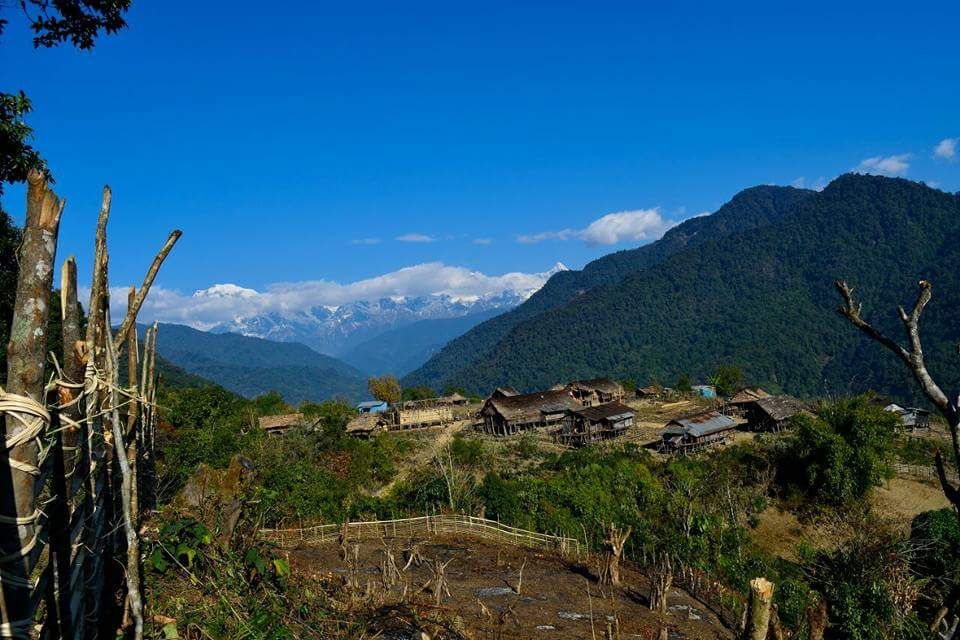
 The blue sky over the lush green hills many a times gives an impression as if it is a Nilalay, means Bluehouse (nil – blue and alay-home).
The initiative of bloggers, YouTubers and social media groups touring the state on The Arunachal Odyssey, to promote Arunachal Tourism and seven US nationals, assisted by a local tour operator, touring 10 districts on motorcycle are laudable. But it would not be that easy to unravel many unknown facets of this vast Himalayan state.
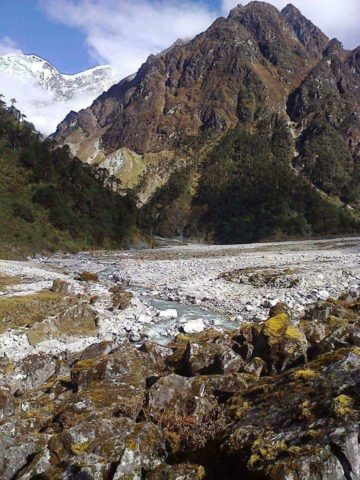
Home Minister Kumar recently cited the example of Kento hill in East Kameng district where his deputed ITPB team at 18,000-feet height found 1,057-metre long and 854-metre wide heart touching Charen Lake. Arunachal, much beautiful than Paris, would turn a global tourist hub once the reality is known to the world, Waii had opined.
One Ram Kasang of the district surprised with pictures of his native village Sachung under Lada circle. These pictures beyond explanation prove the adage ‘Seeing is believing’ right.
Lal Ane – a Shangri-La in Land of the Rising Sun
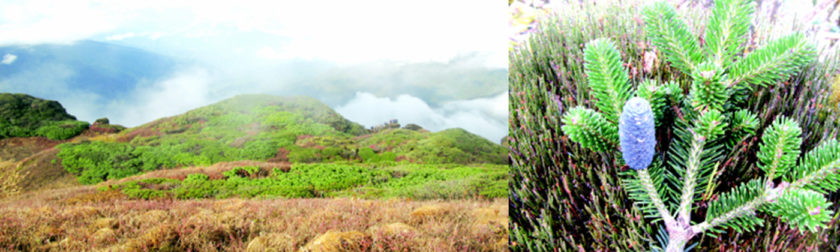
With Arunachal Pradesh posing to tap its vast tourism potential, a survey conducted in 2008 by Papum Pare DC Bidol Tayeng (present education secretary) has led to the confirmation of the existence of a virgin valley, far away from the hustle and bustle of human habitations, which could be turned into an attraction for nature lovers and adventure tourists alike.
Lal Ane, a flat valley spread over 21-km in length and 6.5-km in width in the Lal Ane mountain range, is situated at an altitude of about 12,000 feet above sea level, and located around 30-km from Mengio circle of Papum Pare district. It has alpine meadows and remains snow-capped from November to March.
The valley is a repository of varied flora and fauna, according to East Kameng DPO Vijay Sonam, who had led a 119-member team comprising Govt officers, scientists, GBs and youths including women to the valley in November 2008.
Nature in Lal Ane is in its most unparalleled form, with numerous plants, orchid species and rhododendrons blooming in the wilderness, SFRI scientist RK Taj, who was in the team, had said and urged the forest department to declare the mountain range as a biodiversity hotspot.
The 65-km Yazali-Sakiang road links the valley. Tourists travel by vehicles up to Sakiang (Mengio) from where it takes a trek of three days via Tapo and Pega to reach the spot.
Lal Ane peak, which houses many wild animals, remains under cloud cover most of the time. But under a clear sky, it facilitates a panoramic view of K/Kumey and E/Kameng districts, surrounding peaks and the great Himalayan range is in the morning hours before 10 o’clock during November-March. The night temperature during Nov-Dec is 2-4 degrees Celsius and the daytime temperature during this period is 2-6 degrees Celsius. The rich fauna reportedly includes the Himalayan Black Bear, monkeys, porcupines, wild goats, tigers, wild boars, tragopon, grosbeaks, white eagles, snakes (pit viper, tits etc). A thorough investigation could help find the existence of other groups, both amphibian and reptilian, says former chief minister Nabam Tuki.
Union MoS (Home Affairs) Kiren Rijiju on 07.04.15 had proposed to set up North East Mountaineering, Adventure Sports Institute (NEMASI) to help tap state’s vast potentials commercially while boosting tourism.
While talking to media he had lamented that the Defence and Home ministries by imposing Restricted Area Permit (RAP) and Protected Area Permit (PAP) have been obstructing opening up of the Himalayan peaks which are yet to be surveyed, identified and named to woo mountaineers, unlike China which has opened its peaks to the adventurers.
The GoAP should pursue the Centre to set up NEMASI that could play a vital role in unfolding the unknown and unseen natural beauty of the state.
Moreover, the proposed regional Film and Television Institute in the state in the line of national film and television institute and Kolkata-based Satyajit Ray Film and Television Institute could serve as panacea to bring many unknown aspects of the state to limelight.
The state is proud to have a national level filmmaker Nang Tanvi Manpoong, who knows she could think of a film that would help the world to see the unseen mindboggling landscape of this state!


 20
