
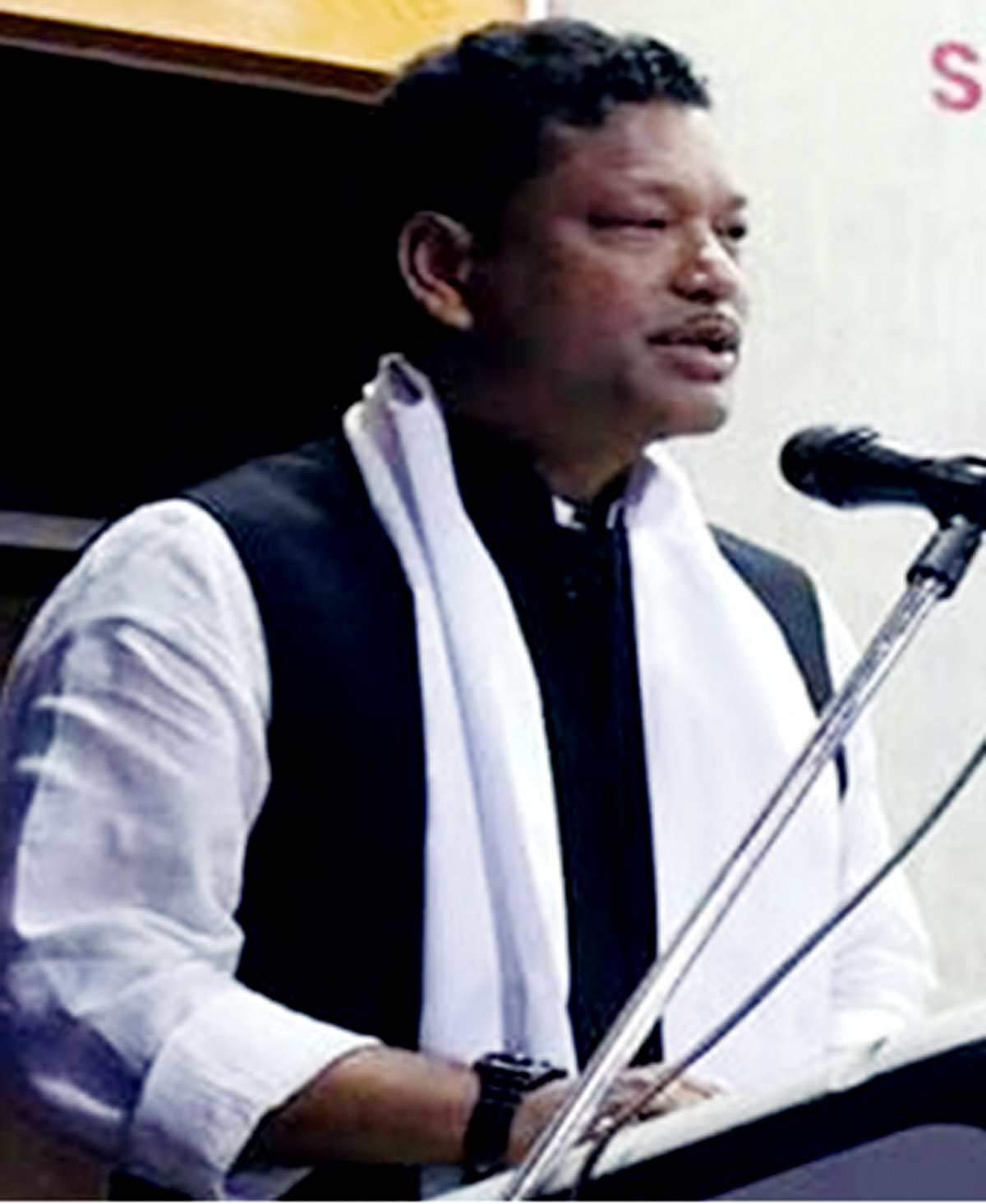
RONO HILLS, May 09: Praising the GoAP for its move to introduce mother-tongue instruction in schools, Legislative Assembly Speaker Tesam Pongte made a compelling case for preservation of shamanic chanting traditions and languages of Arunachal Pradesh which encapsulate the tribes’ ecological wisdom, myths, and ethics.
In his inaugural address to a two-day Sanskrit orientation workshop titled “Sanskrit and Sanskriti: Unearthing the Repository of Knowledge in the Traditional Indian Knowledge System” in Mini Auditorium here on Thursday, he urged institutions to replicate Sanskrit’s revival model – peer-led learning, immersive camps and digital archiving – to safeguard these ancestral oral traditions.
The workshop, a landmark initiative blending ancient heritage with contemporary relevance by Rajiv Gandhi University (RGU) Centre for Online and Distance Education (CODE) in collaboration with Institute of Open and Distance Education and New Delhi’s Central Sanskrit University, saw participation of over 200 scholars, including RGU in-charge vice chancellor Prof S K Nayak, students and cultural practitioners of Nrijuli’s Vivekananda Kendra College of Teacher Education (VKCTE) and Narlagun’s Oju Mission School (OMS).
Nalbari-based Kumar Bhaskar Varma Sanskrit & Ancient Studies University vice chancellor Prof. Prahlad R. Joshi, in his keynote address, reminded the participants of state’s deep-rooted Sanskrit heritage and pointed to villages where Sanskrit is still spoken daily.
RGU registrar Dr. N. T. Rikam, in his address earlier, emphasized the urgent need to replicate Sanskrit’s revival strategies to preserve state’s indigenous languages.
Highlighting the event’s alignment with national 1008 Sanskrit Sambhashan Shivir Abhiyan, workshop convenor Moyir Riba and affirmed RGU’s commitment to Sanskrit as a “living linguistic treasure.”
A thought-provoking panel discussion on relevance of Sanskrit education in the state saw eminent scholars Prof. Oken Lego, Dr. V. K. Mishra and Dr. Arun Kumar Pandey speaking in details on historical, scientific and linguistic significance of Sanskrit.
From algorithmic thinking in Paninian grammar to regional job creation in translation and media, the discussion underscored Sanskrit’s adaptability in modern academia and society.
In afternoon session Bhasha Parichay and Bhasha Krida was interactive on Sanskrit basics and language games.
CODE director Prof. Ashan Riddi lauded collaborative efforts of VKCTE and OWS and vowed to spread Sanskrit and indigenous language education across the NE region.
This pioneering workshop not only celebrated India’s classical language but also set a visionary precedent for integrating Sanskrit education with local language preservation and cultural resurgence in Arunachal Pradesh.
“Shamanism forms the soul of Arunachal Pradesh’s tribal heritage, a spiritual and cultural anchor that has guided communities for generations. The decline of shamanism threatens not just the loss of rituals but the erosion of an indigenous faith system rooted in harmony with nature and ancestral wisdom,’Chief Minister Pema Khandu wrote on X..
The book “Shamanistic Practices and Narratives of Arunachal Pradesh”, released in presence of Union Minister of Tribal Affairs Jual Oram and Indigenous Affairs Minister Mama Natung during IFCSAP’s silver jubilee celebrations, sheds light on the challenges faced by this ancient practice.
Edited by Dr Tarun Mene and S. Simon John, this multidisciplinary volume features 18 scholarly contributions exploring the rituals, narratives, and contemporary challenges surrounding shamanism in tribes like the Apatani, Aka, Adi, Mishmi, Nyishi, Sartang, and Bugun. A product of collaborative research by AITS (RGU) and RIWATCH, it emphasizes the urgent need for preservation through research, documentation and policy advocacy.
“Shamans are more than spiritual healers and custodians of our identity and oral traditions. Once shamanism disappears, an irreplaceable part of Arunachal’s tribal soul will vanish,”added Khandu.


 20
