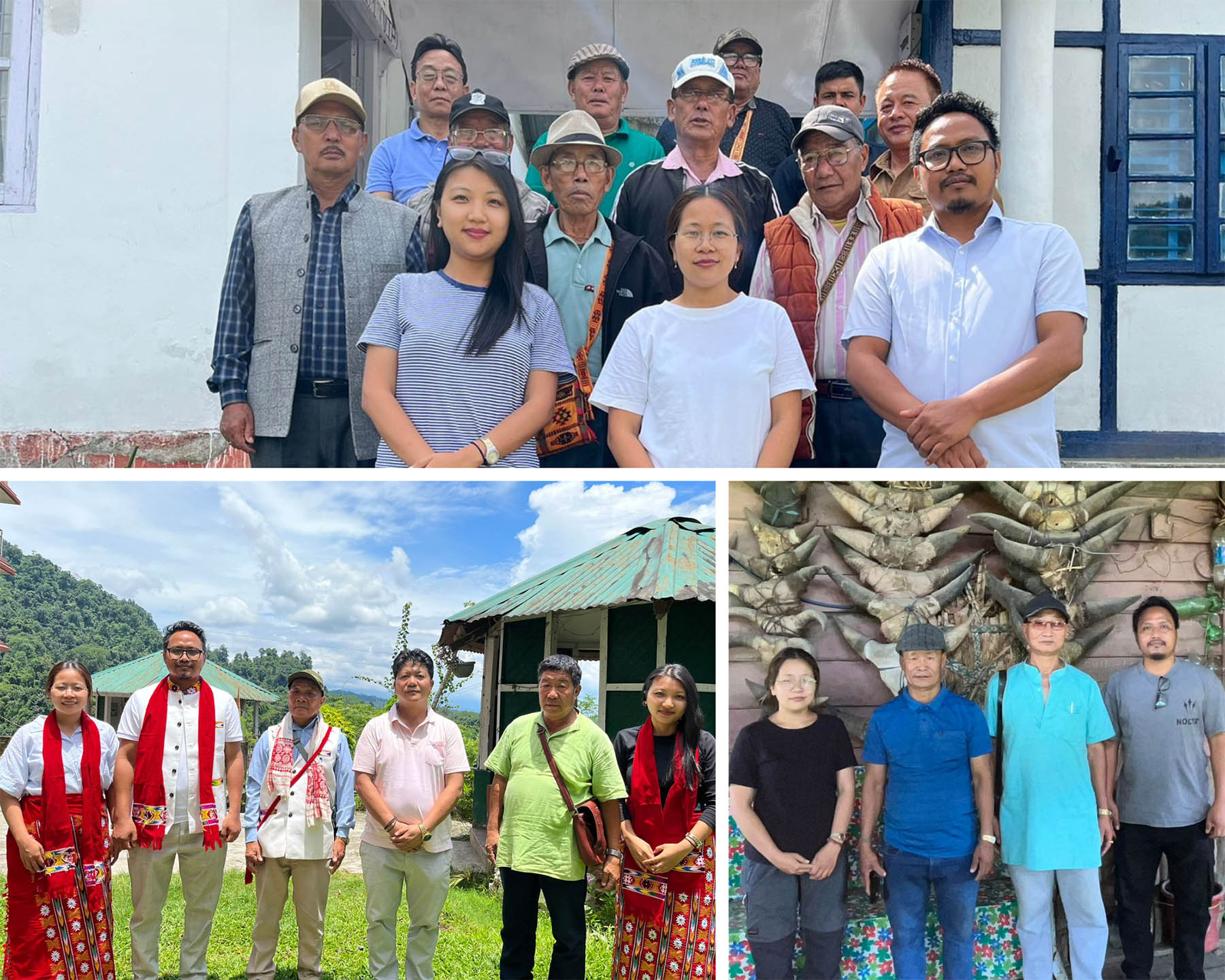
ROING, Aug 02: The RIWATCH Centre for Mother Languages (RCML) has successfully completed intensive field study onhe Sajolang (Miji) community in Bichom district, and Aka (Hrusso) and Sherdukpen communities in West Kameng district during July 14 to 31 last.
The study focused on documenting the rich oral traditions and linguistic heritage of these indigenous communities. The research team closely engaged with community elders, folklorists and native speakers to collect endangered oral narratives, including folk tales, oral histories and linguistic data.
Such study forms a crucial part of RCML’s larger mission to promote and revitalize endangered indigenous languages and oral traditions in Arunachal Pradesh. The data will be published as illustrated folktale books, designed to encourage reading culture and facilitate the intergenerational transmission of indigenous stories. It would also support community-based educational and preservation efforts with sustained collaboration with the studied communities.
RIWATCH, in a release, lauded Aka Shotuko-Kunu, All Sherdukpen Blu, Tukpen Village Council, Shergaon Village Council, Sajolang Indigenous Faith & Culture Preservation Society, Sajolang Elite Society and all elders of these communities for their support to make the field study a great success.
AONS adds: As Arunachal Pradesh is known as an ethnic hub of India, the GoAP is actively working to document and preserve the rich cultural heritage of its indigenous tribes. This initiative involves creating documentaries, developing books on folktales and researching various aspects of tribal life, including shamanic practices and traditional arts and crafts. The Department of Indigenous Affairs is dedicated, and focused on promoting, preserving and nurturing the state’s cultural heritage.
The Research Institue of World’s Ancient Traditions, Cultures and Heritage (RIWATCH) with Vijay Swami as its executive director is appreciably involved in documenting tribal cultures.
It has been developing books based on local folktales of Nyishi, Galo, Tagin, Wancho, Tangsa, Idu-Mishmi, Taraon Mishmi and Kaman Mishmi tribes for use in classrooms. It has also launched a website to document intangible cultural heritage of 17 indigenous communities.
The documentation includes both tangible aspects like artifacts and intangible aspects like traditional tales and practices. Thus, the GoAP is also collaborating with organizations, like International Information and Network for Intengible Cultural Heritage in Asia-Pacific (ICHCAP) to give a thrust these efforts.


 20