
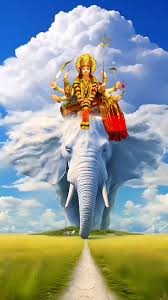
‘Ya Devi sarva-bhuteshu bhranti
Rupena samstitha; Namastasye
namastasye namastasye namo namaha’
(O Divine Mother! I bow down to You who are manifest as Bhranti – the element of delusion in all living beings).
Beyond the Horizon
By Pradeep Kumar
The humanity is agog with the joy to welcomeGoddess Durga, who riding on a lion or tiger and carrying weapons in many arms, would land on earth to combat evils and demonic forces threatening peace, dharma and cosmic order, representing the power of good over evil, for the living beings to live peace.
Mother Durga, often depicted as a warrior, is widely worshipped by the followers of goddess-centric sect Shaktism besides Shaivism and Vaishnavisim, of nirākāraĀdiparāśakti, the ultimate feminine essence.
Durga Puja celebration with rituals begun on Mahalaya (Sept 21) followed by Maha Panchami (Sept 27), Shashthi (Sept 28), Saptami (Sept 29), Ashtami (Sept 30), Maha Navami (Oct 1) blending with mythology, art and community and on Vijaya Dashami (Oct 2), Mother return to her heavenly abode.
Maa Durga will arrive this year on an elephant and depart on a human (Nara), both of which are seen as auspicious signs, bringing blessings of prosperity, rainfall, peace and harmony.
Goddess Durga represents combination of the combined powers of all the gods, who gifted her their divine weapons and blessings to defeat demon king Mahishasura. While she is depicted with numerous arms and weapons signifying her diverse powers, she is not a combination of 10 distinct powerful forms but rather a singular goddess embodying the collective power of the deities. The concept of 10 great powers most closely relates to Das Mahavidyas (Ten Wisdom Goddesses), who are 10 different forms of Divine Feminine energy, not Durga herself, but associated with wisdom and liberation.
The gods combined their energies to create Durga, making her a powerful, ultimate force born from the sacred waters of the Ganga.
Each god gifted Durga one of their powerful attributes, equipping her with weapons like Shiva’s trident, Vishnu’s discus and Indra’s thunderbolt, all of which symbolize specific divine powers.
As the Great Mother of the Cosmos, she is responsible for creation, preservation and eradication of evil forces, a role that requires a union of all the gods’ power.
Each Mahavidya represents unique cosmic energies and spiritual abilities, providing devotees with wisdom, strength, and the power to overcome challenges.
In essence, while Durga is a powerful warrior goddess, her strength comes from the combined power of the gods. The concept of ten great powers, however, pertains to the Das Mahavidyas, who represent different facets of the supreme feminine divine energy.
Durga Puja or Durgotsava or Sharadotsava, is celebrated across India and many South East Asia nations to honour the goddess and commemorating her victory over demon Mahishasura. The Durga Puja in Kolkata was inscribed on UNESCO’s Representative List of Intangible Cultural Heritage of Humanity In 2021.
Durga Puja’s origins in India is traced to late 1500s in Bengal, when landlords (zamindars) in Malda & Dinajpur first organized it. Taherpur Raja Kangsanarayan in Nadia district organised first grand worship. The celebration later evolved into a community event with the first “baro-yaari” (twelve-pal) puja in 1790 in Gutipura, West Bengal, followed by first public community puja in 1910 in Kolkata.
The festival transformed from an exclusive practice of the wealthy to a widely popular and inclusive community celebration of venerate Lakshmi, Saraswati, Ganesha and Kartikeya with Maa Durga. The community-based puja, called “sarbajanin,” became a central part of the festival, fostering social unity and cultural integration.
The hymn emanating positive energy and peace of mind for prosperity and success would rent all puja pandals for five days symbolising Devi Durga’s presence and her blessings to her countless devotees!


 20

