
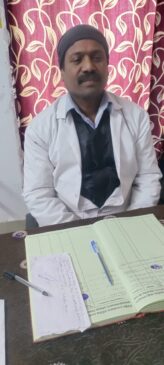
Dr Pankaj Kumar Das
By Pradeep Kumar
BALASORE, Jan 16: Physiotherapy or physical therapy is a healthcare profession focused on restoring movement, function and quality of life for people affected by injury, illness or disability using science-based methods, like exercise, manual therapy and education.
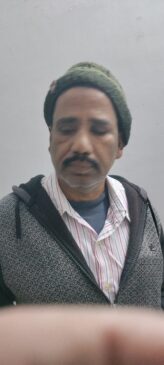 Senior advocate Sapan Kumar Dey during morning walk the other day hinted about his right leg femur fracture and undergoing post-operative physiotherapy treatment from Dr Pankaj Kumar Das of Sahadebkunta UPHC. “I have improved a lot by his last three months’ treatment,” he added.
As I walked into the UPHC, saw many people were waiting in queue. One Purna Chandra Pradhan, 78, responding to question, said, “I was unable to walk due to severe pain in leg joints. But I came walking down today for the relief I got for one-month regular treatment”.

Dr Das, Master in physiotherapy, diploma in Neurotherapy and advance chiropractor, in an exclusive interview to this editor, said, “I have been treating large number of post-operative cases, paralytic cases and joint pain cases morning and evening regularly”.
“A 10-month-old cerebral pulse child and a 96-year-old man were fully cured giving great satisfaction. Satisfaction and relief of the patients are the greatest rewards for a doctor,” he said.
“Physiotherapy has undergone a major revolution, transforming from traditional methods focused on massage and passive modalities into a science-based, technologically advanced, and patient-centric healthcare profession. This evolution is driven by research, technological innovation and a shift towards holistic and preventative care,” he added.
Historically, physiotherapy relied heavily on passive treatments like heat packs, massage and traction. Modern practice emphasizes active patient participation through customized, therapeutic exercises and movement science, empowering individuals to take an active role in their recovery and long-term health management, he said.
“The field has embraced cutting-edge technology to enhance diagnosis, treatment and monitoring. Virtual consultations and VR-based therapy allow remote access to care, breaking down geographical barriers and making rehabilitation more engaging and accessible. Moreover, smart sensors and AI-powered software monitor movement patterns, provide real-time feedback and help therapists create highly personalized treatment plans based on data analytics,” he said.
This ongoing transformation is making physiotherapy more precise, efficient and personalized, significantly enhancing the overall quality of life for a wider range of patients, added Dr Das, who passed out in 2009 and joined service here in 2024.
Swedish physician and fencing master Dr Per Henrik Ling, who founded Royal Central Institute of Gymnastics in 1813, establishing a system of massage, manipulation and exercise for health is widely considered as “father of modern physiotherapy”.
Dr Ling had developed Swedish gymnastics, integrating exercise and manual techniques for rehabilitation, influencing the profession’s foundation.
But, the term “physiotherapy” was coined later by German physician Dr Lorenz Gleich in 1851 (Physiotherapie), linking the practice to “nature’s therapy” (from Greek physis meaning nature and therapeia meaning treatment).
Mary McMillan led the establishment of American Women’s Physical Therapeutic Association (APTA), a key moment in professionalizing the field to be known as ‘Mother of Physical Therapy’ in the U.S.
Ling’s work providing systematic basis became popular in early 19th Century. The profession grew significantly in early 20th Century after World War-I following treatment of injured soldiers and later polio victims and McMillan forming APTA.
Physiotherapy was formally introduced in India in early 1950s, spurred by polio outbreaks, leading to India’s first physiotherapy school in Mumbai in 1953 with WHO support. The profession grew with the establishment of Indian Association of Physiotherapists (IAP) in 1962, formalizing standards and now offers degrees and specializations, evolving from a diploma course into a recognized allied health field.
As healthcare continues to evolve, physiotherapists are embracing new tools and strategies that enhance mobility, andreduce pain which is shaping India’s wellness revolution.


 20
