
By Pradeep Kumar
ITANAGAR. Feb 04: A Royal Bengal tiger prowling in Mehao Wildlife Santuray (MWS), spread in281.5 km2 area, gifted with virgin natural lush green forest, lakes and harbours some rare varieties of orchids, reportedly attacked and killed Roing Police Stationhead constable (WT) in Mayodia area on February 1 (Sunday) evening, when he was returning home to Roing on a two-wheeler after duty at Anini.
Tigers are present in MWS is well known to state’s Environment, Forest, Climate Change and Wildlife Department as a camera trap survey conducted by a team led by MWS range forest officer (RFO) Dr Kabuk Lego along with NERIST PhD scholar Deepankar Barman with support of NGO Wildlife Trust of India had recorded tiger paws, as reported in 07.03.25 edition of this daily.
Why the department failed to take precautionary steps to ensure safety of commuters passing through the MWS is the moot question?
Arunachal Pradesh spread in 83,743 km², one of India’s largest forest covers, with approximately 65,881.57 sqkm (about 78.67%) of its geographical area covered by forests as of the 2023 assessment to become one of the 12 biodiversity hotspots of the world. The state is renowned for its rich biodiversity, with forests categorized into tropical, subtropical, temperate broad-leaved, temperate coniferous, and sub-alpine/alpine types.
With human being encroaching into forest area, 549 sqkm forest cover decreased between 2021 and 2023. However, present status is very dense forest (20,985.32 sqkm), moderately dense forest (29,615.09 sqkm), open forest (15,281.16 sqkm), scrub area: 1,058.98 sq km.
The state’s forests are part of the Himalayan biodiversity hotspot, containing about one-third of the habitat area in that region.
It is appreciable that Deputy Chief Minister Chowna Mein, while mourning the tragic death of HC, has categorically stated that “While wildlife conservation is of utmost importance and remains a collective responsibility, it is equally essential to ensure that human lives are protected. I urge wildlife authorities concerned to take immediate and appropriate measures to safely relocate the tigers to a secure habitat away from human settlements.
“Proactive steps must be taken to prevent such tragic incidents from recurring, so that harmonious coexistence between humans and wildlife is ensured without endangering lives,” the DCM wrote on X.
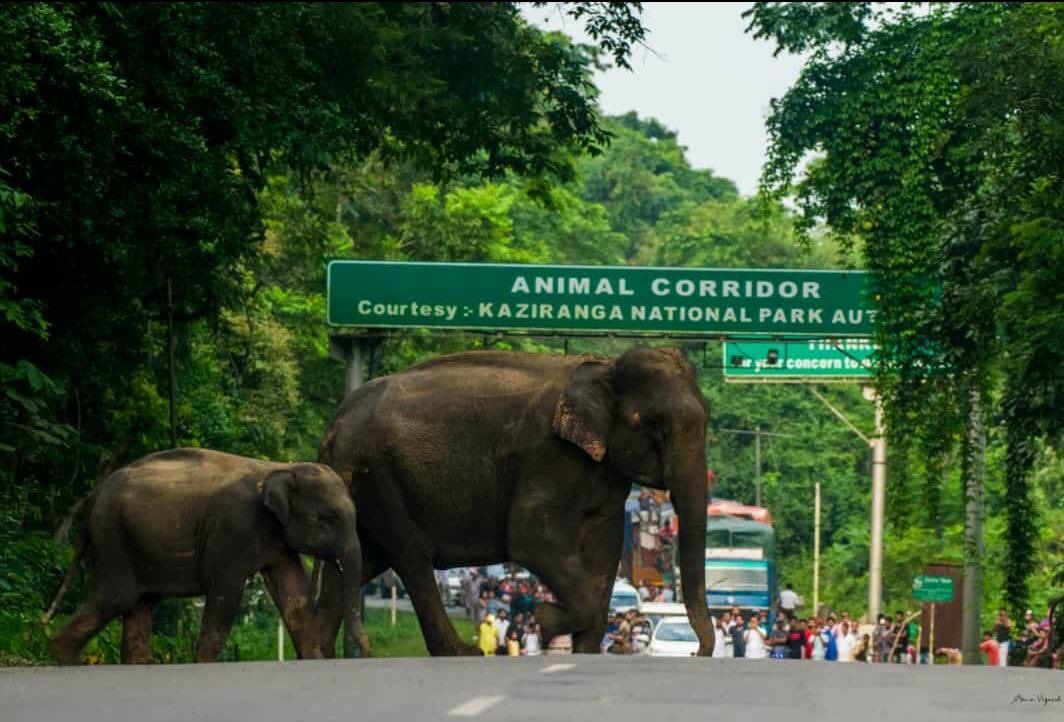
It is high time for Principal Chief Conservator of Forests (PCCF) & Principal Chief Conservator of Forests (Wildlife) & Chief Wildlife Warden, focusing on wildlife conservation, protected area management, and implementing the Wild Life (Protection) Act, 1972, as well as Minister Wangki Lowang, to take a lesson from Assam to ensure safety of commuters and tourists.
Kaziranga’s animal corridors are vital natural pathways, especially nine delineated corridors (like Haldibandi, Kanchanjuri) connecting the national park to Karbi Anglong hills for rhinos, tigers and elephants, preventing human-wildlife conflict and ensuring genetic flow.
A significant development is the new, large-scale Kaziranga Elevated Corridor, an ambitious project featuring 35-km of elevated highway sections over NH- 715, allowing animals to cross safely underneath, even during floods, while improving connectivity for humans.


 20

