
Sikkim top producer,
Arunachal 2nd in India
AONS: Large cardamom also known as badielaichi (Amomum subulatum) is primarily cultivated in sub-Himalayan tracts of North-East India. Sikkim is the largest producer of large cardamom in India, followed by Arunachal Pradesh and Nagaland.
In 2022-23, Sikkim produced highest of 5,147 tonnes in around 23,312-hectare area followed by Arunachal Pradesh 1,751 tonnes in around 11,912-hectare area, Nagaland 1,096 tonnes in around 6,650-hectare area, West Bengal(specifically Darjeeling and Kalimpong districts) contributes significantly to national production and small quantity in Manipur.
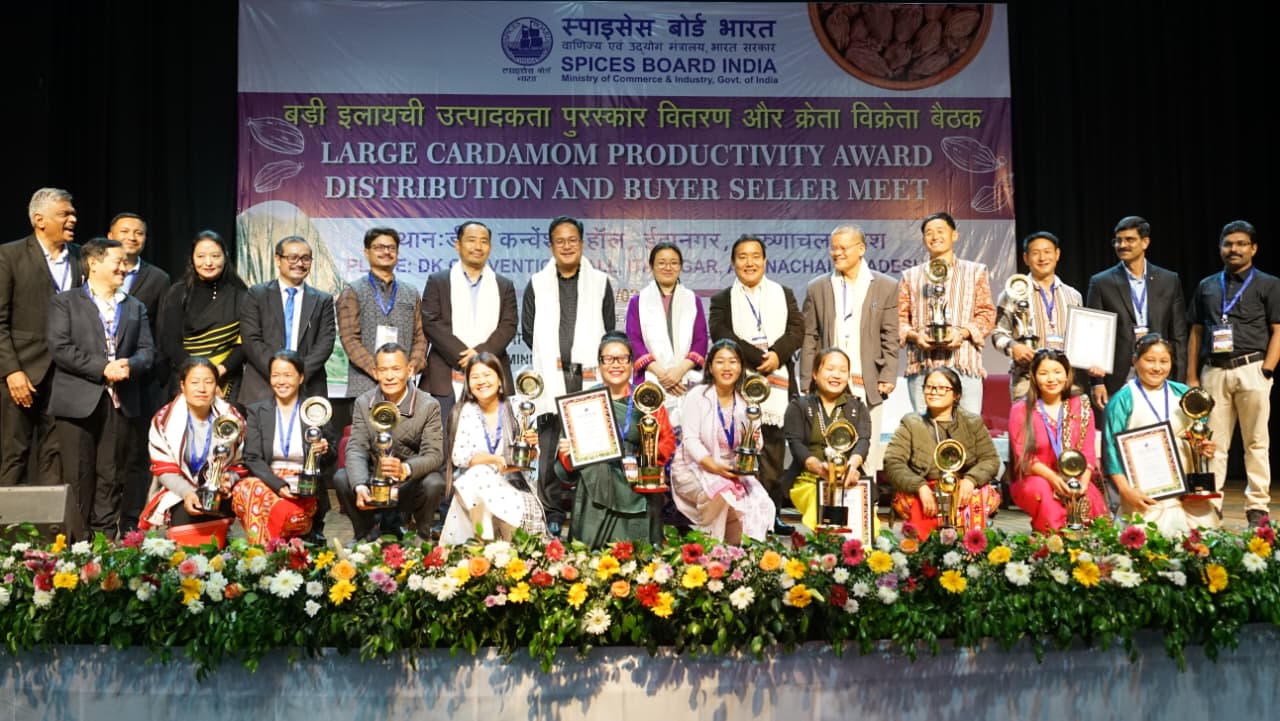
ITANAGAR, Mar 14: A buyer–seller meet (BSM) was organised by Spices Board of India (SBI)of Union Commerce and Industry Ministry at DK Convention Hall here on Saturday when large cardamom productivity awards for 2022–23, 2023–24, 2024–25 and 2025–26 were distributed during the programme, the Chief Guest distributed the Large Cardamom Productivity Awards for the years 2022–23, 2023–24, 2024–25 and 2025–26 to farmers in recognition of excellence in cultivation.
Horticulture Minister Gabriel Denwang. Wangsu inaugurated the event aimed at recognising outstanding large cardamom growers who have achieved high productivity through improved scientific cultivation practices.
Over 250 spice growers, including members of Farmer Producer Companies (FPCs) and Farmer Producer Organisations (FPOs) from Arunachal Pradesh, Sikkim, Nagaland, Manipur and Meghalaya, were present besides 35 spice exporters from different parts of the country.
Wangsu, in his address, congratulated all award-winning farmers, lauded their dedication and disciplined farming practices. Their efforts in adopting scientific orchard management have helped improve productivity and quality of large cardamom in the region, he said, adding their success would motivate others to follow suit.
Stressing on market connectivity, he said the BSM would help strengthen direct market linkages between growers and buyers, enabling transparent interaction and remunerative prices for farmers. He encouraged buyers to collaborate closely with farmer groups and producer organisations in establishing reliable procurement arrangements to ensure stable incomes for growers.
Highlighting the GoAP’s commitment to strengthening the spice value chain, he said that efforts are on to develop a reliable and quality-driven ecosystem for spice production and marketing. He urged farmers and FPOs to maintain proper documentation, adopt simple digital tools and coordinate with field officers to enhance transparency and creditworthiness.
Stressing the need to balance productivity with environmental sustainability, he advocated preservation of soil health, prudent water management and adoption of climate-resilient farming practices in spice cultivation.
Large cardamom is one of the most important high-value spice crops in the NE region, providing a significant source of income and livelihood for many farming communities. Initiatives like productivity awards encourage farmers to adopt improved varieties, good agricultural practices and scientific cultivation methods.
The BSM also served as a platform for growers, traders, exporters and other stakeholders to interact, exchange ideas and explore new market opportunities. The initiative is expected to strengthen market linkages and support the sustainable growth of the region’s spice sector.
SBI Director (development) Dharmendra Das, Guwahati deputy director (development) Dwijendra Mohan Barman & Gangtok deputy director (development) Phurba Tshering Lepcha, Tadong’s Indian Cardamom Research Institute John Jo Varghese, state Secretaries Samuel Changkija (agriculture), & Koj Rinya (horticulture), horticulture director Tobom Bam, Director (agriculture marketing) Mark Boje, among others, were present.(PRO)


 20
