By Pradeep Kumar
BALASORE, Mar 27: Over 4,000-years old Balasore town joined the global Hinu community in celebrating Rama Navami, birth of Ram, seventh incarnation of Lord Vishnu on 9th day of the Shukla Paksha) of the lunar cycle of Chitra month,first month of Hinu calendar and part of Chaitra Navaratri festival in spring, in Treta Yuga.
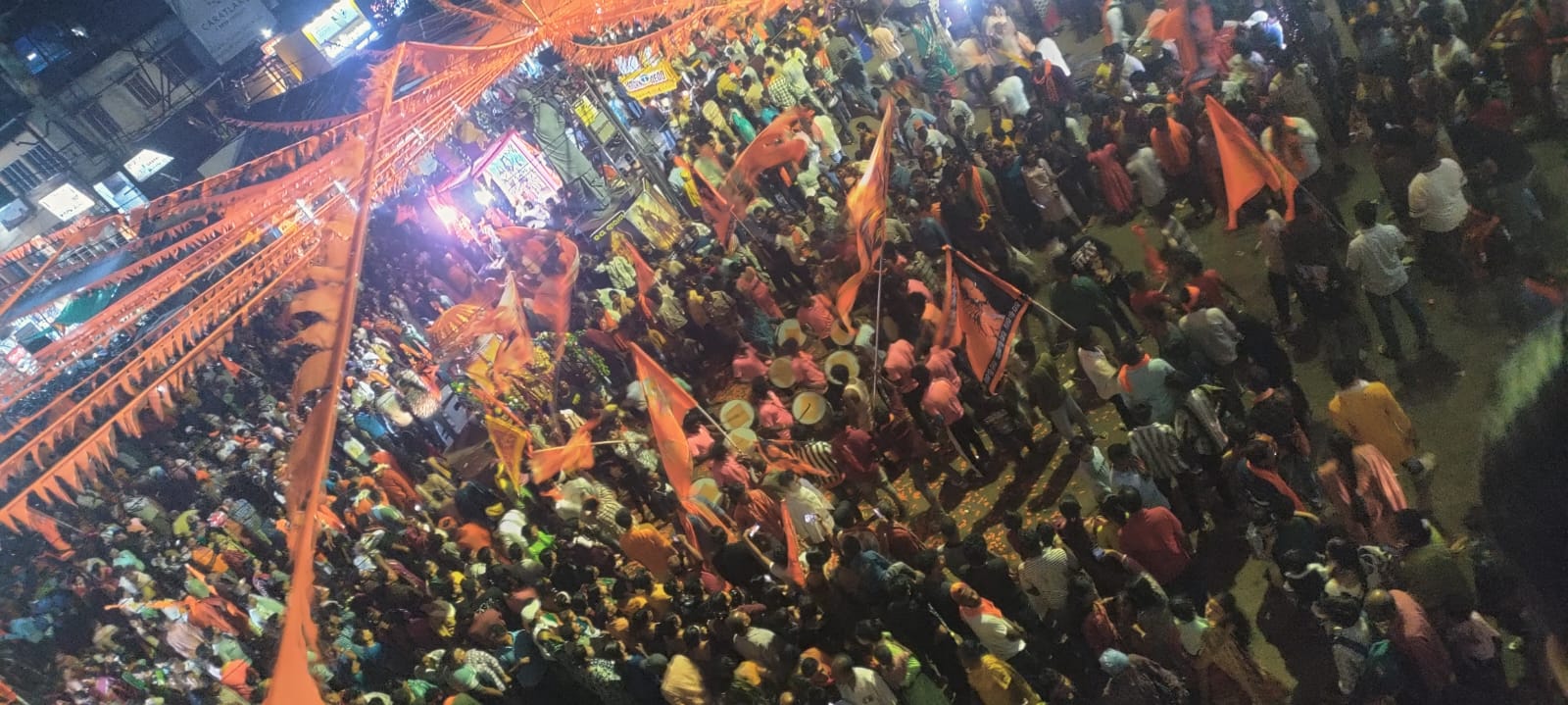
Thousands of devotees holding flags and beating drums with idols of Majyada Purushatam Ram, his consort Sita, younger brother Laxman, selfless devotee Lord Hanuman, Lord Shiva and Lord Jaganath took out a procession along main throughfare of the town. Ram dhun sang by a group of pandits sitting on a vehicle rented the air.
Uncounted people watched the procession on both side of the road, who in chorus often shouted Ram Ram, Jai Jai Ram.
Rama Navami is celebrated across India with varying rituals and customs. These include devotional practices such as fasting, prayer, singing, recitations from the Ramayana, temple visits, processions, and music or dramatic performances. The festival is an occasion for reflecting on Rama’s virtues.
Rama was born to King Dasharatha and Queen Kausalya in Ayodhya city as mentioned in Valmiki’s Ramayana and the Mahabharata. King Dasharatha had three wives—Kausalya, Kaikeyi and Sumitra– but remained sonless for many years. Desperate for an heir, Dasharatha organized a sacrifice to be conducted under the authority of the sage Rishyasringa, which concluded with a celestial figure that emerged from a fire with a pot of rice and milk. As instructed, the king divided the contents of the pot among his wives. As a result, Kausalya gave birth to Rama, Kaikeyi gave birth to Bharata and Sumitra bore twins Lakshmana and Shatrughna.
During Ram’s 14-year exile, while living in a hermitage in Panchavati forest, demon king Ravana kidnapped Sita, to avenge his sister Surpanakha and due to his lust for her. Disguising himself as a sage, he utilized Maricha to lure Ram away before forcing her into his chariot, the Pushpak Viman, for his kingdom in Lanka.
This led to Ramayan war when Lord Ram killed Ravan on the battlefield in Lanka using divine Brahmastra weapon. Advised by Ravan’s brother Vibishana, Ram targeted Ravan’s navel, which contained nectar for immortality, bypassing the boon that kept him alive. This event symbolizes the victory of Dharma (righteousness) over Adharma.
Ravan’s 10 heads represented various vices and his death marked the end of his tyrannical reign and the rescue of Sita before returning to Ayodhya.


 20