
- Calls for Centre of Excellence in NE at Governing Body Meet
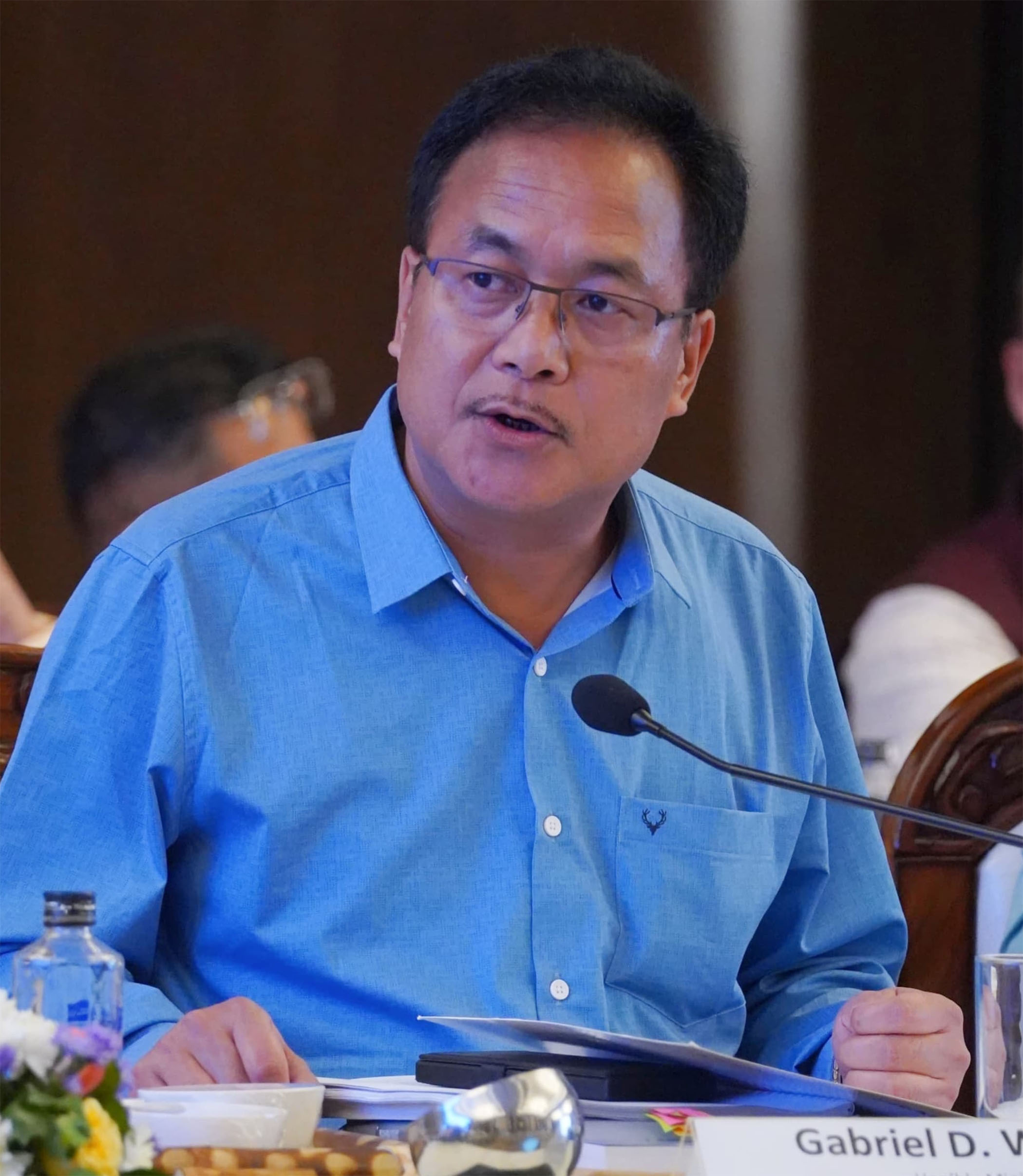
GUWAHATI, May 19: Arunachal Pradesh Agriculture Minister Gabriel D. Wangsu has strongly advocated for transforming the North Eastern Regional Institute of Water and Land Management (NERIWALM) into a premier national institution on the lines of the IITs, citing the growing environmental and agricultural challenges facing the Northeast.
Addressing the 6th Governing Body Meeting of North Eastern Regional Institute of Water and Land Management (NERIWALM) in Guwahati, Wangsu lauded the institute for launching M.Tech and Ph.D. programmes in Water Resource Management, strengthening its NABL-accredited laboratories and developing field laboratories and demonstration units.
“The institute should not remain only as a regional training and research organisation,” the minister said, urging stakeholders to envision a larger national role for NERIWALM.
Highlighting India’s worsening water crisis, Wangsu said nearly 70 per cent of the country’s water bodies are polluted, with more than 350 polluted stretches identified across 323 rivers. In contrast, he noted that the Northeast has a Water Quality Index score of 88.12 per cent, significantly higher than the national average of 70.28 per cent, underlining the ecological importance of the region.
Focusing on Arunachal Pradesh, the minister raised concern over severe soil erosion, acidic soil conditions and climate-related agricultural stress. Citing studies by ICAR and IIT Roorkee, he informed the Governing Body that around 17.69 lakh hectares of land in Arunachal Pradesh suffer from acidic soil conditions, while nearly 669.35 million tonnes of soil are eroded annually in the state.
He warned that climate change, erosion and erratic monsoon patterns are severely affecting agricultural productivity and contributing to floods, landslides and degradation of fertile land in both Arunachal Pradesh and downstream Assam.
Wangsu stressed that watershed protection, springshed rejuvenation, catchment treatment and soil conservation in Arunachal Pradesh are critical not only for the state but also for regional ecological and water security.
The minister sought formal collaboration with NERIWALM in areas such as soil and land use surveys, watershed and springshed management, catchment prioritisation, land capability classification and soil characterisation studies.
He also proposed setting up a Technological Resource Centre or State Soil Museum in Arunachal Pradesh, which could later evolve into a Centre of Excellence for land and water resource knowledge.
Calling for institutional strengthening, Wangsu urged the creation of specialised schools and centres in water resource domains, expansion of postgraduate and professional programmes and recruitment of quality faculty and scientists. He further sought implementation of UGC and AICTE-equivalent pay structures and filling up of vacant senior scientific posts without delay.
Earlier, NERIWALM Director Ujjal Moni Hazarika presented the agenda of the meeting, which was approved by the Governing Body members.
Union Jal Shakti Minister C. R. Patil, who also serves as President of the Governing Body, virtually inaugurated the International Hostel-cum-Guest House at the NERIWALM campus in Tezpur.
Arunachal Pradesh Health and Water Resources Minister Biyuram Wahge also attended the meeting, while the concluding remarks were delivered by Union Minister of State for Jal Shakti Raj Bhushan Choudhary. (PR Cell)


 20

