
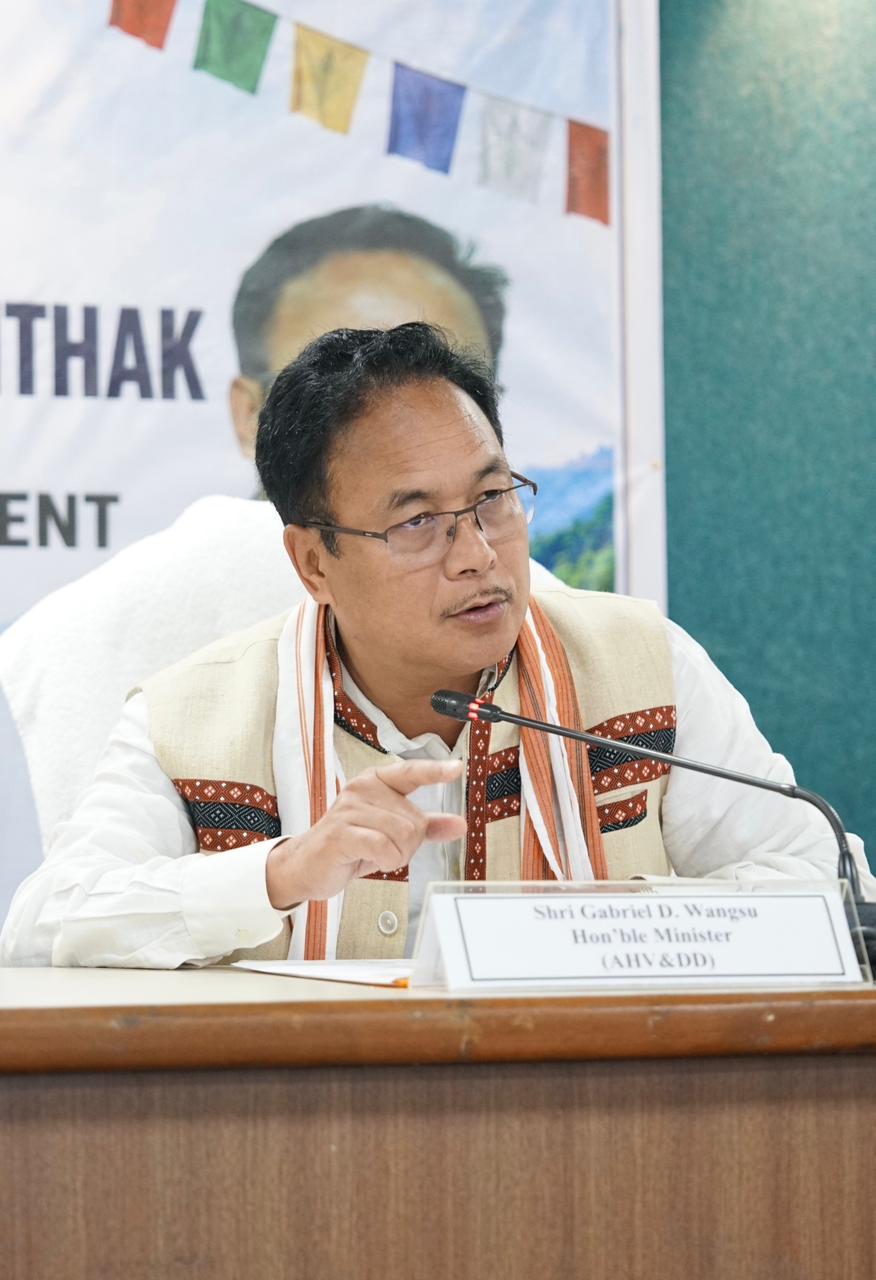
ITANAGAR, June 24: Terming animal husbandry sector as a major source of employment generation in the state, Animal Husbandry, Veterinary & Dairy Development (AHV&DD) Minister Gabriel D. Wangsu stressed importance of accurate ground-level data and directed officers to take livestock census activities seriously, saying that incorrect reporting often leads to poor planning and implementation.
Wangsu was addressing department’s Chintan Baithak-cum-DVO conference here on Wednesday, attended by Secretary YVVJ Rajshekhar, director Dr. Danjan Longri, joint directors Dr. Taba Heli & Dr. Talo Taggu, DVOs and nodal officers.
Stressing the need to identify genuine and trained farmers to ensure that GoAP assistance reaches deserving beneficiaries, he said the department should continue handholding and monitoring trained aspirants even after completion of training.
Hinting infrastructure development as a priority area, Wangsu said that excessive expenditure on renovation and maintenance of old structures often results in inefficient use of resources. He assured officers that he would work towards securing adequate funds for new infrastructure development and announced that well-performing districts would receive priority support from the government.
He urged officers to maintain clarity in their work and communication, stating that departmental personnel must be well-informed and confident to effectively guide farmers. Referring to the state’s socio-cultural context, he noted that dairy farming remains a relatively new concept for many tribal communities, making awareness and motivation efforts even more important.
“This is not the old Animal Husbandry Department. We need to renew it with renewed determination,” Wangsu said, while reiterating the importance of motivating youth participation in the sector and filling critical gaps within the department.
He also called for innovative and out-of-the-box approaches to sectoral development. He advised against establishing new veterinary dispensaries and facilities in areas where they are not required and directed officers to identify locations lacking suitable land for such establishments.
He also stressed the need to encourage trained youths and progressive farmers to form dairy cooperative societies, describing them as key drivers for expanding dairy-based livelihoods. He also highlighted the importance of fodder development and directed officers to earmark adequate land for fodder cultivation. Informing the gathering that a state fodder policy would be drafted soon, he said ensuring sufficient fodder resources would be crucial for the growth of the livestock sector.
Expressing optimism about future of the department, Wangsu said the goal should not merely be growth but overall prosperity of the Animal Husbandry sector. He also emphasised the importance of strengthening inter-departmental cooperation to achieve the department’s long-term objectives, and assured officers of his full support in addressing all departmental concerns and challenges.
Advisor to Minister MLA Talem Taboh lauded officers for their achievements, but expressed concern over encroachment of departmental land by private individuals. He advised to utilise available land resources effectively to prevent future encroachments. He suggested constituting committees headed by respective ADCs, with departmental officers as members, to address land-related issues. He also proposed that youth trained under the “Catch Them Young” initiative should be linked with Govt support schemes likes Atmanirbhar Yojana.
The conference began with a detailed presentation by Secretary Rajshekhar earlier highlighted department’s achievements, gaps, challenges and areas requiring intervention. He stressed the need for preparing modern and practical DPRs. Referring to issues raised earlier, he said the department’s challenges were not insurmountable as significant progress has been made in recent months.
He called for close coordination with district administrations to resolve cases of land encroachment on departmental properties.
After district-wise presentations by DVOs and nodal officers on their performances, including manpower availability, infrastructure status and key challenges, an extensive open discussion on various operational challenges, bottlenecks and strategies for improving the functioning and growth of the sector followed. (PRO)


 20
