
By A O news Service
NAHARLAGUN | Dec 06 | Though Christmas, the annual festival commemorating the birth of Jesus Christ, on December 25 as a religious and cultural festival, is still 20 days away but its preparations have begun with great enthusiasm.
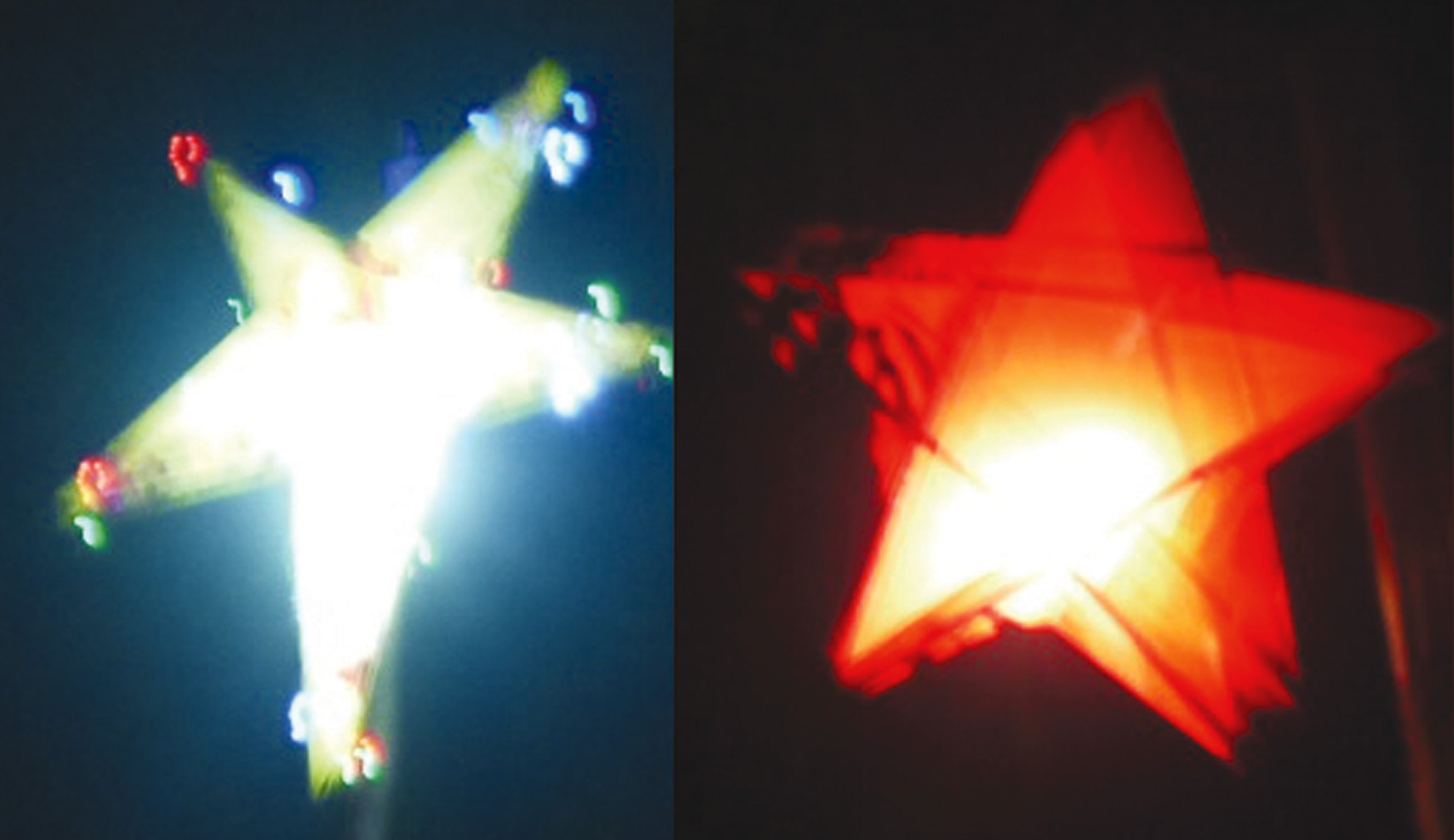
Decorated Christmas trees in many houses and multi-coloured stars installed atop many houses like twinkling stars in the night have given a new identity to Capital Complex. Orders have been placed for cakes, guests invited to join the celebrations indicate commitment to seek the blessings of Jesus, who had sacrificed his life for the sake of humanity.
Christmas, among billions of people around the world. A feast central to Christmas liturgical year, it is preceded by the season of Advent or the Nativity fast and initiates the season of Christmastide, which historically in the West lasts 12 days and culminates on 12th night; in some traditions, Christmastide includes an Octave.
Christmas Day is a public holiday in many nations and celebrated religiously by a majority of Christians, as well as culturally by many non-Christians, and forms an integral part of holiday season. In several countries, celebrating Christmas Eve has the main focus rather than Christmas Day.
Although the month and date of Jesus’ birth are unknown, by the early-to-mid 4th century the Western Christian church had placed Christmas on December 25, a date that was later adopted in the East. Today, most Christians celebrate on December 25 in Gregorian calendar, which has been adopted almost universally in civil calendar used in countries across the world. However, some Eastern Christian churches celebrate Christmas on December 25 of the older Julian calendar, which currently corresponds to January 7 in the Gregorian calendar, the day after the Western Christian Church celebrates Epiphany. This is not a disagreement over the date of Christmas as such, but rather a preference of which calendar should be used to determine the day that is December 25.
Although it is not known why December 25 became a date of celebration, there are several factors that may have influenced the choice. December 25 was the date the Romans marked as the winter solstice, the shortest and darkest day of the year, and the first day in which the days would begin to elongate and the Sun would have a longer presence in the sky. Jesus was identified with the Sun based on an Old Testament verse, and the date is exactly nine months following Annunciation, when the conception of Jesus is celebrated, which is one theory on what may have influenced the timing of the Christmas holiday. Also, Ancient Romans had a series of pagan festivals near the end of the year, and Christmas may have been scheduled at this time to appropriate, or compete with, one or more of these festivals. Some scholars disagree with this latter interpretation and state that the Roman Emperor Aurelian placed a pagan celebration on December 25 in order to compete with the growing rate of the Christian Church, which had already been celebrating Christmas on that date.
The celebratory customs associated in various countries with Christmas have a mix of pre-Christian, Christian, and secular themes and origins. Popular modern customs of the holiday include gift giving, completing an Advent calendar or Advent wreath, Christmas music and caroling, lighting a Christingle, viewing a Nativity play, exchange of Christmas cards, church services, a special meal, and display of various Christmas decorations, including trees, lights, nativity scenes, garlands, wreaths, milestone, and holly.
In addition, several closely related and often interchangeable figures, known as Santa Claus, Father Christmas, Saint Nicholas and Christkind are associated with bringing gifts to children during the Christmas season and have their own traditions and lore. Because gift-giving and many other aspects of Christmas involve heightened economic activity, the holiday has become a significant event and a key sales period for retailers and businesses. The economic impact of Christmas has grown steadily over the past few centuries in many regions of the world.


 20
