
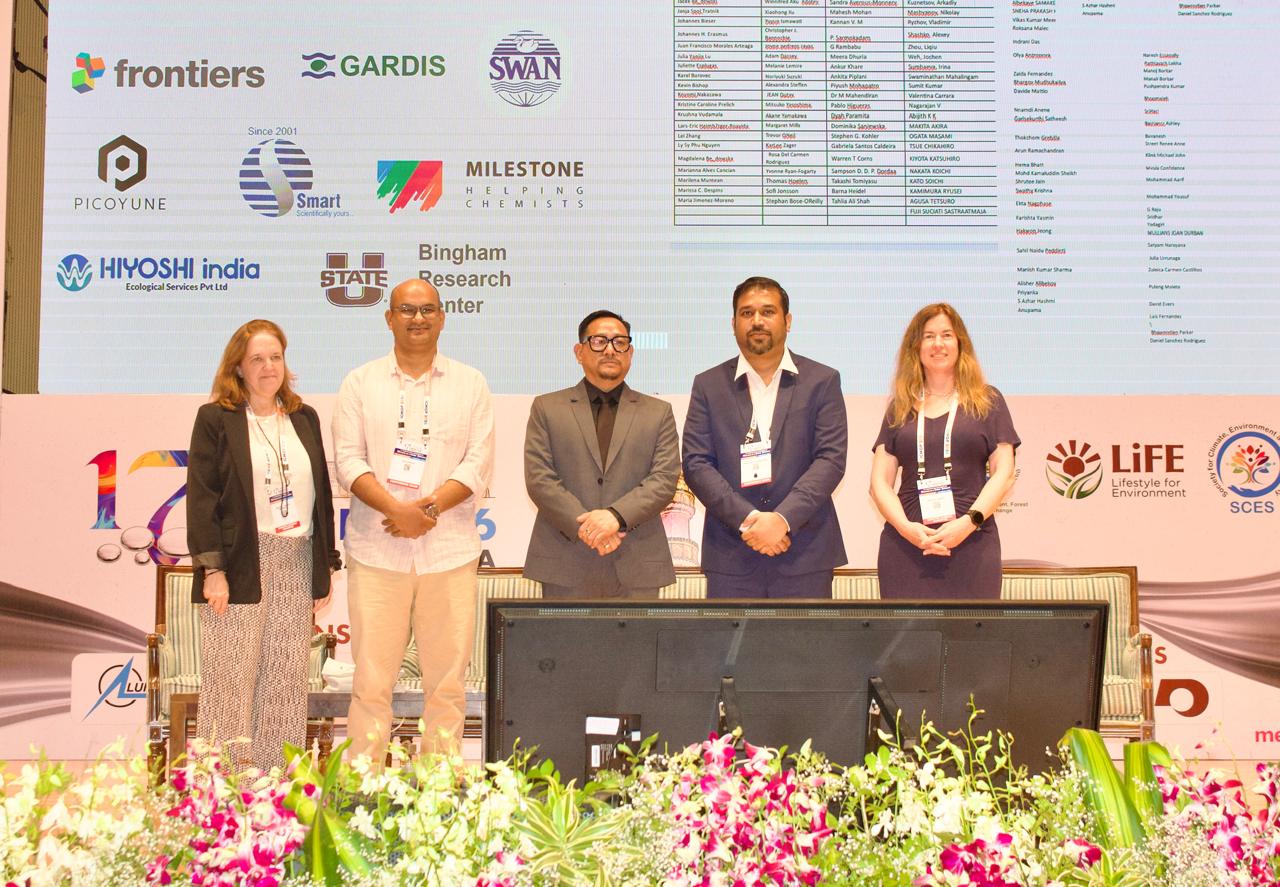
HYDERABAD, Oct 10: Community-based biodiversity conservation initiatives from Arunachal Pradesh were highlighted at the 17th International Conference on Mercury as a Global Pollutant (ICMGP 2026), which concluded at the Indian Institute of Technology (IIT) Hyderabad on Friday.
Gumjum Haider from Arunachal Pradesh presented the conservation efforts of the Bugun community in the Eastern Himalayas, drawing attention to the Singchung Bugun Village Community Reserve and community-led hornbill conservation initiatives in the landscape surrounding Pakke Tiger Reserve.
The presentation highlighted how Indigenous knowledge, local stewardship and community participation can complement scientific research and government conservation programmes in protecting biodiversity.
The Singchung Bugun Village Community Reserve was established through the conservation efforts of the Bugun community to protect the habitat of the rare and endangered Bugun liocichla. The presentation brought the experiences of Arunachal Pradesh to an international platform, underlining the importance of involving local communities in environmental decision-making.
Held from October 4 to 9, ICMGP 2026 brought together scientists, policymakers, environmental experts, representatives of international organisations and young researchers from 26 countries to deliberate on mercury pollution, its impact on human health and ecosystems, and the translation of scientific evidence into effective environmental policies.
The conference featured participation from major international institutions, including the Secretariat of the Minamata Convention on Mercury, the United Nations Environment Programme (UNEP) and the World Health Organization (WHO). The participation of WHO in its official capacity was described as a first in the conference’s history.
Monika Stankiewicz, Executive Secretary of the Minamata Convention on Mercury, engaged with the scientific community on the link between research and international environmental governance, while Eisaku Toda of the Convention Secretariat contributed to several scientific and policy discussions.
Representatives from Minamata, Japan, including a person affected by Minamata disease, also participated in the conference. Their presence highlighted the human consequences of mercury pollution and the need for effective measures to protect public health.
The valedictory programme recognised scientific contributions, outstanding presentations, institutional partnerships and the efforts of researchers and organisers. Conference chairs Dr Jagannath Biswakarma of the University of Bristol, United Kingdom, and Professor Asif Qureshi of IIT Hyderabad emphasised the importance of international scientific cooperation and translating research into practical environmental solutions.
The conference also stressed the role of students and early-career researchers in strengthening future scientific capacity and environmental policymaking.
For Arunachal Pradesh and the wider Northeast, the presentation highlighted the relevance of community-led conservation to global sustainability discussions. While mercury pollution and biodiversity conservation involve different challenges, both require credible scientific evidence, institutional cooperation and meaningful engagement with local communities.
The six-day conference concluded with a call for stronger international collaboration, scientific capacity building and the application of research to protect human health and the environment.


 20
