
Transportation costs triple potato rate
By Pradeep Kumar
ITANAGAR | Mar 23 | Potatoes are sold for Rs 15 to 20 per kg in this capital town for the traders to earn huge margin mostly due to higher transportation cost from sabji mandi.
Most of the vegetables are sold at very high rates and the huge difference between rates of farmers and traders is mostly due to higher transportation cost and profit.
The pressing demand to introduce good train services from Guwahati to Naharlagun would certainly lower much below the present prevailing rates to benefit the common consumers. This calls for the GoAP to urgently move the Railway ministry to introduce good train services soon.
Alu khulu khulu Mahadev (Lord Shiva surfaced while digging potatoes), goes the proverb as proved by the Munshipara villagers.
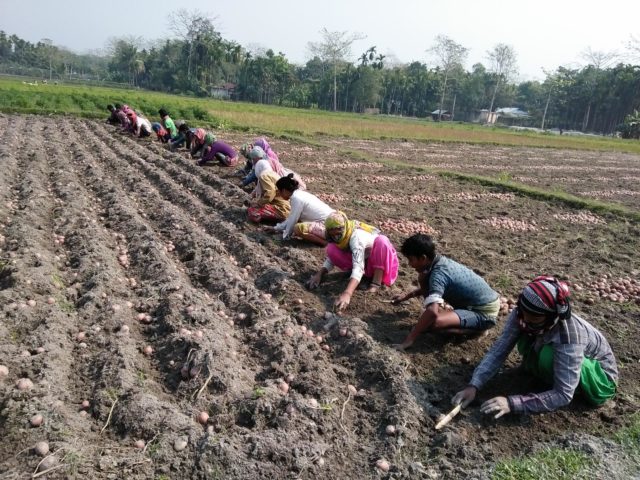
Our correspondent Puja Chetry adds: The non-descriptive Munshipara village transports about 50 metric tons of vegetables by trucks to Nepal, Bihar, Assam, Arunachal Pradesh and Kolkata annually.
Hundreds of families of this vegetable hub of West Bengal’s Jalpaiguri district, located along Jaldapara reserve forest, meant money from the land made fertile by Torsa river flowing nearby. The villagers cultivate potatoes, tomatoes, bitter gourd (karela), cabbage, cauliflower, bitternuts etc. and get enriched by selling their produce but at a very low price.
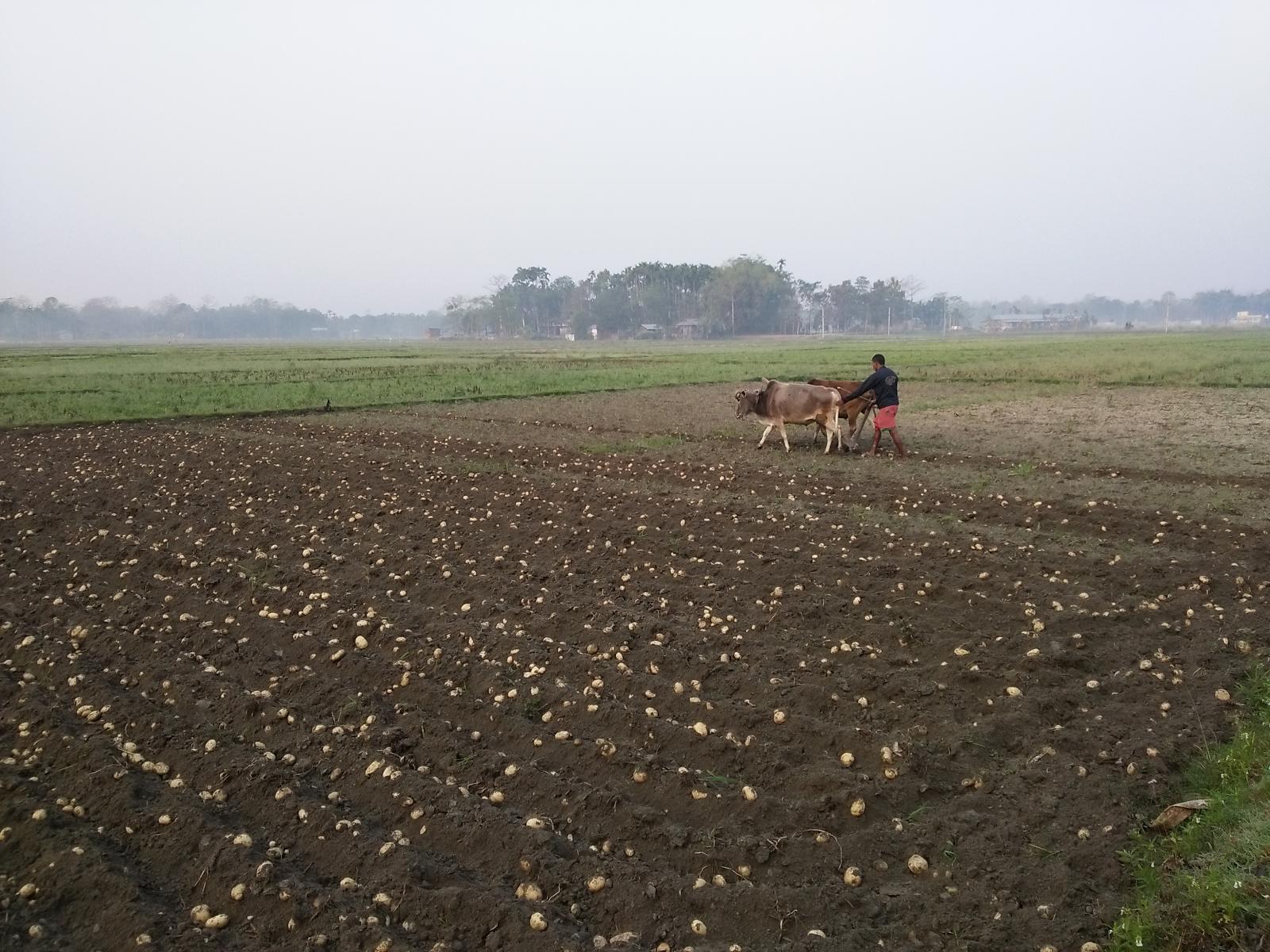
A farmer recently sold 5 MT of potatoes @ Rs 3.80 per kg (Rs 380 per quintal). It is needless to mention as to how transport cost and profit push the rate higher. The villagers toil hard throughout to nourish the plants before harvesting. They plough the fields for collecting the potatoes, clean, pack in bags before dumping in sabji mandi for the buyers to purchase.
One of the farmers, while taking to this correspondent, said that though they have been earning a sustainable livelihood but most of them are deprived of remunerative prices of their products.
History: Potato, a starchy, tuberous crops from perennial nightshade Solanum tuberosum, is the 4th largest food crop in the world, after maize, wheat and rice. Though an integral part of much of the world’s food supply, the green leaves & green skins of tubers exposed to light are toxic.
Potato, originally believed to have been domesticated independently in multiple locations, but later genetic testing of the wide variety of cultivars and wild species proved a single origin for potatoes in present-day southern Peru and extreme northwestern Borlivia’s Solanum Brevicaule Complex, where it was domesticated approximately 7,000–10,000 years ago.
Following centuries of selective breeding, there are now over a thousand varieties of potatoes. Over 99% of presently cultivated potatoes worldwide descended from varieties that originated in the lowlands of south-central Chile, which have displaced earlier popular varieties from the Andes. It remains an essential crop in Europe (especially eastern & central), where per capita production is still the highest in the world, but the most rapid expansion over the past few decades took place in southern and eastern Asia. As of 2007, China led the world in potato production, and nearly a third of the world’s potatoes were harvested in China and India.
Origin of word potato though unknown but was originally used as a term (c. 1440) for a short knife or dagger, probably related to Dutch spyd or Latin spad, (meaning sword) or Spanish espada or English spade and sparrow.


 20
