
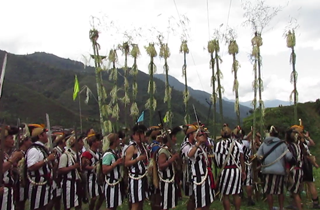
Ethnic-rich Arunachal Pradesh known for its unique cultural heritage with each of the major and minor known tribe known for its ek se bad kar ek festivals. But ceremonial sacrifice to appease the nature gods and goddesses are distinct part of the celebrations of each festival.
But Longte festival of the Nyishi community celebrated with a difference is the only bloodless festival of this Himalayan state. Myth has it that the Abo-Tani, the ancestors of the early human beings, had to struggle for survival amidst hostile surroundings and malicious spirits, responsible for misfortune, accidents, diseases, and miseries.
Thus, Longte is celebrated by the community by performing rituals to erect typical fencing to demarcate the domain of the malevolent (evil) spirits to barricade them from the benevolent souls of human inhabited areas, their animals and cultivation fields to live in peace without any interference by the evil spirits.
The practice underscores the importance of festival as every living being has a spirit, which leaves the mortal body, to either become good or bad spirit depending upon the works he/she did when alive. The tribal communities also believe in such life philosophy.
The human beings through the festival had to strike a golden mean for their survival for which they started the Longte festival, celebration committee chairman Chera Taya said.
With the initiative of then Koloriang lawmaker Chera Talo, then first ZPM Chelo Tatup and PI Bengia Tarak, first community level celebration of the festival begun at Pingang and Taipa villages of undivided Lower Subansisri district in 1975, he said, adding celebration committee chairman Chera Taya said. Nirjuli has been hosting the festival at Nyikum Niya ground for the last six years and all preparations are over for the 6th edition to begin on Saturday.
Without denying the tell-tale impacts of modernity on state’s rich traditions, he exhorted the younger generations to rise to the occasion to document, protect and preserve the anokha dhrobar, (unique sanskriti) lest the future generations blame us.
Ramesh Menon in – The influence of spirits – in India Today’s 30.11.88 edition had written: Arunachal Pradesh’s over 100+odd tribes continue to cling to their ancestors’ world view: human lives are governed by spirits, which can be malevolent or benevolent. The only person who can mediate with spirits is the dandai (priest).
The incantations and often grisly rites of dandai hold total sway in Arunachal Pradesh. Faith still transcends everything and no one questions age-old beliefs. The state’s tribes continue to cling to their ancestors’ world view that human lives are governed by spirits.
“Tribals in Arunachal are traditionalists and so modern waves of change have not affected them much. Because of their beliefs and superstitions they are made out to be primitive, but aren’t the bulk of Indians superstitious?” – says anthropologist Parul Chandra Dutta:
A tribal in Arunachal Pradesh would find it difficult to conceive life without the dandais – so dominant is their influence, says then forest minister Mukut Mithi: “Life for many of us would be unimaginable without a dandai.” But it cannot be denied that underdevelopment has facilitated this domination of tradition.


 20
